
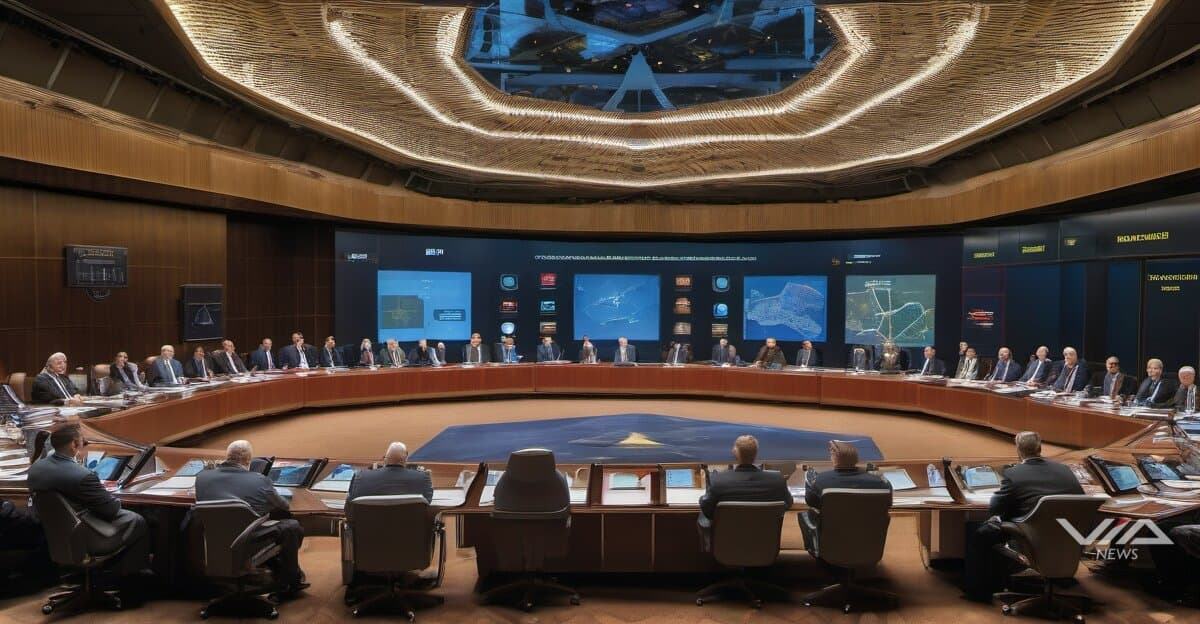
The Pentagon banned Anthropic's Claude AI system from military use, part of a wave of regulatory actions fragmenting global AI development along national boundaries. India simultaneously joined US semiconductor supply chains, reinforcing emerging AI alliances based on geopolitical alignment rather than technical merit.
The fracturing extends beyond government policy. Reliance Industries chairman Mukesh Ambani committed $110 billion to AI infrastructure investments in India, building capacity independent of Western ecosystems. These parallel development tracks suggest nations are prioritizing sovereignty over interoperability in AI systems.
Arthur Mensch, CEO of Mistral AI, argues the real divide isn't geographic. "The fight for AI supremacy is between open versus closed systems rather than where those systems are built," he said. Luke Sernau of Google contends an "open-source free-for-all is threatening Big Tech's grip on AI," framing the split as ideological rather than territorial.
Legal pressures compound the governance crisis. Meta faces surveillance lawsuits over AI monitoring practices. Google confronts a wrongful death case involving AI-generated suicide instructions. These cases force companies to navigate conflicting regulatory frameworks across jurisdictions, with no international consensus on AI safety standards.
The technical implications run deep. Hidenori Tanaka of NTT Research notes that "AI is becoming ubiquitous, but how these computational engines actually work remains—to a surprising degree—a mystery." This opacity complicates attempts to regulate systems that even their creators don't fully understand.
The governance vacuum creates competing regulatory approaches. The US focuses on export controls and supply chain security. The EU prioritizes comprehensive AI legislation. China advances AI development through state coordination. India builds domestic capacity while aligning with US partnerships. Each model reflects different values around innovation, security, and control.
The fragmentation carries economic consequences. Companies must now design products for multiple regulatory environments or choose markets based on compliance costs. The global AI talent pool faces new mobility restrictions as nations treat AI expertise as strategic assets. Research collaboration slows as geopolitical tensions override scientific cooperation.
No unified framework appears likely soon. The diverging approaches suggest the emergence of separate AI ecosystems with limited interoperability, fundamentally reshaping how artificial intelligence develops globally.