
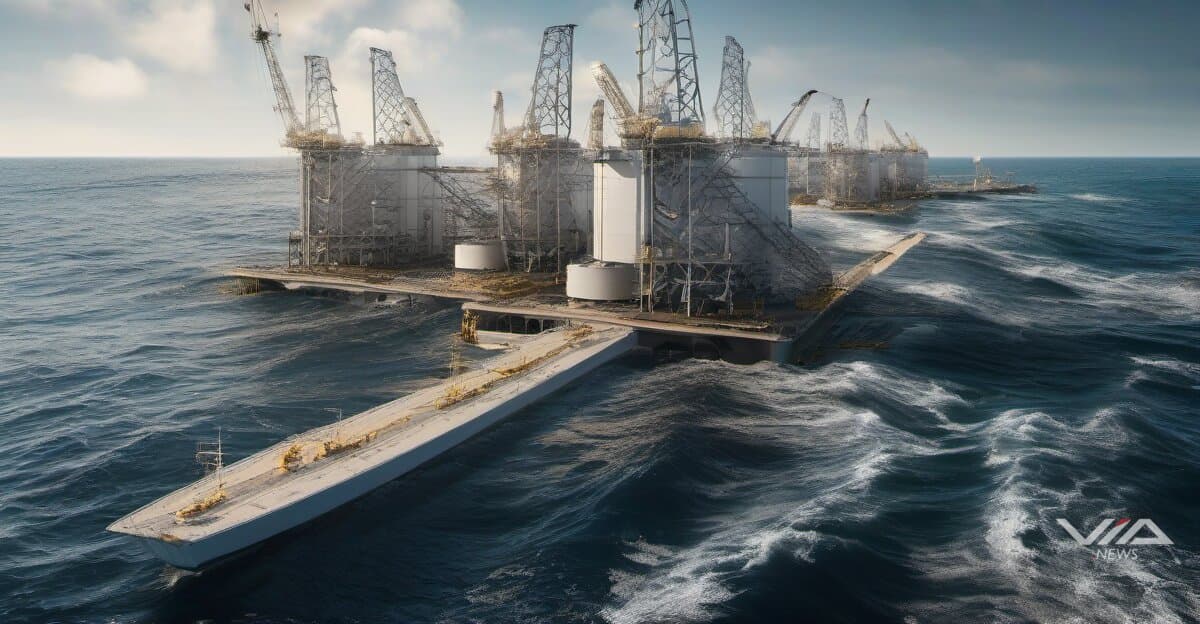
Aikido is developing ocean-based data centers powered by offshore wind turbines to solve AI infrastructure power bottlenecks. The marine environment creates engineering challenges including increased salinity, debris, and metal pipe corrosion that don't exist in freshwater cooling systems, according to engineer Daniel King.
VCI Global launched V Gallant, a GPU-as-a-Service center in Malaysia targeting Southeast Asian AI businesses. Asia-Pacific ranks among the fastest-expanding regions for AI infrastructure deployment, with the facility addressing local demand for compute resources.
Ethernet Alliance released AI-specific networking protocols to handle increased data transfer requirements between GPUs and training clusters. Nokia accelerated AI-RAN partnerships for 6G networks, with executive Ronnie Vasishta stating physical AI requires intelligent networks "so operators can fully harness distributed intelligence across every layer."
Semiconductor equipment maker KLA projects mid-to-high teens growth in advanced packaging, the technology that connects multiple chips in AI accelerators. The forecast reflects manufacturing capacity expansion to meet AI hardware demand.
Veea Inc. open-sourced Lobster Trap, a security scanning tool for AI agents that operates under one millisecond with no meaningful delay. The company's TerraFabric platform sits above existing infrastructure as a coordination layer for edge deployments, working with Kubernetes and operating systems rather than replacing them.
The infrastructure buildout addresses three bottlenecks: power delivery for energy-intensive training workloads, network bandwidth between distributed compute nodes, and regional data center capacity in high-growth markets. Offshore facilities solve land and grid constraints but introduce saltwater engineering complexity. Regional hubs reduce latency for local AI workloads while advanced packaging increases chip density without new fabrication capacity.
Edge computing platforms are consolidating AI agent orchestration and security into unified systems. This shift enables enterprises to deploy autonomous systems without managing separate infrastructure layers for coordination, scanning, and execution.