
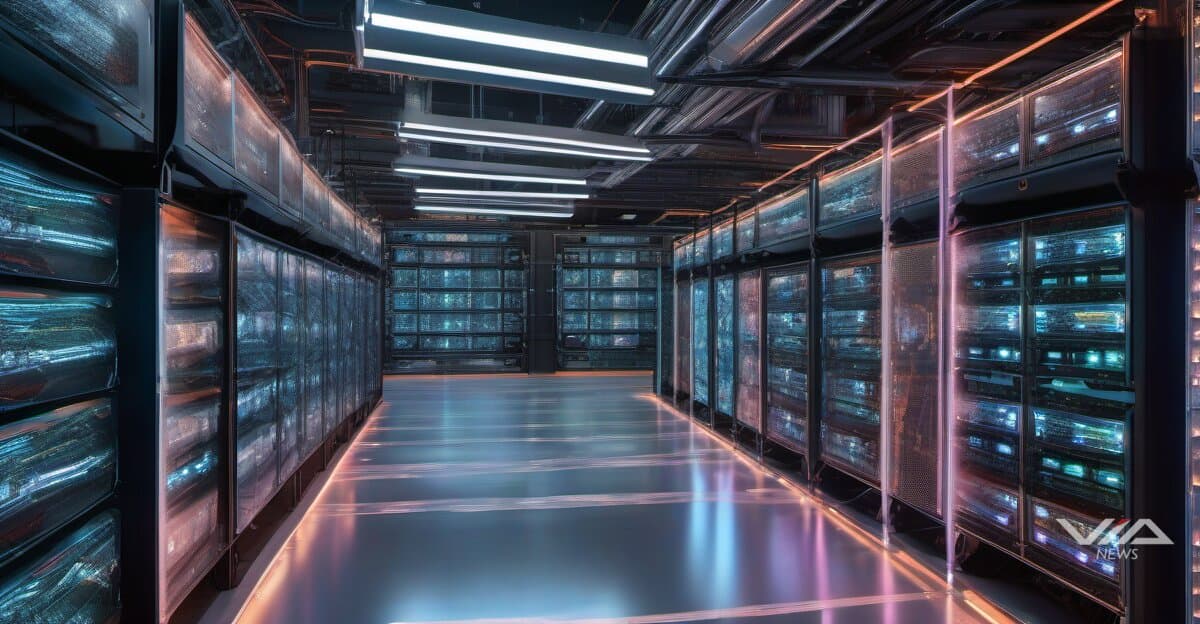
AI infrastructure development will require trillions of dollars in total investment, with only a few hundred billion deployed so far, according to Netris, which reported 622% growth as demand for AI-optimized networking accelerates. The company's automated network management platform now reaches 95% adoption among AI cloud operators.
Hardware acceleration is advancing across multiple fronts. Next-generation chip manufacturing is moving to 4nm PCIe 6 and A16 process nodes, while KLA Corp. expects mid-to-high teens growth in advanced packaging for calendar 2026. The packaging advances are critical for integrating multiple chiplets and high-bandwidth memory needed for AI accelerators.
Confidential computing is now deploying on NVIDIA HGX B200 systems, enabling hardware-enforced isolation for AI workloads. Corvex became among the first companies to achieve certification for the technology. "In production AI, security is only trustworthy if it can be independently verified," said Seth Demsey. "Confidential computing makes trust at runtime measurable, using hardware-enforced isolation and cryptographic attestation across CPUs, GPUs, and interconnects."
Networking infrastructure is evolving specifically for AI workloads, with Ethernet adaptations replacing traditional InfiniBand in some deployments. The shift reflects the need for different traffic patterns as model training and inference scale across distributed data centers.
Asia-Pacific represents one of the fastest-expanding regions for AI infrastructure deployment, according to VCI Global Limited, which launched V Gallant to target the market. India is seeing parallel expansion as sovereign AI infrastructure becomes a strategic priority across markets. Countries are building domestic AI capabilities rather than relying solely on hyperscale cloud providers.
Offshore data centers are emerging as an alternative deployment model, co-located with floating wind turbines. The approach raises questions about operational complexity. "It's unclear to me whether this actually makes life easier or harder for a developer," said Daniel King, comparing offshore facilities to traditional terrestrial data centers.
The infrastructure expansion enables deployment of increasingly large models requiring thousands of GPUs and high-speed interconnects. Training runs that once took weeks are compressing to days as networking and compute capabilities improve in parallel.