
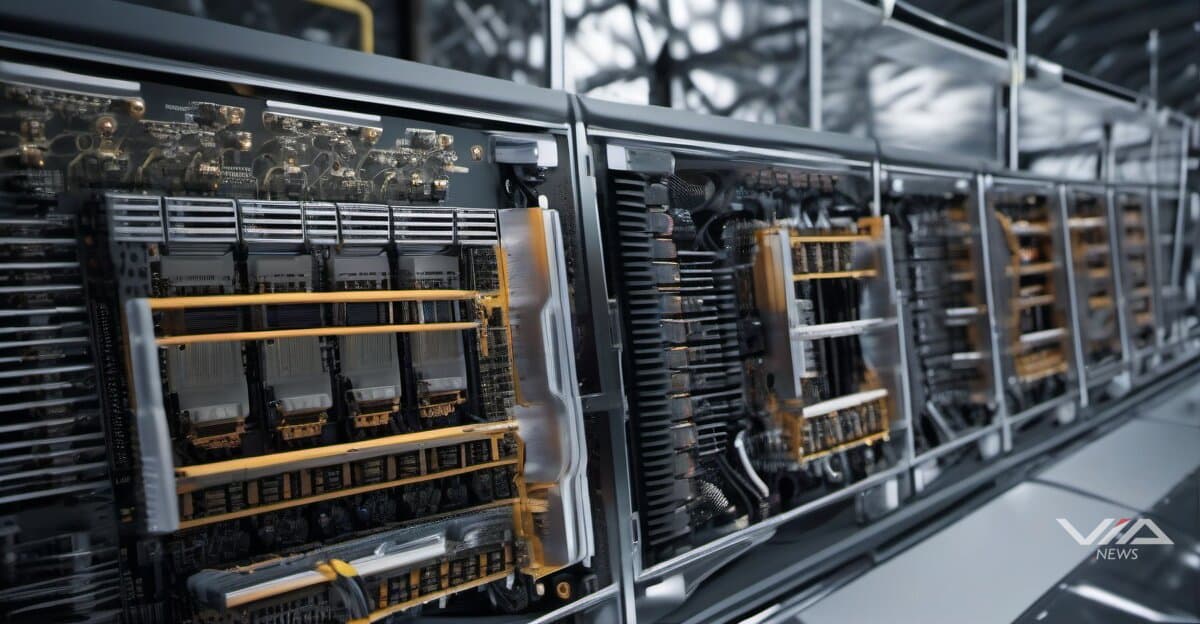
Intel's Hala Point neuromorphic system reached production with 1.15 billion neurons, marking a shift from experimental brain-inspired chips to deployable AI hardware. The architecture mimics biological neural networks to reduce power consumption compared to GPU-based inference systems.
BrainChip's Akida neuromorphic processor entered commercial deployment in edge IoT applications, processing sensor data locally without cloud connectivity. The event-driven architecture activates circuits only when processing input, cutting standby power draw in battery-operated devices.
Traditional accelerator roadmaps continue in parallel. NVIDIA scheduled Rubin Ultra for 2027 release, while Corvex integrated confidential computing capabilities into HGX B200 platforms for enterprises requiring encrypted AI workloads. VCI Global launched Intelli-X, an enterprise AI platform combining multiple accelerator types for data center deployments.
Amkor's Arizona campus will add advanced packaging capacity by 2028, addressing chiplet integration demands from both neuromorphic and conventional AI architectures. The facility targets high-bandwidth memory stacking and 3D chip assembly for compute-intensive applications.
Aehr Test Systems reported $6.2 million in Q2 FY2026 bookings, down from $11.4 million in Q1, but projected $60-80 million in orders for the second half driven by AI wafer-level testing demand. The company's lead Sonoma customer provided forecasts for Q1 FY2027 shipments starting May 30, 2026, supporting AI ASIC production ramps.
Credo Technology Group forecast 63.8-65.8% GAAP gross margins for Q3 FY2026, reflecting pricing power in connectivity chips linking AI accelerators within data center racks. High-speed interconnects between processors become critical as model sizes exceed single-chip memory capacity.
Ensurge Micropower positioned its microbattery technology for AI-enabled edge devices, where neuromorphic chips require compact power sources. The convergence of low-power processing and miniaturized batteries enables new form factors for wearable and embedded AI applications.
The hardware landscape now spans neuromorphic edge processors, traditional GPU clusters, and hybrid systems combining both approaches. Energy efficiency requirements drive adoption curves as training and inference workloads multiply across industries.