
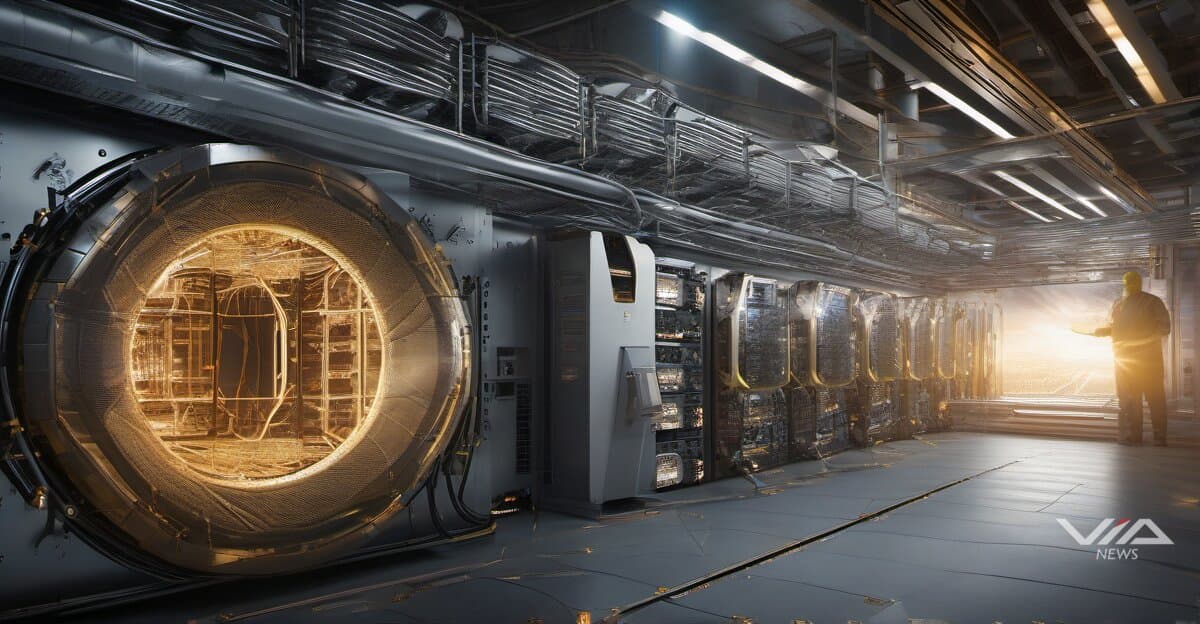
Data center operators are testing underwater facilities powered by offshore wind turbines to solve energy and cooling challenges in AI infrastructure. The marine approach tackles density limits but introduces corrosion and debris management hurdles that don't exist in freshwater systems, according to Daniel King, who noted increased salinity creates "brutal" engineering constraints on metal piping and cooling loops.
Networking vendors are shipping AI-optimized silicon to handle traffic patterns from GPU clusters. New 4nm interconnect chips and "AI-Scale Ethernet" protocols target the communication bottlenecks between accelerators running distributed training workloads. Supermicro expanded its Red Hat-certified systems portfolio for NVIDIA-based AI factories, focusing on validated configurations that reduce deployment time for hybrid cloud infrastructures.
Nokia is advancing AI-RAN (AI Radio Access Network) partnerships to build intelligence into network layers for what it calls "Physical AI." Ronnie Vasishta said operators need AI-RAN to "fully harness distributed intelligence across every layer of the network," positioning the technology as foundational for future 6G systems.
Security frameworks for AI agents are emerging as operational risk becomes clearer. Veea Inc. open-sourced Lobster Trap, a scanning system that operates under one millisecond and introduces "no meaningful delay" to agent deployments. The company claims large-scale deployments show the approach lets organizations push updates without compromising system stability.
Veea also launched TerraFabric, an edge platform designed to manage AI and autonomous systems outside centralized data centers. The product addresses workloads that require local processing rather than cloud round-trips.
The infrastructure shifts reflect AI workload characteristics that differ from traditional cloud computing: higher power density per rack, extreme east-west network traffic between GPUs, and continuous model updates that demand new operational patterns. Companies are investing in purpose-built systems rather than adapting existing data center designs, signaling a permanent architecture change as AI scales beyond research labs into production deployments across industries.