
Monday, August 24, 2026
What we know · the intelligence behind this page
Live from the substrate
What we're seeing
AI Leadership Exodus Rattles Investor Confidence Amid Capex Boom
High-profile departures at top AI labs — Brad Lightcap's exit from OpenAI and an unnamed researcher's departure from Alphabet/Google that triggered a share-price drop — are surfacing talent retention as a market risk factor even as hyperscalers pour record capital into AI infrastructure. The reaction shows investors treating key-person risk at frontier AI labs as material to valuation, a new fragility layered onto an otherwise bullish AI-driven capex cycle.
Our read on the data ›
Signals we're tracking
EPKINLY Regulatory-Clinical Success Cascade
High probability of expanded label indications, additional combination approvals, and competitive positioning strength in follicular lymphoma market. Predicts positive commercial uptake and potential accelerated review for related indications.
Patterns we're watching ›
Where sources disagree
Broadcom Inc.
Both facts report EPS for Broadcom Inc. for the same fiscal period (Q1 2026) observed on the same date (2026-02-01). However, they report conflicting values: 1.5 USD per share vs 2.05 USD per share. This is a 37% difference for the identical metric and time period, not a value change over time.
We flag conflicts openly ›
Recently verified
Checked against the original source
4,978
facts traced to their source — and we flag the ones that don't hold up.
101 entities tracked4,978 facts checked against source5,251 source documents archived
Work with this data → vianewsagency.com

AI Investment Boom Masks America's Two-Speed Economy as Fed Holds Rates Steady

Massive capital flows into AI infrastructure—including a $1.17B CoreWeave deal and SoftBank's pursuit of Marvell—are inflating top-line economic metrics even as lower-income households struggle and the broader labor market softens. Federal Reserve officials, navigating this unusual divergence, are signaling rates will remain on hold well into 2026. Former Fed Governor Lael Brainard warns the economy is strong "at the top level" but "really stuck under the hood."

AI Investment Boom Masks America's Two-Speed Economy as Fed Holds Rates Steady
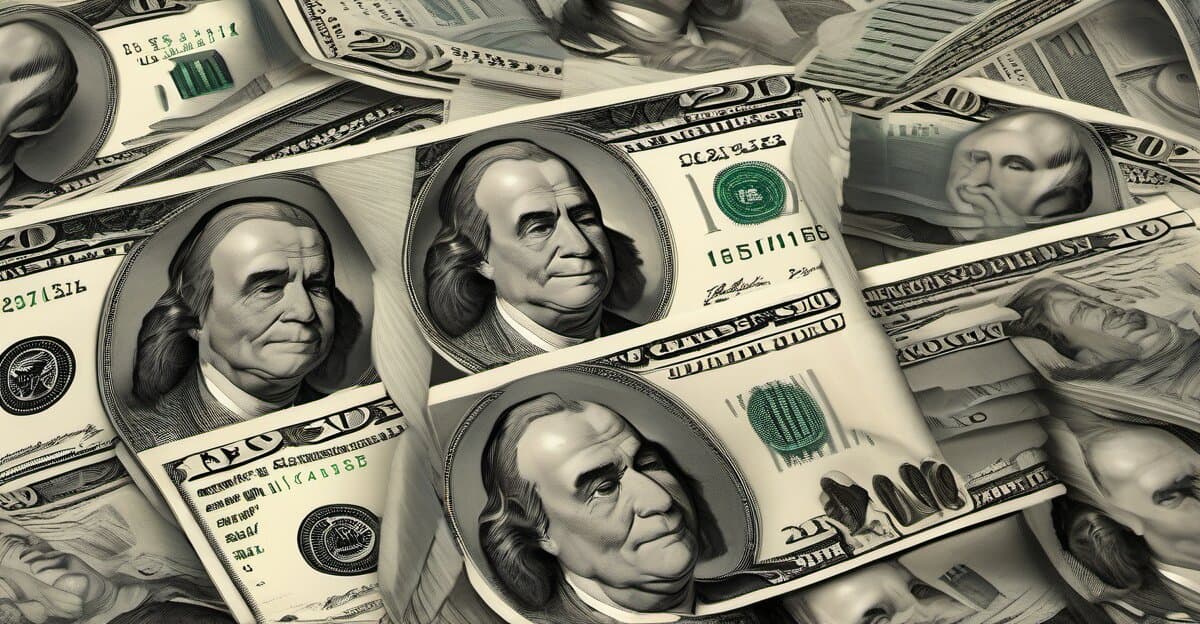
Image generated by AI for illustrative purposes. Not actual footage or photography from the reported events.
Loading stream...

The artificial intelligence sector is attracting capital at a pace that is reshaping how policymakers read the American economy—and complicating the Federal Reserve's ability to act.

A string of major deals underscores the scale of AI-driven investment: GPU cloud provider CoreWeave secured a $1.17 billion financing deal, SoftBank moved to acquire semiconductor designer Marvell Technology, and Charles Schwab purchased Forge Global, a private-markets platform increasingly used by AI startups to manage equity. These transactions represent more than isolated deal-making—they are symptoms of a structural reallocation of capital toward infrastructure that powers large language models and AI workloads.

The result is a statistical paradox. Second-quarter GDP growth came in at a robust 3.8%, with the third quarter expected to match that pace, according to former Federal Reserve Governor Lael Brainard. Yet Brainard, speaking this week, offered a stark qualifier: "The economy at the top level is strong, but again, it's being driven by this really important set of investments in AI. The rest of the economy under the hood is really stuck."

That divergence is making conventional monetary policy signals harder to read. The Fed's dual mandate—stable prices and maximum employment—is being tested by an environment where headline growth looks healthy while lower-income households face an acute affordability crisis and labor market momentum fades in non-tech sectors.

A Fed at an Unusual Juncture

Federal Reserve officials are coalescing around a higher bar for rate cuts. With inflation still running near 3%—partly driven by tariff-related price pressures—most committee members appear unwilling to ease policy. Brainard noted that most Fed officials view tariff inflation as transitory, though she acknowledged they are reluctant to use that politically loaded word after the post-pandemic misstep.

Dennis Lockhart, former president of the Atlanta Fed, offered a measured take on how a potential future Fed chair Kevin Warsh might navigate the environment: "In all likelihood, he'll follow the pattern that the FOMC has shown for years, and that is let the data tell you what's the right policy. He understands that."

Brainard herself, if still serving on the Fed, said she would argue for a rate cut given labor market concerns—willing to accept the risk that tariffs push prices higher temporarily rather than allow a "self-reinforcing downturn in the business sector." That view appears to be a minority position for now.

AI as a Macro Distortion

For technology investors, the picture is more straightforward: AI remains the dominant destination for private and institutional capital regardless of the interest rate environment. The CoreWeave deal signals continued appetite for AI compute infrastructure even at elevated borrowing costs. SoftBank's Marvell pursuit reflects conviction that custom silicon—chips designed specifically for AI inference and training—will be a long-term bottleneck worth owning.

The broader implication is that AI investment is now large enough to move aggregate economic indicators, effectively masking stress elsewhere in the economy. That creates a feedback loop: strong GDP numbers reduce pressure on the Fed to cut rates, which keeps borrowing costs elevated for consumers and non-AI businesses, deepening the two-speed divergence that AI investment itself is helping to create.

As capital continues to concentrate in AI infrastructure, policymakers face an increasingly difficult task—calibrating monetary policy for an economy where one sector's extraordinary growth is writing the headline while the rest of the story tells something quite different.

Source documents

Via News is a conduit. We point to the source documents behind this report — we don't replace them. Trace any claim to its source and decide what to trust. How we source

Source Trace Score8 source documents8 with a live linkVerifiability: Strong
  1. [1]News articleYahoo Finance· November 13, 2025
    Fed is in 'unusual juncture' on rates, lack of data: Lael Brainard
  2. [2]News articleNasdaq· February 3, 2026
    Software Stocks Retreat and Drag the Broader Market Lower
  3. [3]News articleYahoo Finance· February 6, 2026
    Stock market today: Dow closes above 50,000 for the first time as stocks soar to cap volatile week
  4. [4]News articleYahoo Finance· February 10, 2026
    Stock market today: Dow ekes out third straight record, S&P 500, Nasdaq slide with jobs report on deck
  5. [5]News articleYahoo Finance· November 6, 2025
    Stock market today: Dow, S&P 500, Nasdaq fall as Nvidia leads AI trade lower, jobs jitters reignite
  6. [6]News articleYahoo Finance· February 6, 2026
    Stock market today: Dow soars 1,000 points, leading S&P 500, Nasdaq higher as Wall Street rebounds from rout
  7. [7]News articleYahoo Finance· February 4, 2026
    Stock market today: S&P 500, Nasdaq fall for 2nd day as tech slides on AI worries with Google earnings ahead
  8. [8]News articleNasdaq· January 14, 2026
    Stocks Retreat as Big Tech Falters

In this story