
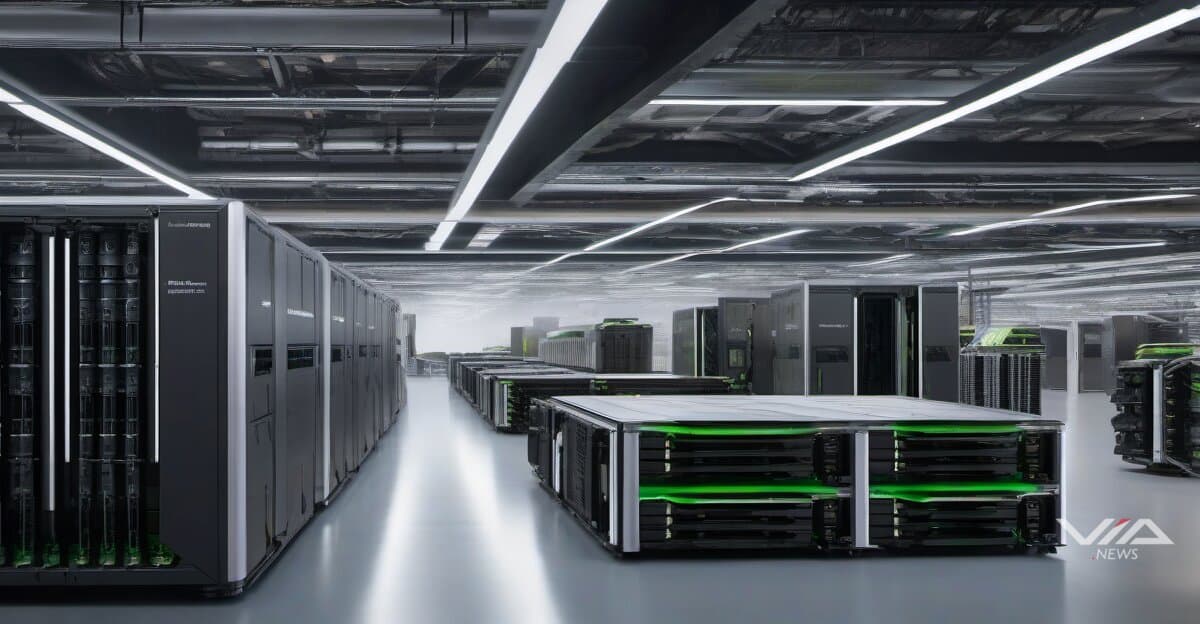
NVIDIA unveiled its Space Computing Platform and Space-1 Vera Rubin Module on March 16, 2026, targeting satellite data processing and orbital operations. The platform addresses computing constraints in space environments where traditional data centers cannot operate.
The same day, NVIDIA announced warehouse automation collaborations with KION, Siemens, and Accenture. These partnerships integrate NVIDIA's AI compute into logistics operations, from inventory management to autonomous material handling systems.
Three major electronic design automation vendors launched AI agents on NVIDIA infrastructure: Cadence released ChipStack AI SuperAgent, Siemens introduced Fuse EDA AI Agent, and Synopsys deployed AgentEngineer. These tools automate semiconductor design workflows that previously required manual engineering.
The vertical platform strategy marks a departure from NVIDIA's traditional approach of selling general-purpose compute for customers to customize. Each platform bundles hardware, software, and domain-specific optimizations for immediate deployment.
Space computing requires radiation-hardened processors and thermal management systems absent from terrestrial GPUs. Warehouse automation demands real-time decision-making for robot coordination and inventory tracking. EDA tools need specialized algorithms for circuit simulation and verification.
The timing aligns with enterprise demand for pre-configured AI solutions rather than building custom implementations. Companies in aerospace, logistics, and semiconductors lack in-house expertise to optimize general AI models for their specific constraints.
Revenue implications remain unclear as NVIDIA has not disclosed pricing models for vertical platforms versus standalone GPU sales. Enterprise adoption rates in Q2-Q4 2026 will indicate whether domain-specific packaging commands premium pricing or accelerates volume deployments.
The semiconductor EDA market particularly stands to benefit, as chip design cycles currently span months. AI agents could compress timelines while reducing engineering headcount requirements.