
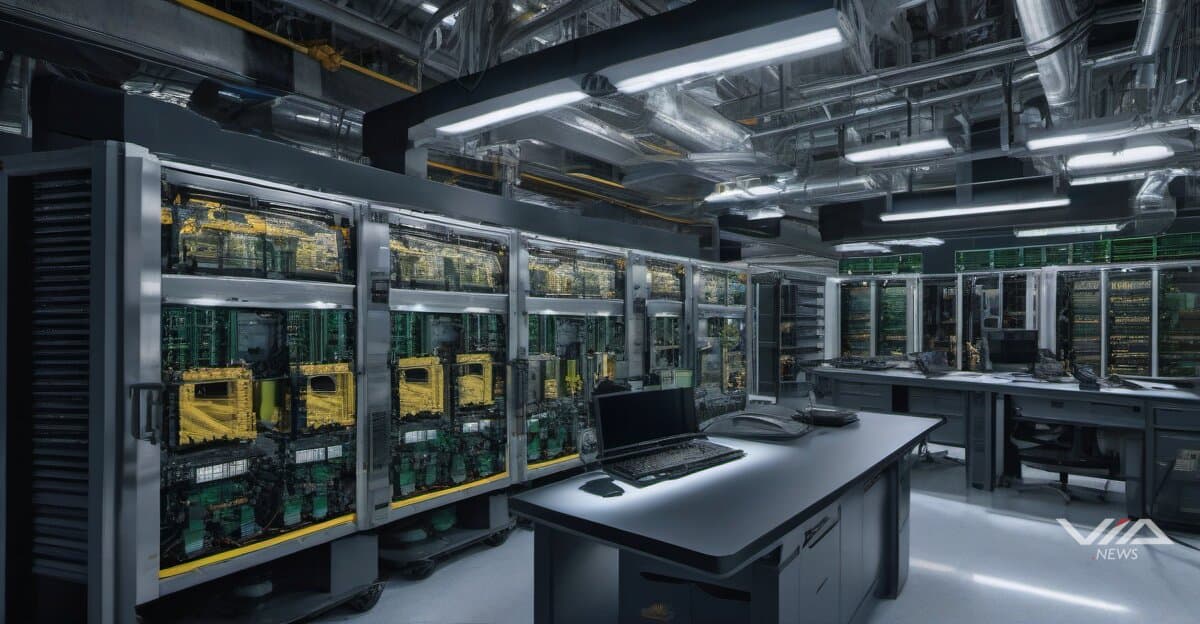
Nvidia's H200 GPU shipments to China have been halted by US export controls, with the government preparing a new permitting process for high-performance AI chips. The restrictions target advanced AI hardware amid escalating national security concerns over China's access to cutting-edge computing capabilities.
The export controls are reshaping procurement timelines for AI companies and research institutions globally. Hardware buyers face uncertainty as the US considers expanding licensing requirements beyond current thresholds, potentially affecting data center buildouts and AI development schedules across multiple markets.
Nvidia's H200, featuring 141GB HBM3e memory and significantly faster performance than the H100, represents the latest generation of AI training hardware now subject to geographic restrictions. The chip's blocked exports compound existing supply constraints as AI labs compete for limited GPU allocations.
Defense sector AI partnerships are encountering resistance alongside the export restrictions. OpenAI's robotics division leader resigned over the company's Pentagon contracts, highlighting internal tensions as AI firms balance commercial growth with military applications. The departure signals employee concerns about autonomous systems development for defense purposes.
Anthropic has been designated a supply chain risk by federal evaluators while simultaneously pursuing renewed Pentagon negotiations. This dual status reflects the complex regulatory landscape AI companies navigate, where national security classifications can shift even as government partnerships expand.
The combined regulatory pressure affects hardware availability across the AI ecosystem. Research institutions dependent on the latest GPUs face procurement delays, while AI startups encounter extended lead times for compute infrastructure. Cloud providers must adjust capacity planning around export compliance requirements.
Alternative hardware markets are emerging as Chinese AI companies seek non-US chip sources. Domestic Chinese semiconductor manufacturers are accelerating AI accelerator development, though performance gaps with Nvidia's latest offerings remain substantial. The export controls are accelerating fragmentation in the global AI hardware supply chain.
The regulatory intervention comes as AI compute demand reaches unprecedented levels. Training frontier models requires thousands of interconnected GPUs, making export restrictions particularly impactful for large-scale AI development programs. Hardware access is becoming a key competitive differentiator in AI capabilities.