
Thursday, September 10, 2026

AI cloud providers pivot to self-build data centers as infrastructure delays eclipse chip shortages

CoreWeave and specialized AI cloud providers are building their own data center infrastructure to bypass supply chain delays now centered on powered facilities rather than chips. The company expects to resolve the majority of deployment delays within Q1 2026 through vertical integration and diversified provider relationships.

AI cloud providers pivot to self-build data centers as infrastructure delays eclipse chip shortages
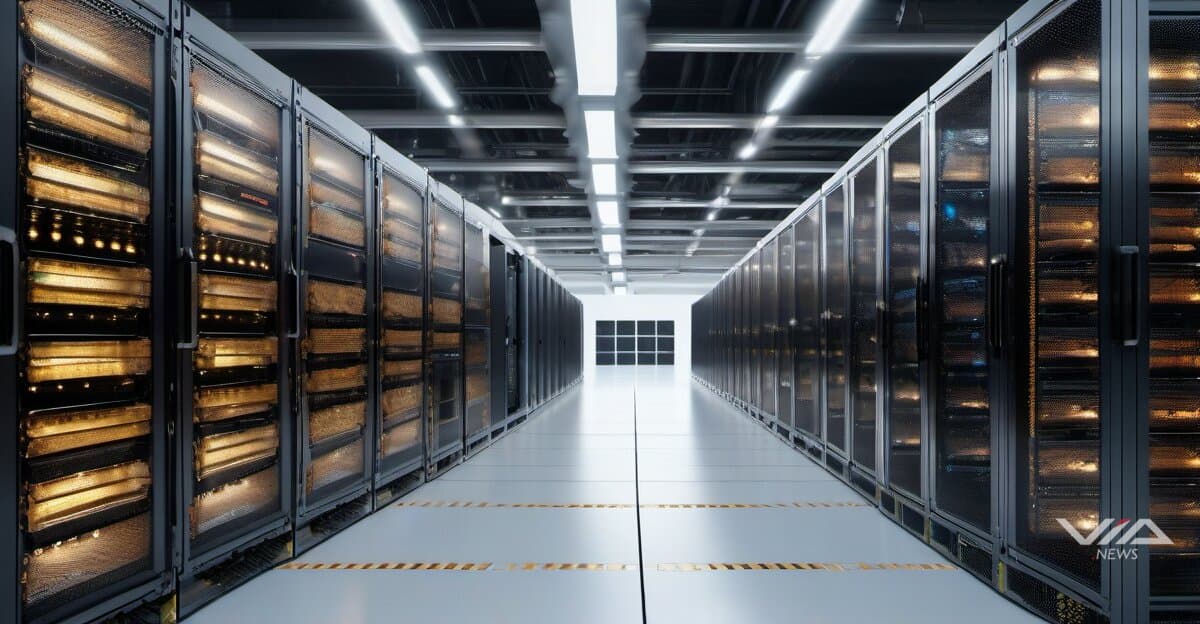
Image generated by AI for illustrative purposes. Not actual footage or photography from the reported events.
Loading stream...

AI cloud infrastructure bottlenecks have shifted from semiconductor availability to data center capacity, pushing providers like CoreWeave toward vertical integration. The company reports delays stem from "powered shell" data center infrastructure, not chip supply or power availability.

CoreWeave is embedding self-build capabilities directly into its supply chain, moving closer to physical infrastructure operations. This vertical integration strategy aims to reduce dependency on third-party data center providers in supply-constrained markets.

The provider has diversified its data center partnerships to manage ongoing constraints. Internal projections indicate Q1 2026 will eliminate the overwhelming majority of current deployment delays through these combined approaches.

This infrastructure-first bottleneck marks a reversal from 2023-2024, when GPU scarcity dominated AI deployment timelines. Specialized cloud providers now face longer lead times for securing rack space, power connections, and cooling systems than for procuring advanced AI accelerators.

The shift reflects surging demand for AI inference and training infrastructure outpacing traditional data center construction cycles. Hyperscalers and AI-focused providers are competing for limited availability in established facilities while racing to bring new capacity online.

CoreWeave's self-build approach follows patterns seen in hyperscale cloud providers like AWS and Google Cloud, which operate proprietary data center networks. For specialized AI clouds, vertical integration represents a strategic departure from asset-light models that previously relied on colocation providers.

Industry watchers expect more AI infrastructure companies to announce similar self-build initiatives through 2026 as time-to-deployment becomes competitive differentiation. Providers with captive data center capacity can offer faster provisioning for enterprise AI workloads.

The infrastructure crunch affects model training timelines, inference deployment schedules, and AI application scaling. Companies dependent on third-party cloud infrastructure face extended wait times for new capacity, particularly in power-constrained markets.

CoreWeave's Q1 2026 timeline will test whether vertical integration and provider diversification can meaningfully compress deployment cycles in supply-constrained conditions.

In this story

What we know · the intelligence behind this page
Live from the substrate
What we're seeing
AI Capital Boom Meets Valuation Jitters: Funding Surges While Bellwether Stocks Wobble
A dense wave of AI-sector funding (Socure, Stability AI, Emerald AI, Generalist AI, Gatik, Regent Craft and others closing rounds on the same day) and strong enterprise-automation earnings (UiPath raising full-year guidance) point to continued heavy capital deployment into AI infrastructure, fintech-adjacent AI, and agentic automation. Yet Palantir's stock fell even after winning the Army's high-profile TITAN contract, and commentary (e.g., the Alphabet bull case citing AI capex and regulatory risk) signals growing investor unease about whether current AI valuations and spending levels are sustainable.
Our read on the data ›
Signals we're tracking
Satellite-Terrestrial Network Integration Acceleration
Increased investment and launches in hybrid satellite-cellular networks across telecom industry; competitive responses from other carriers; regulatory activity around satellite spectrum; expansion of emergency/rural connectivity use cases
Patterns we're watching ›
Where sources disagree
JPMorgan Chase & Co.
Both facts represent the same entity (JPMorgan Chase & Co.), same attribute (EPS), and same observation date (2025-12-31), which aligns with FY 2025 year-end reporting. Fact A explicitly states FY 2025 with EPS of 20.02 USD/share. Fact B has an unspecified fiscal period (N/A) but reports 4.63 USD, a significantly different value (4.3x lower). Given identical observation dates and the same metric, both facts appear intended to represent FY 2025 annual EPS. The conflicting values (20.02 vs 4.63) constitute a direct contradiction. The N/A period in Fact B suggests incomplete or corrupted metadata rather than legitimate time-period variation.
We flag conflicts openly ›
Recently verified
Checked against the original source
4,981
facts traced to their source — and we flag the ones that don't hold up.
101 entities tracked4,981 facts checked against source5,278 source documents archived
Query this data → isubstrate.com