
Thursday, September 10, 2026

AI Datacenter Optical Switching Orders Surge Past $400M on Multi-Customer Demand

Optical circuit switch (OCS) technology for AI datacenters hit a $10M quarterly revenue milestone with backlog exceeding $400M, driven by multiple customers rather than single hyperscaler deployments. The diversified demand signals faster-than-expected OCS adoption as AI infrastructure providers seek alternatives to traditional electrical switching.

AI Datacenter Optical Switching Orders Surge Past $400M on Multi-Customer Demand
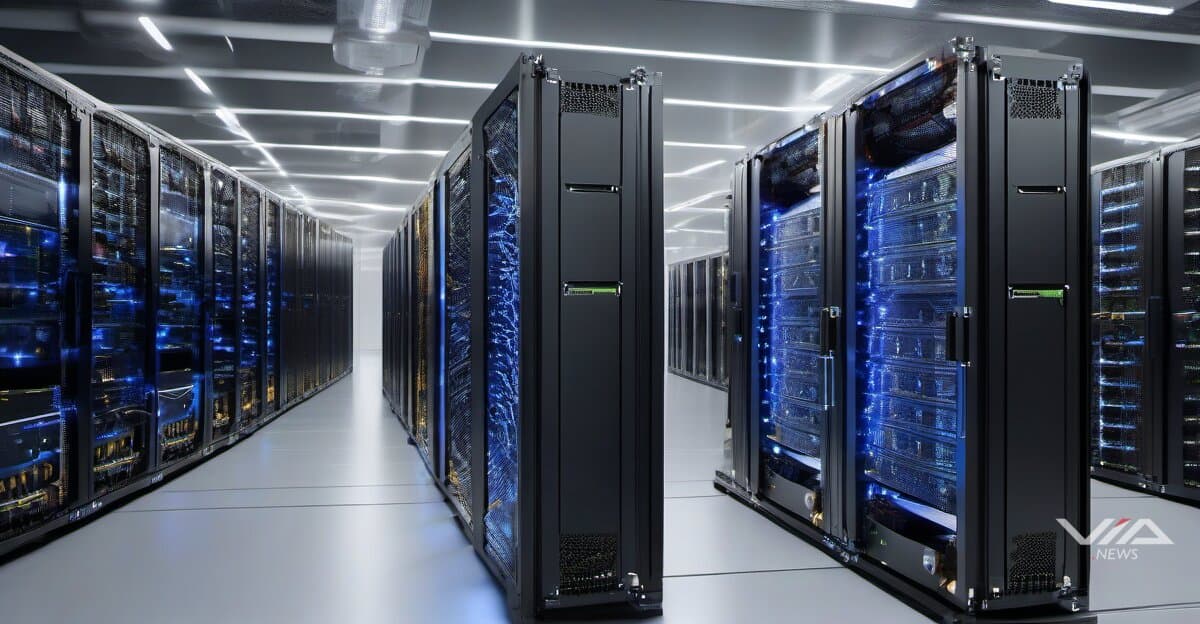
Image generated by AI for illustrative purposes. Not actual footage or photography from the reported events.
Loading stream...

Optical circuit switch orders for AI datacenters surged past $400 million in backlog, with most shipments scheduled for the second half of 2026. The milestone marks faster adoption than industry projections, driven by demand from multiple customers rather than concentration in single hyperscaler deployments.

OCS technology achieved its first $10 million quarterly revenue benchmark. The hardware enables direct optical connections between servers without electrical conversion, reducing latency and power consumption in AI training clusters.

The customer diversification distinguishes this cycle from earlier datacenter optical deployments dominated by one or two large buyers. Multiple AI infrastructure providers are now integrating OCS into cluster architectures, spreading adoption risk and accelerating market development.

Transceiver demand tied to OCS deployments remains strong enough that suppliers face difficulty capping revenue at $1 billion thresholds. The optical transceivers connect servers to OCS fabric, with AI workloads requiring higher port densities than traditional datacenter applications.

OCS adoption addresses bandwidth bottlenecks in AI model training, where thousands of GPUs must exchange gradient updates simultaneously. Traditional electrical switches create congestion and power overhead at these scales. Optical switching provides reconfigurable connectivity that adapts to changing traffic patterns during training runs.

The technology shift impacts datacenter architecture decisions happening now for facilities coming online in 12-18 months. AI labs and cloud providers are locking in OCS orders to secure supply for planned GPU clusters, driving the backlog surge.

Second-half shipment concentration indicates customers are timing OCS installations with new datacenter buildouts and next-generation GPU deployments. The coordination suggests optical switching is becoming standard infrastructure rather than experimental technology.

Market development exceeds earlier projections that assumed slower enterprise adoption and hyperscaler concentration. The $400M+ backlog from diversified customers establishes OCS as infrastructure for AI deployment rather than niche application.

What we know · the intelligence behind this page
Live from the substrate
What we're seeing
AI Capital Boom Meets Valuation Jitters: Funding Surges While Bellwether Stocks Wobble
A dense wave of AI-sector funding (Socure, Stability AI, Emerald AI, Generalist AI, Gatik, Regent Craft and others closing rounds on the same day) and strong enterprise-automation earnings (UiPath raising full-year guidance) point to continued heavy capital deployment into AI infrastructure, fintech-adjacent AI, and agentic automation. Yet Palantir's stock fell even after winning the Army's high-profile TITAN contract, and commentary (e.g., the Alphabet bull case citing AI capex and regulatory risk) signals growing investor unease about whether current AI valuations and spending levels are sustainable.
Our read on the data ›
Signals we're tracking
Satellite-Terrestrial Network Integration Acceleration
Increased investment and launches in hybrid satellite-cellular networks across telecom industry; competitive responses from other carriers; regulatory activity around satellite spectrum; expansion of emergency/rural connectivity use cases
Patterns we're watching ›
Where sources disagree
JPMorgan Chase & Co.
Both facts represent the same entity (JPMorgan Chase & Co.), same attribute (EPS), and same observation date (2025-12-31), which aligns with FY 2025 year-end reporting. Fact A explicitly states FY 2025 with EPS of 20.02 USD/share. Fact B has an unspecified fiscal period (N/A) but reports 4.63 USD, a significantly different value (4.3x lower). Given identical observation dates and the same metric, both facts appear intended to represent FY 2025 annual EPS. The conflicting values (20.02 vs 4.63) constitute a direct contradiction. The N/A period in Fact B suggests incomplete or corrupted metadata rather than legitimate time-period variation.
We flag conflicts openly ›
Recently verified
Checked against the original source
4,981
facts traced to their source — and we flag the ones that don't hold up.
101 entities tracked4,981 facts checked against source5,278 source documents archived
Query this data → isubstrate.com