
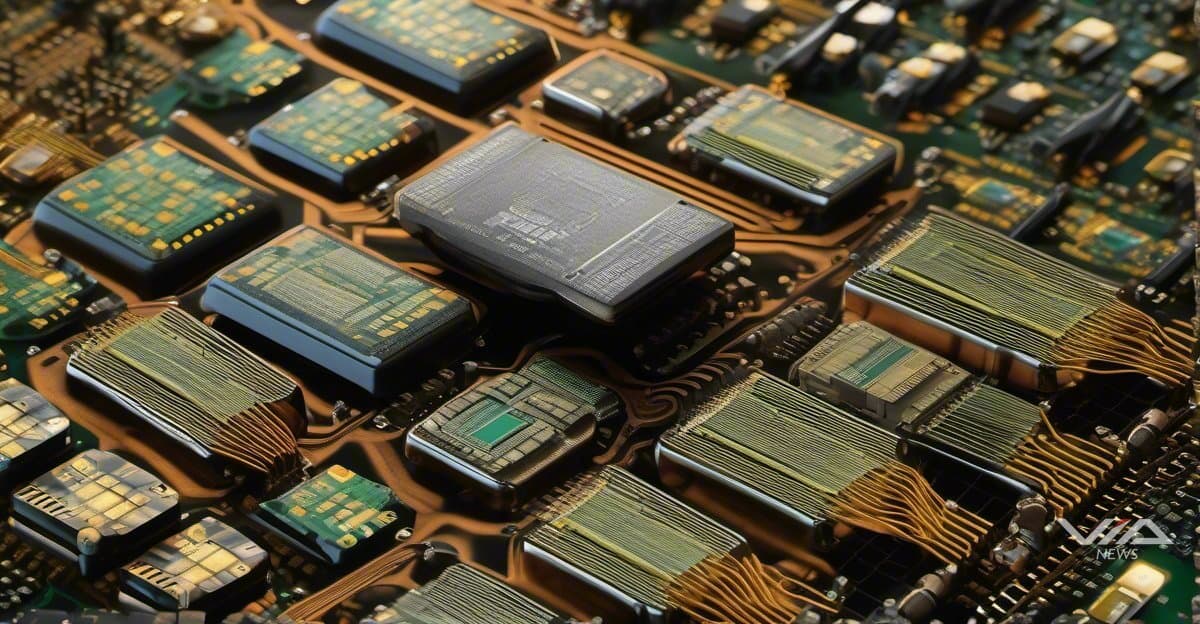
Amkor Technology posted record earnings in its latest quarter, even as AI infrastructure and semiconductor stocks sold off broadly.5 Leveraged ETFs tracking the sector are down sharply from their recent highs, but the manufacturing side of the chip supply chain is showing no comparable strain.
SK hynix has locked in new AI-memory supply agreements, reinforcing demand for the high-bandwidth memory that powers AI data centers.1 The commitments suggest chipmakers are still racing to keep pace with AI buildout even as investors question whether capital spending levels are sustainable.
GlobalFoundries received a $300 million CHIPS Act award alongside a government equity stake, adding public money to the push to expand US-based chip manufacturing capacity.3 The award lands as foundries face pressure to scale output for AI accelerators and specialty chips without the multi-year lead times that have constrained supply in past cycles.
Consolidation is reshaping the supply base too. Skyworks and Qorvo announced their expected joint leadership team ahead of a planned merger, with Bob Bruggeworth citing a partnership that has shaped their integration planning "from the very beginning."2 The deal combines two RF-chip makers as demand shifts toward AI-capable connectivity hardware.
Kalray, a French chipmaker, struck a partnership with Bull to develop high-speed networking technology for next-generation AI and high-performance computing infrastructure. CEO Éric Baissus said the collaboration aims to deliver "increased performance, greater flexibility and improved efficiency" as AI reshapes infrastructure needs across sectors.4
Separately, Safe Superintelligence raised $5 billion in a round backed by Nvidia, underscoring continued capital flowing into AI development even as public semiconductor equities wobble. The divergence points to a split market: physical supply chains for AI chips are still tightening in favor of demand, while investor sentiment around the stocks that supply them has turned cautious.
Apple's leadership transition from Tim Cook to John Ternus adds a further layer of structural change atop a sector already absorbing consolidation and new capacity commitments.