
Thursday, September 10, 2026

DRAM Shortage Hits 4% Supply Gap as AI Infrastructure Demand Outpaces Chip Production

AI infrastructure orders from hyperscalers have created a 4% supply-demand gap in DRAM chips, pushing memory prices toward record highs. The AMD-Meta 6GW GPU partnership exemplifies demand outpacing semiconductor manufacturing capacity, with new fabs requiring 18+ months to come online. The bottleneck threatens to constrain AI model training pipelines as memory and GPU shortages intensify.

DRAM Shortage Hits 4% Supply Gap as AI Infrastructure Demand Outpaces Chip Production
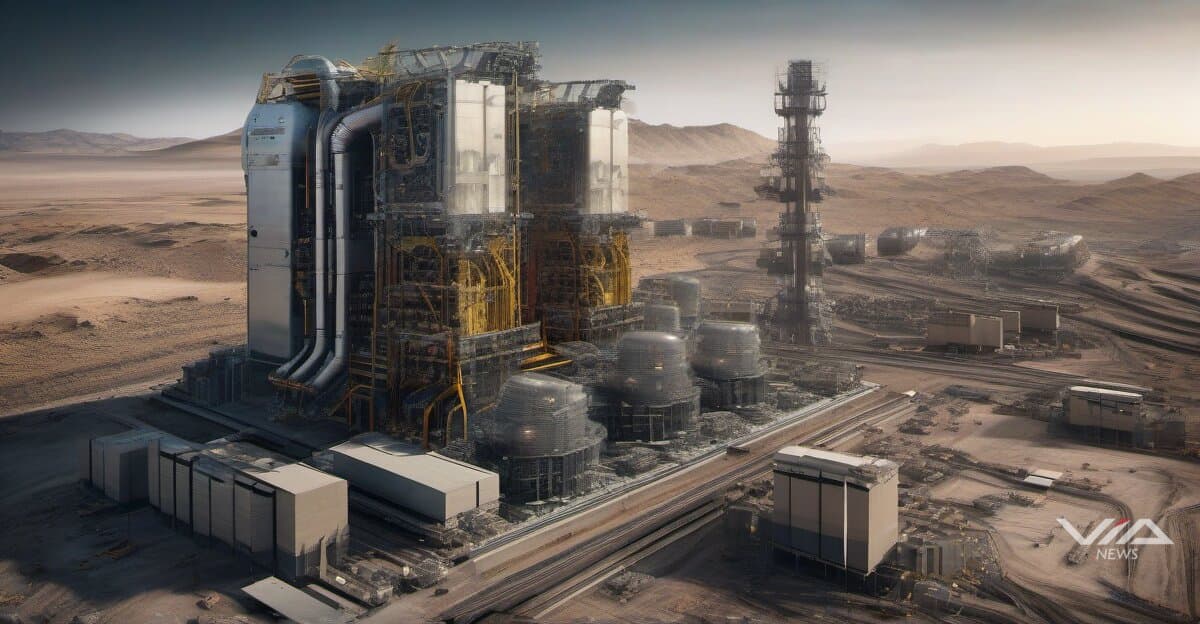
Image generated by AI for illustrative purposes. Not actual footage or photography from the reported events.
Loading stream...

AI infrastructure demand has triggered a 4% supply-demand gap in DRAM chips, creating the most severe memory shortage since the last semiconductor supercycle. Memory prices are climbing toward parabolic territory as hyperscalers compete for limited chip supplies.

The AMD-Meta partnership for 6GW of GPU capacity illustrates the scale mismatch. AI training clusters require massive memory configurations, but DRAM production cannot expand fast enough to meet orders. New fabrication plants cost $15 billion or more and take 18 months minimum to reach production, guaranteeing capacity arrives long after demand spikes.

Semiconductor indices trade near record highs as investors bet on an AI-driven supercycle. Camtek Ltd. projects double-digit revenue growth for 2026 based on its order backlog, signaling sustained equipment demand from chipmakers racing to expand. The company expects Q1 2026 revenues around $120 million, with acceleration in the second half.

The cyclical nature of DRAM manufacturing amplifies the crisis. Chipmakers hesitate to invest in new fabs during downturns, leaving them cash-constrained when boom times return. This boom-bust pattern means production capacity consistently lags behind AI infrastructure buildouts.

GPU shortages compound the memory bottleneck. Training advanced AI models requires balanced ratios of processing power to memory bandwidth. Shortages in either component create idle capacity in the other, reducing overall training throughput for AI labs.

The supply constraints pose direct risks to AI development timelines. Labs planning large-scale training runs face delays acquiring hardware, potentially pushing back product launches. Smaller AI companies struggle to compete for limited chip allocations against hyperscalers with guaranteed supply contracts.

Industry analysts warn the supply-demand imbalance could persist through 2027. Semiconductor manufacturers are greenlighting new fab construction, but the 18-month lead time means relief won't materialize until late 2026 at earliest. Until then, hardware bottlenecks will constrain AI scaling plans across the industry.

Source documents

Via News is a conduit. We point to the source documents behind this report — we don't replace them. Trace any claim to its source and decide what to trust. How we source

Source Trace Score12 source documents12 with a live linkVerifiability: Strong
  1. [1]News articleYahoo Finance· February 23, 2026
    Adeia Announces Record Fourth Quarter and Full Year 2025 Financial Results
  2. [2]News articleYahoo Finance· February 18, 2026
    CAMTEK ANNOUNCES RECORD RESULTS FOR THE FOURTH QUARTER & FULL YEAR 2025
  3. [3]Press releaseGlobeNewswire· November 11, 2025
    Grab Pilots High-Accuracy GPS Positioning System to Improve Location and Navigation Accuracy of GrabMaps in Singapore
  4. [4]News articleIEEE Spectrum
    How and When the Memory Chip Shortage Will End
  5. [5]Press releaseGlobeNewswire· January 16, 2026
    Micron Celebrates Official Groundbreaking at New York Megafab Site
  6. [6]News articleYahoo Finance· February 15, 2026
    Rampant AI Demand for Memory Is Fueling a Growing Chip Crisis
  7. [7]News articleUk· January 16, 2026
    Stocks to watch next week: Netflix, Intel, Burberry, JD Wetherspoon and JD Sports
  8. [8]Press releaseGlobeNewswire· February 5, 2026
    Trillion-Yuan Innovation Hub Empowers Growth, SIXUNITED Targets RMB 10 Billion Revenue and 15 Million AI Terminals by 2026
  9. [9]News articleYahoo Finance· February 22, 2026
    5 big analyst AI moves: Nvidia stock ’likely to outperform in 2H26’
  10. [10]News articleYahoo Finance· February 24, 2026
    AMD and Meta Announce Expanded Strategic Partnership to Deploy 6 Gigawatts of AMD GPUs
  11. [11]News articleYahoo Finance· December 8, 2025
    Apple won’t be the same in 2026. Meet the company’s next generation of leaders and rising stars after its biggest executive exodus in years
  12. [12]News articleYahoo Finance· February 24, 2026
    Panasonic Automotive Systems secures industry-wide endorsement for its initiative to standardize VirtIO device virtualization technology
What we know · the intelligence behind this page
Live from the substrate
What we're seeing
AI Capital Boom Meets Valuation Jitters: Funding Surges While Bellwether Stocks Wobble
A dense wave of AI-sector funding (Socure, Stability AI, Emerald AI, Generalist AI, Gatik, Regent Craft and others closing rounds on the same day) and strong enterprise-automation earnings (UiPath raising full-year guidance) point to continued heavy capital deployment into AI infrastructure, fintech-adjacent AI, and agentic automation. Yet Palantir's stock fell even after winning the Army's high-profile TITAN contract, and commentary (e.g., the Alphabet bull case citing AI capex and regulatory risk) signals growing investor unease about whether current AI valuations and spending levels are sustainable.
Our read on the data ›
Signals we're tracking
Satellite-Terrestrial Network Integration Acceleration
Increased investment and launches in hybrid satellite-cellular networks across telecom industry; competitive responses from other carriers; regulatory activity around satellite spectrum; expansion of emergency/rural connectivity use cases
Patterns we're watching ›
Where sources disagree
JPMorgan Chase & Co.
Both facts represent the same entity (JPMorgan Chase & Co.), same attribute (EPS), and same observation date (2025-12-31), which aligns with FY 2025 year-end reporting. Fact A explicitly states FY 2025 with EPS of 20.02 USD/share. Fact B has an unspecified fiscal period (N/A) but reports 4.63 USD, a significantly different value (4.3x lower). Given identical observation dates and the same metric, both facts appear intended to represent FY 2025 annual EPS. The conflicting values (20.02 vs 4.63) constitute a direct contradiction. The N/A period in Fact B suggests incomplete or corrupted metadata rather than legitimate time-period variation.
We flag conflicts openly ›
Recently verified
Checked against the original source
4,981
facts traced to their source — and we flag the ones that don't hold up.
101 entities tracked4,981 facts checked against source5,278 source documents archived
Query this data → isubstrate.com