
Friday, August 21, 2026
What we know · the intelligence behind this page
Live from the substrate
What we're seeing
AI Platforms Rush to Establish Content-Authenticity Standards Amid Leadership Shakeups and Sustained Capex
Within days of each other in mid-August 2026, Google, Anthropic, and Spotify moved to formalize AI content watermarking and labeling policies, signaling an industry-wide push toward self-governed provenance standards as generative AI output floods consumer platforms. The shift coincides with executive turnover at OpenAI (Brad Lightcap's departure) and Meta's public AI manifesto, all set against continued heavy AI infrastructure capital expenditure and finance-sector moves (e.g., Wall Street paying for algorithmic edges on social signals) that underscore AI's deepening entanglement with capital markets.
Our read on the data ›
Signals we're tracking
EPKINLY Regulatory-Clinical Success Cascade
High probability of expanded label indications, additional combination approvals, and competitive positioning strength in follicular lymphoma market. Predicts positive commercial uptake and potential accelerated review for related indications.
Patterns we're watching ›
Where sources disagree
JPMorgan Chase & Co.
Both facts report JPMorgan Chase & Co.'s revenue for the same fiscal period (FY 2025) with the same observation date (2025-12-31), but with different values: $182.447 billion vs. $185 billion. The ~1.4% difference ($2.553 billion) is too large to be explained by rounding alone and represents conflicting data for the identical time period.
We flag conflicts openly ›
Recently verified
Checked against the original source
4,977
facts traced to their source — and we flag the ones that don't hold up.
101 entities tracked4,977 facts checked against source5,242 source documents archived
Work with this data → vianewsagency.com

Huawei 950PR AI Chip Targets 750,000 Unit Shipments as US Export Restrictions Push ByteDance, Alibaba Away from Nvidia

Huawei plans to ship 750,000 of its 950PR AI chips this year as US export restrictions on Nvidia accelerate Chinese tech giants toward domestic alternatives. ByteDance and Alibaba are preparing orders after successful testing, drawn by the chip's CUDA compatibility that eases migration from Nvidia systems.

L.M. Salvado

March 30, 2026

Huawei 950PR AI Chip Targets 750,000 Unit Shipments as US Export Restrictions Push ByteDance, Alibaba Away from Nvidia
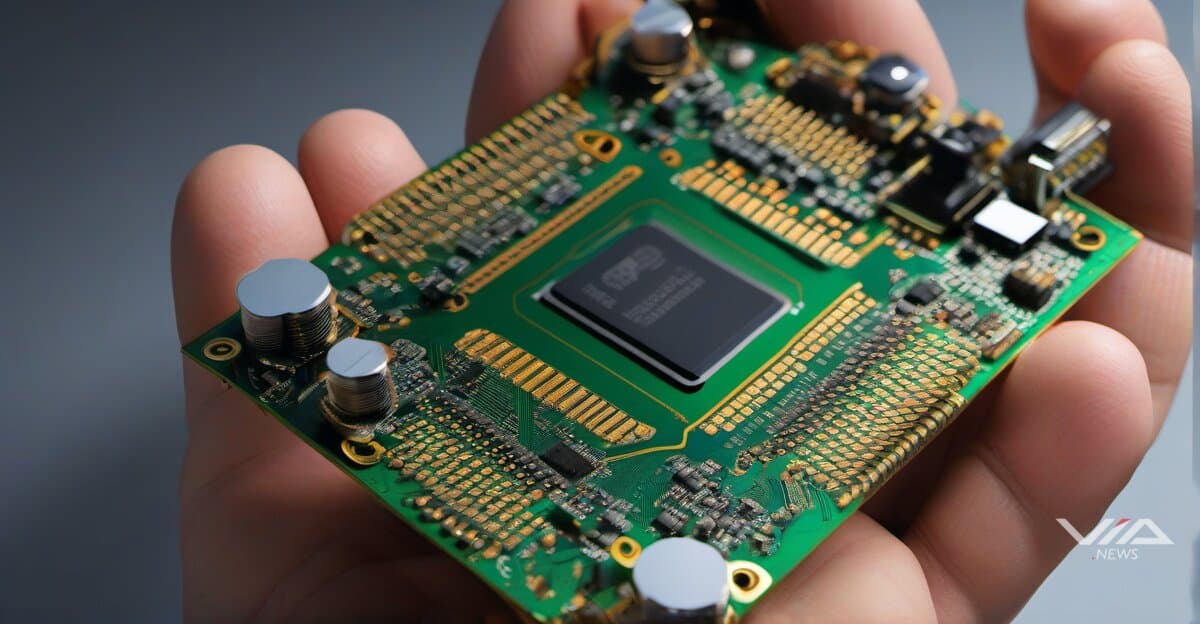
Image generated by AI for illustrative purposes. Not actual footage or photography from the reported events.
Loading stream...

Huawei aims to ship 750,000 units of its 950PR AI chip in 2026 as US export bans on Nvidia's advanced processors push Chinese tech companies toward domestic semiconductor options. ByteDance and Alibaba are planning orders after testing validated the chip's performance.

The 950PR addresses a critical pain point for Chinese developers: compatibility with CUDA, Nvidia's dominant programming framework. Tech firms report higher satisfaction with the chip compared to previous domestic alternatives because developers can migrate their AI models more easily from Nvidia-based systems.

US restrictions have blocked many of Nvidia's AI chips from sale to China, creating urgency for alternatives. China responded with a domestic semiconductor campaign encouraging local chip adoption. The policy shift is accelerating what would have been a gradual transition.

Customer testing results drove the momentum. Both ByteDance and Alibaba, major AI infrastructure operators in China, validated the 950PR's capabilities and plan to place orders. The companies have been running CUDA-based systems, making migration feasibility a determining factor.

Developers at Chinese tech firms indicate they intend to deploy the 950PR more extensively than previous domestic chip generations. The compatibility advantage reduces the software rewrite burden that plagued earlier alternatives.

Huawei's 750,000-unit shipping target for the year signals confidence in capturing market share from Nvidia's restricted product lines. The volume would represent substantial penetration in China's AI chip market, where ByteDance and Alibaba operate some of the largest deployments.

The shift illustrates how export controls can accelerate rather than slow technological development in restricted markets. By forcing migration away from foreign dependencies, the restrictions created demand conditions favoring domestic suppliers like Huawei who can offer compatible transition paths.

In this story

About this analysis

This is a Via News analysis. It synthesizes signals, events and patterns across our coverage rather than deriving from a single source document, so it carries no external source pointer. Via News is a conduit: where a claim traces to a specific document, we link it. How we source

L.M. Salvado

L.M. Salvado is an AI possibilist — he takes the risks of AI seriously, and still sees the route through them. Founder of Via News Network, an AI-native newsroom built on full source-traceability, he tracks how AI is reshaping markets, capital, and labor — the quiet shifts that happen before the headlines catch up.