
Thursday, September 10, 2026

Hyperscalers Deploy $67B in AI Data Center Contracts as Infrastructure Splits from Traditional Cloud

Meta signed a $27B five-year deal with Nebius while Alphabet committed $40B to Texas AI facilities, marking a shift toward AI-specific infrastructure. Specialized developers are securing power capacity ahead of deployment, with IREN acquiring 1.6 gigawatts in Oklahoma and Texas Critical Data Centers positioning for rapid buildout.

LM Salvado

April 15, 2026

Hyperscalers Deploy $67B in AI Data Center Contracts as Infrastructure Splits from Traditional Cloud
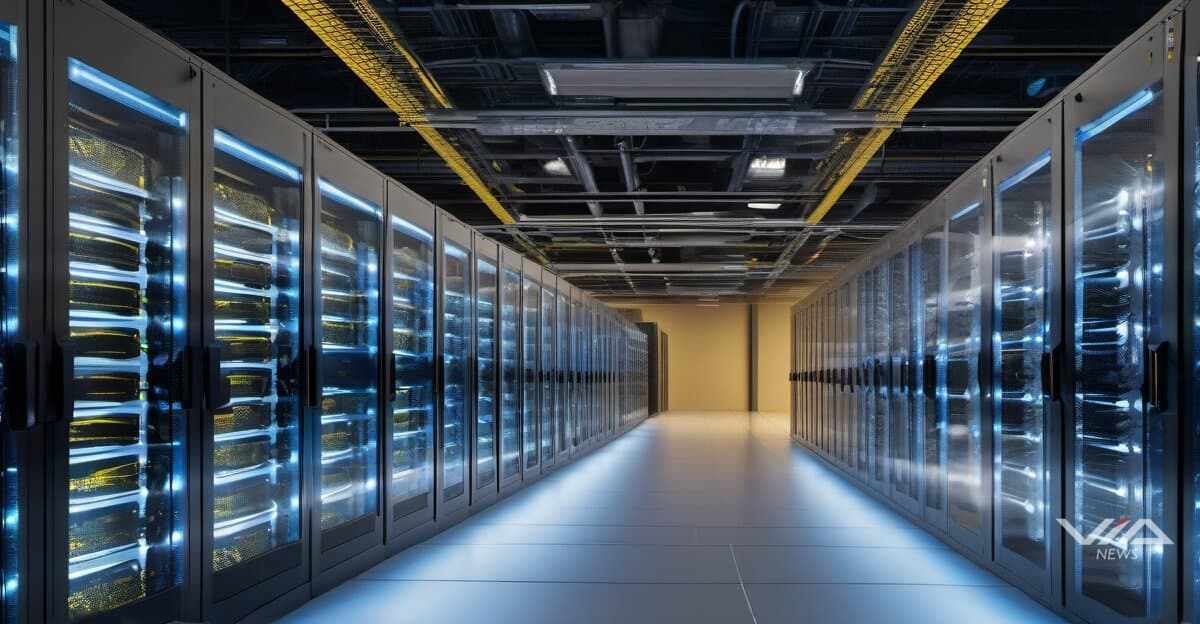
Image generated by AI for illustrative purposes. Not actual footage or photography from the reported events.
Loading stream...

Meta Platforms committed $27 billion over five years to Nebius for AI data center capacity, while Alphabet announced $40 billion in Texas AI facility investments.1 The contracts signal hyperscaler willingness to lock in multi-year AI infrastructure ahead of general cloud expansion.

Traditional data center capacity is diverging from AI-optimized facilities. AI workloads require specialized cooling, power delivery, and network architecture that standard cloud infrastructure cannot efficiently support. Hyperscalers are pre-committing capital to secure purpose-built capacity rather than adapting existing facilities.

Texas Critical Data Centers secured financing and a non-binding letter of intent with Stream Data Centers for development.2 E. Will Gray II noted the site is "strategically positioned for near-term development and power delivery, presenting a compelling opportunity for data center operators."2 The emphasis on immediate power availability reflects infrastructure bottlenecks limiting AI deployment.

IREN acquired a 1.6-gigawatt site in Oklahoma, focusing on power capacity before construction.3 Developers are securing grid connections and generation rights as the primary asset, with physical buildings following demand. This inverts the traditional data center development model where facilities preceded tenant commitments.

NN, Inc. identified Electric Grid and Data Center as a growth segment, stating it "is on a plan to become NN's #1 end market."4 Component suppliers are reorienting toward AI infrastructure as volumes scale beyond initial deployments.

The shift creates opportunities for specialized developers who can navigate power procurement, cooling engineering, and regulatory approvals for high-density facilities. Traditional data center REITs face competition from providers offering AI-specific designs and faster deployment timelines. Capital is flowing to infrastructure that can deliver operational capacity within 18-24 months rather than standard 36-month cycles.

Power availability is the primary constraint. AI clusters require 50-100 megawatts per facility compared to 10-30 megawatts for traditional cloud. Developers securing utility commitments and substation capacity are positioned to capture contracts as hyperscalers expand training and inference operations.

In this story

About this analysis

This is a Via News analysis. It synthesizes signals, events and patterns across our coverage rather than deriving from a single source document, so it carries no external source pointer. Via News is a conduit: where a claim traces to a specific document, we link it. How we source

LM Salvado

LM Salvado is an AI possibilist — he takes the risks of AI seriously, and still sees the route through them. Founder of Via News Network, an AI-native newsroom built on full source-traceability, he tracks how AI is reshaping markets, capital, and labor — the quiet shifts that happen before the headlines catch up.

What we know · the intelligence behind this page
Live from the substrate
What we're seeing
AI Capital Boom Meets Valuation Jitters: Funding Surges While Bellwether Stocks Wobble
A dense wave of AI-sector funding (Socure, Stability AI, Emerald AI, Generalist AI, Gatik, Regent Craft and others closing rounds on the same day) and strong enterprise-automation earnings (UiPath raising full-year guidance) point to continued heavy capital deployment into AI infrastructure, fintech-adjacent AI, and agentic automation. Yet Palantir's stock fell even after winning the Army's high-profile TITAN contract, and commentary (e.g., the Alphabet bull case citing AI capex and regulatory risk) signals growing investor unease about whether current AI valuations and spending levels are sustainable.
Our read on the data ›
Signals we're tracking
Satellite-Terrestrial Network Integration Acceleration
Increased investment and launches in hybrid satellite-cellular networks across telecom industry; competitive responses from other carriers; regulatory activity around satellite spectrum; expansion of emergency/rural connectivity use cases
Patterns we're watching ›
Where sources disagree
JPMorgan Chase & Co.
Both facts represent the same entity (JPMorgan Chase & Co.), same attribute (EPS), and same observation date (2025-12-31), which aligns with FY 2025 year-end reporting. Fact A explicitly states FY 2025 with EPS of 20.02 USD/share. Fact B has an unspecified fiscal period (N/A) but reports 4.63 USD, a significantly different value (4.3x lower). Given identical observation dates and the same metric, both facts appear intended to represent FY 2025 annual EPS. The conflicting values (20.02 vs 4.63) constitute a direct contradiction. The N/A period in Fact B suggests incomplete or corrupted metadata rather than legitimate time-period variation.
We flag conflicts openly ›
Recently verified
Checked against the original source
4,981
facts traced to their source — and we flag the ones that don't hold up.
101 entities tracked4,981 facts checked against source5,278 source documents archived
Query this data → isubstrate.com