
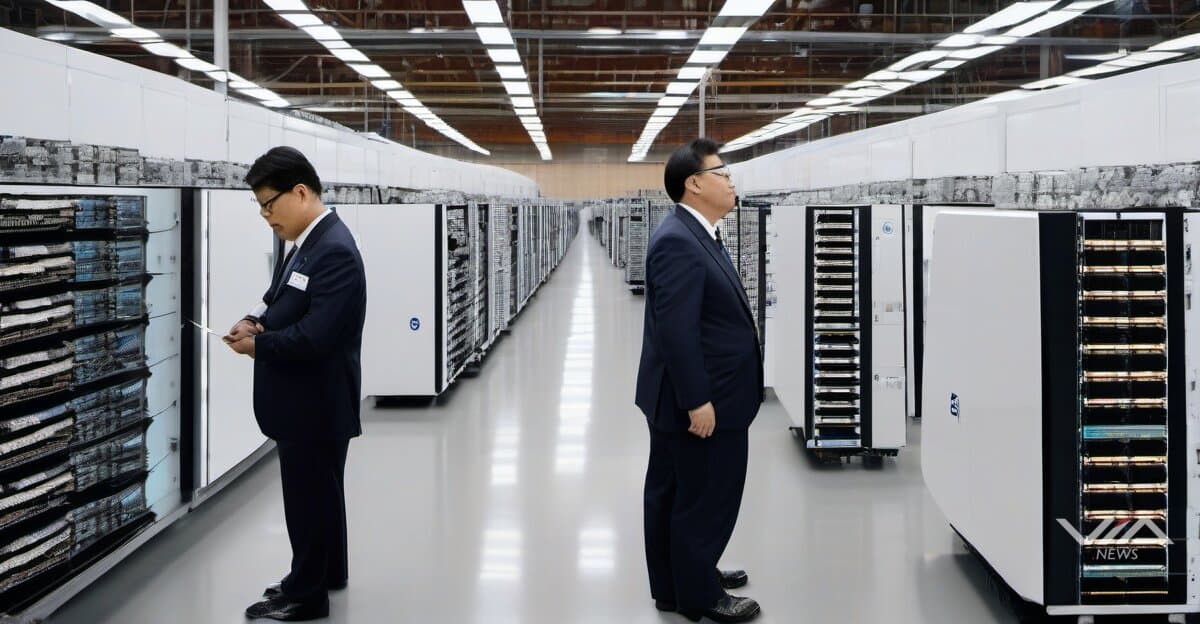
Samsung's semiconductor division posted a 48-fold jump in profit, while SK Hynix's first-quarter profit rose 406%, both driven by surging AI chip demand.1 Samsung and SK Hynix have each topped $1 trillion in market capitalization, a first for Korean chipmakers.1
The windfall is showing up in national accounts. Chip exports are lifting South Korea's overall GDP figures, and the two companies now anchor a growing share of the country's industrial output.1 Chip workers have become a coveted status symbol domestically, with well-paid semiconductor engineers now sought-after prospects on the marriage market.1
Labor unions at both firms have negotiated bonus-sharing deals tied to the record profits, funneling part of the earnings boom directly to employees.1 Policymakers have gone further, floating a proposed "AI dividend" that would extend some of the chip windfall beyond the two companies' workforces to the broader public.1
Not everyone is celebrating evenly. The Bank of Korea has warned the boom is producing a K-shaped economy: sharp gains concentrated in chipmakers and their employees, while growth in other sectors lags behind.1 The divergence mirrors a pattern showing up globally as AI infrastructure spending funnels wealth toward a narrow band of hardware suppliers.
The tension sets up a policy debate ahead: whether Seoul spreads the chip windfall through mechanisms like the proposed AI dividend, or leaves the K-shaped split to widen as Samsung and SK Hynix keep riding AI demand to fresh records.