
SOXX, the iShares Semiconductor ETF, is up 79% year-to-date and 152% over one year as of June 5, 2026 — a sustained rally reflecting genuine structural demand, not speculation alone.1 The gains map directly onto a two-track AI chip race: U.S.-aligned manufacturers accelerating product launches while Chinese chipmakers push for silicon independence under tightening export constraints.
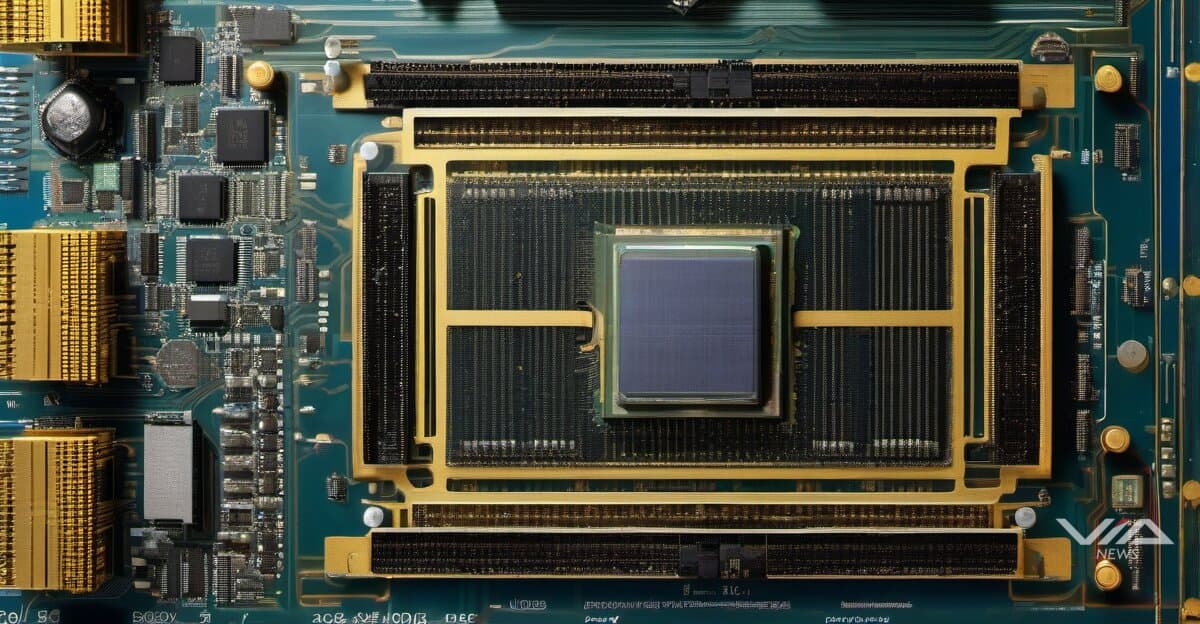
Inspire Semiconductor Holdings unveiled Thunderbird I, described by the company as a "supercomputer-cluster-on-a-chip" datacenter accelerator.2 Target verticals include financial services, computer-aided engineering, energy, climate modeling, cybersecurity, and life sciences and drug discovery.2 The design targets sectors where general-purpose GPU clusters are expensive to deploy and oversized for specific workloads.
Memory capacity is the second front. Phison's aiDAPTIV technology, developed in collaboration with Intel, expands available memory for AI workloads on Intel AI PC platforms.3 The technology is aimed at locally-run agentic applications and larger mixture-of-experts models — workloads that currently require cloud infrastructure or oversized hardware.3 The pitch is privacy and efficiency: run capable AI on-device, not in a data center.
Chinese manufacturers operate under a different constraint set. U.S. rare earth bans and defense procurement restrictions are compressing the supply chain available to domestic producers. Zhenwu's J900 and V900 chips target AI silicon self-sufficiency, with a 2027–2028 horizon for meaningful volume.
Vertical integration is accelerating beyond chips. Tesla-SpaceX convergence and a potential SpaceX IPO signal that compute, satellites, and energy are consolidating around a small number of single-stack players. Owning every layer insulates against the supply chain fragmentation now squeezing specialized vendors.
The academia-to-industry design gap is widening in parallel. In academic chip labs, researchers receive 40 chips from TSMC's prototyping service and consider a run successful with just 5–10 functional units — sufficient for a publication.4 Industry tolerates none of that attrition rate. As AI chip complexity scales, the gap between academic design tolerances and commercial fab requirements is becoming a talent pipeline constraint.
The competition has shifted. Raw compute leadership was once the only metric; efficiency, ecosystem depth, and supply chain control now define who wins the AI infrastructure layer.