
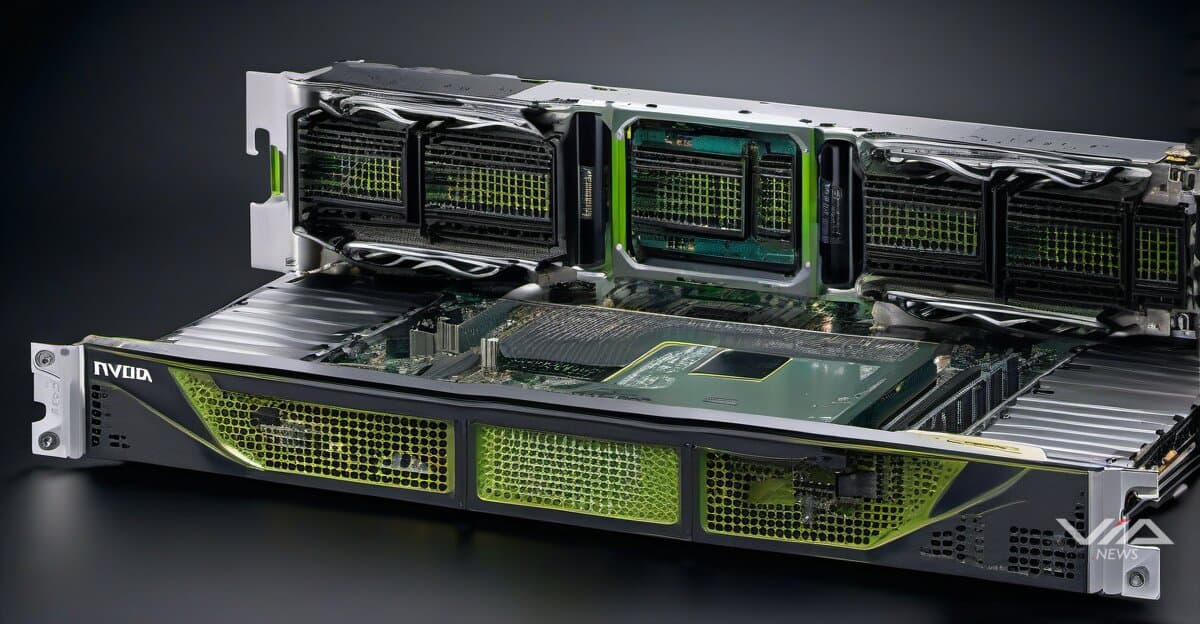
Supermicro launched a complete infrastructure ecosystem for NVIDIA's Rubin GPU platforms, covering both the Vera Rubin NVL72 and HGX Rubin NVL8 configurations simultaneously.1
The release bundles four infrastructure layers: Quantum-X800 InfiniBand networking, DLC-2 direct liquid cooling, a software suite, and context memory storage — all packaged as DCBBS (Data Center Building Block Solutions) blueprints.1
Coordinated multi-layer launches of this kind are rare. Vendors typically release compute hardware first, then network and cooling components follow months later. Supermicro's simultaneous delivery across all layers indicates the Rubin platform has cleared engineering validation and is ready for data center deployment.1
What the Stack Covers
The Vera Rubin NVL72 targets hyperscale AI training workloads at the rack cluster level. The HGX Rubin NVL8 addresses dense server deployments for inference and mixed workloads.
Quantum-X800 InfiniBand is NVIDIA's highest-bandwidth fabric, designed for tightly coupled GPU-to-GPU communication across large training runs. DLC-2 liquid cooling handles the thermal density that air cooling cannot support at Rubin-class power envelopes.
Context memory storage — included in the blueprint — addresses a persistent bottleneck in large language model inference: fast retrieval of long-context state between GPU memory and storage tiers.
What It Predicts for Infrastructure Spending
The Rubin ecosystem entering production ramp has direct consequences for capital expenditure cycles.1 Large data center procurement announcements typically follow ecosystem readiness by one to two quarters.
Hyperscalers setting capex guidance for Q3–Q4 2026 will be pricing Rubin-generation hardware into their roadmaps. NVIDIA's supply chain — memory, networking, cooling — stands to see order volumes accelerate as deployment commitments convert into purchase orders.1
For AI infrastructure buyers, the practical implication is straightforward: the blueprint stack removes integration risk. Customers receive a validated, co-engineered reference design rather than assembling components from separate vendor roadmaps.
Broader Context
The Rubin architecture succeeds Hopper and Blackwell in NVIDIA's data center GPU roadmap. Each generation has compressed the time between announcement and ecosystem readiness. Rubin's coordinated launch compresses that gap further — a signal that the infrastructure industry is building more parallel, not sequential, delivery pipelines around NVIDIA's platform cycles.