
Thursday, September 10, 2026

Google TPU Chips and Gemini Models Now Powering Autonomous Crypto Trading Systems

Advanced AI infrastructure including Google TPU chips and Gemini 3 Pro models is being deployed in cryptocurrency trading platforms. Traditional market maker Flow Traders launched dedicated deep learning initiatives while crypto platforms BitMart and nof1.ai rolled out AI trading assistants and autonomous trading competitions with real capital.

Google TPU Chips and Gemini Models Now Powering Autonomous Crypto Trading Systems
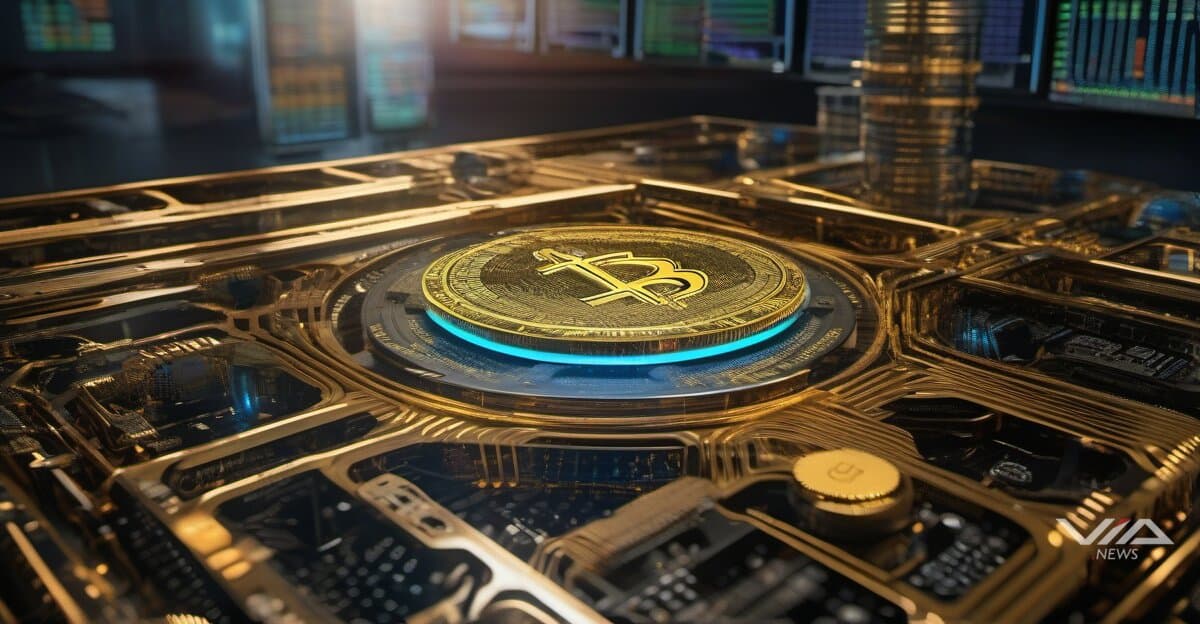
Image generated by AI for illustrative purposes. Not actual footage or photography from the reported events.
Loading stream...

Google TPU chips and Gemini 3 Pro models are now running autonomous cryptocurrency trading systems as AI infrastructure moves from research labs into live markets. BitMart and nof1.ai deployed AI-powered trading assistants this month, with nof1.ai launching autonomous trading competitions using real capital deployment.

Flow Traders, a traditional market maker, established dedicated deep learning initiatives specifically for algorithmic trading. The infrastructure shift enables real-time pattern recognition across multiple exchanges and asset classes simultaneously—a processing task impossible with conventional computing architecture.

Trading platforms are combining TPU acceleration with large language models to analyze market sentiment, execute trades, and adjust positions without human intervention. Gemini 3 Pro's multimodal capabilities allow systems to process financial documents, social media sentiment, and price data through unified models.

The deployment coincides with volatile regulatory conditions. USDT faced a recent downgrade while China reaffirmed its cryptocurrency ban. Bitcoin reached all-time highs despite regulatory uncertainty, creating opportunities for AI systems designed to navigate rapid market shifts.

Autonomous trading competitions at nof1.ai pit different AI models against each other with actual capital at risk. Participants deploy custom algorithms running on cloud TPU infrastructure, competing on risk-adjusted returns rather than raw profit.

Traditional finance firms are responding to crypto-native AI innovation. Flow Traders' deep learning initiative signals institutional recognition that competitive advantage now requires dedicated AI infrastructure rather than conventional quantitative methods.

The infrastructure requirements are substantial. TPU clusters process millions of market data points per second, while Gemini models analyze news flows and social sentiment in real-time. This compute intensity creates barriers to entry—only well-capitalized platforms can afford the infrastructure costs.

Market complexity is increasing as AI systems interact with each other. When multiple autonomous traders respond to the same signals simultaneously, they create feedback loops that human traders struggle to anticipate. This dynamic is reshaping market microstructure in ways regulators have not yet addressed.

The convergence of advanced AI chips, frontier language models, and cryptocurrency markets represents a new phase in algorithmic trading where infrastructure determines competitive position.

Source documents

Via News is a conduit. We point to the source documents behind this report — we don't replace them. Trace any claim to its source and decide what to trust. How we source

Source Trace Score3 source documents3 with a live linkVerifiability: Strong
  1. [1]Press releaseGlobeNewswire· January 13, 2026
    BitMart 2025 Annual Review: Building a More Complete Financial Infrastructure to Drive Long-Term Sustainable Growth
  2. [2]Press releaseGlobeNewswire· December 5, 2025
    CoinEx Research November 2025 Report: Painvember's Brutal Reality Check
  3. [3]News articleYahoo Finance· February 12, 2026
    Flow Traders 4Q and FY 2025 Results

In this story

What we know · the intelligence behind this page
Live from the substrate
What we're seeing
AI Capital Boom Meets Valuation Jitters: Funding Surges While Bellwether Stocks Wobble
A dense wave of AI-sector funding (Socure, Stability AI, Emerald AI, Generalist AI, Gatik, Regent Craft and others closing rounds on the same day) and strong enterprise-automation earnings (UiPath raising full-year guidance) point to continued heavy capital deployment into AI infrastructure, fintech-adjacent AI, and agentic automation. Yet Palantir's stock fell even after winning the Army's high-profile TITAN contract, and commentary (e.g., the Alphabet bull case citing AI capex and regulatory risk) signals growing investor unease about whether current AI valuations and spending levels are sustainable.
Our read on the data ›
Signals we're tracking
Satellite-Terrestrial Network Integration Acceleration
Increased investment and launches in hybrid satellite-cellular networks across telecom industry; competitive responses from other carriers; regulatory activity around satellite spectrum; expansion of emergency/rural connectivity use cases
Patterns we're watching ›
Where sources disagree
JPMorgan Chase & Co.
Both facts represent the same entity (JPMorgan Chase & Co.), same attribute (EPS), and same observation date (2025-12-31), which aligns with FY 2025 year-end reporting. Fact A explicitly states FY 2025 with EPS of 20.02 USD/share. Fact B has an unspecified fiscal period (N/A) but reports 4.63 USD, a significantly different value (4.3x lower). Given identical observation dates and the same metric, both facts appear intended to represent FY 2025 annual EPS. The conflicting values (20.02 vs 4.63) constitute a direct contradiction. The N/A period in Fact B suggests incomplete or corrupted metadata rather than legitimate time-period variation.
We flag conflicts openly ›
Recently verified
Checked against the original source
4,981
facts traced to their source — and we flag the ones that don't hold up.
101 entities tracked4,981 facts checked against source5,278 source documents archived
Query this data → isubstrate.com