
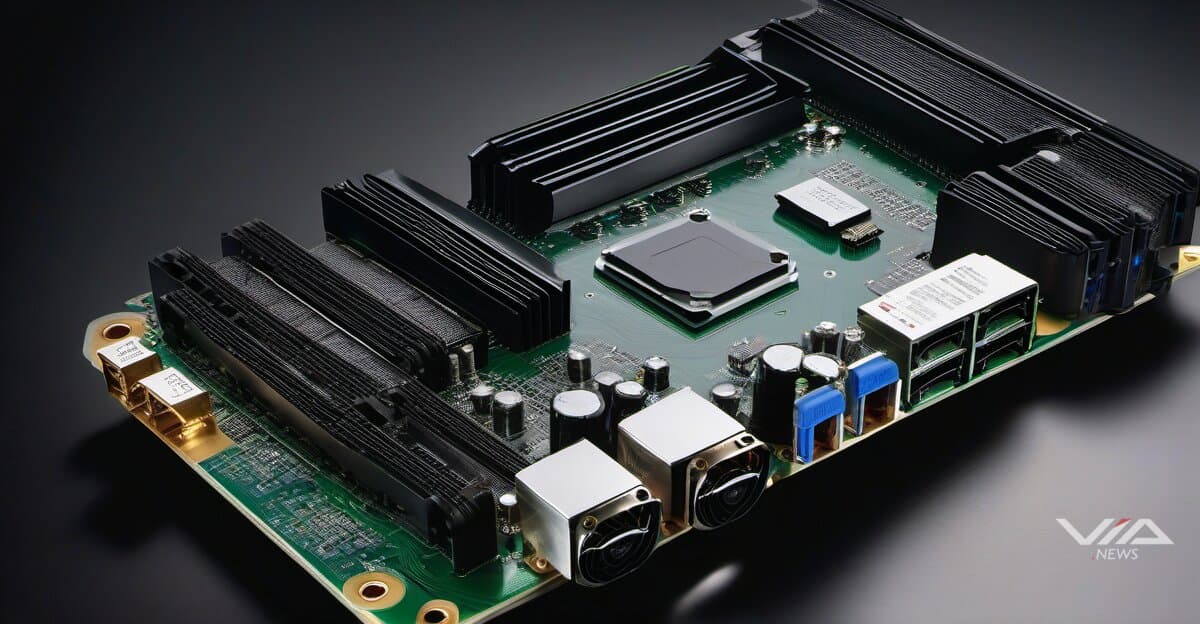
Supermicro released DCBBS Blueprints for NVIDIA's Vera Rubin NVL72 and HGX Rubin NVL8 on June 1, 2026, offering turnkey reference architectures for large-scale AI factory builds.1
The Vera Rubin platform doubles AI factory performance density compared to prior generations, according to Supermicro.1 For hyperscalers under pressure to maximize compute per square foot, that metric matters more than raw chip specs.
At the core of the blueprint is DLC-2 Direct Liquid Cooling.1 Supermicro engineered the system for near-total heat capture, a requirement as rack power densities climb beyond what traditional air cooling can handle. Liquid cooling is no longer optional at NVL72 scale — it is the architecture.
Supermicro is positioning these blueprints on the back of a track record it claims includes the world's largest liquid-cooled AI factory deployments.1 That credibility matters in a market where operators need certainty before committing to nine-figure infrastructure buildouts.
The DCBBS (Data Center Building Block Solutions) model gives customers a pre-validated stack: servers, networking, power, and cooling configured together. This reduces integration risk and compresses deployment timelines — factors that grow more valuable as AI compute demand outpaces supply chain lead times.
NVIDIA's Vera Rubin generation marks a significant step beyond the Hopper and Blackwell cycles. The NVL72 form factor, with 72 GPUs in a single rack-scale unit, demands infrastructure partners who can deliver at that density. Supermicro's early blueprint release signals an attempt to lock in design wins before the Vera Rubin wave crests.
Whether the launch translates to revenue growth depends on order conversion over the next two quarters. The blueprint strategy reduces friction for buyers but does not guarantee contract timing. Hyperscalers operate on their own procurement cycles, and Vera Rubin availability will be the binding constraint near-term.
The AI infrastructure stack is consolidating around a small number of system integrators capable of operating at NVL72 density and scale. Supermicro's June 1 move is a direct play for that position.