
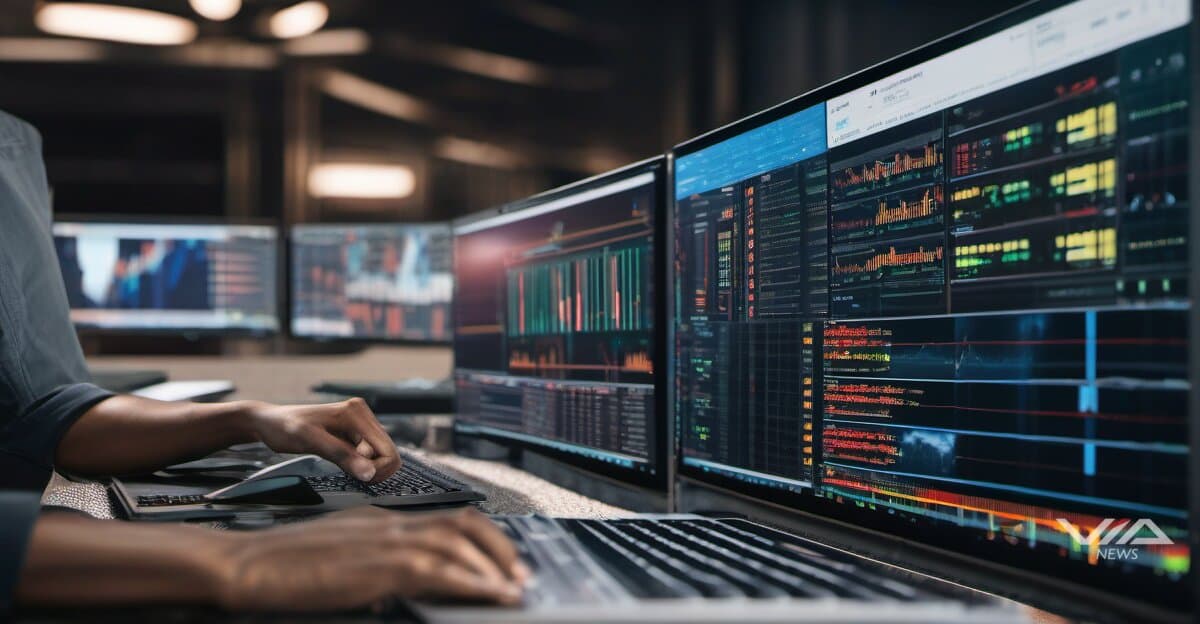
Meta's hardware migration to Google TPUs coincides with releases of Gemini 3 Pro and kimi-k2-thinking models, creating new infrastructure for autonomous trading systems. These AI advances are being deployed directly into crypto markets experiencing extreme volatility.
BitMart launched three AI trading products: Beacon for market analysis, X Insight for social sentiment tracking, and AI Trading Arena for strategy deployment. Separately, nof1.ai's Alpha Arena operates with $320K in real capital, demonstrating that AI trading systems have moved beyond backtesting to live market execution.
The timing tests these systems against actual market stress. Bitcoin reached all-time highs before entering a November correction. Prediction market volumes surged simultaneously, creating the volatility conditions that expose weaknesses in algorithmic trading approaches.
Traditional finance firms are investing in parallel infrastructure. Flow Traders allocated resources to deep learning trading initiatives, bridging conventional market-making expertise with AI model capabilities. This convergence suggests institutional validation of AI trading technology beyond crypto-native platforms.
Hardware shifts matter for trading systems. TPUs offer different performance characteristics than GPUs for model inference, potentially reducing latency in time-sensitive trading decisions. Meta's migration signals broader industry movement toward specialized AI chips for production workloads.
Advanced reasoning models like kimi-k2-thinking enable new strategy types. These models process multi-step logic chains rather than simple pattern matching, allowing more sophisticated market analysis. Gemini 3 Pro's release expands available model options for developers building trading infrastructure.
Regulatory uncertainty persists alongside technical progress. USDT faced credit rating downgrades while China reaffirmed crypto restrictions. AI trading systems must navigate both market volatility and policy risk, adding complexity beyond pure technical challenges.
The infrastructure buildout is measurable: multiple platforms deployed, real capital allocated, traditional firms investing. Whether AI trading systems can maintain performance across market cycles remains unproven, but the foundation for autonomous trading is now operational.