
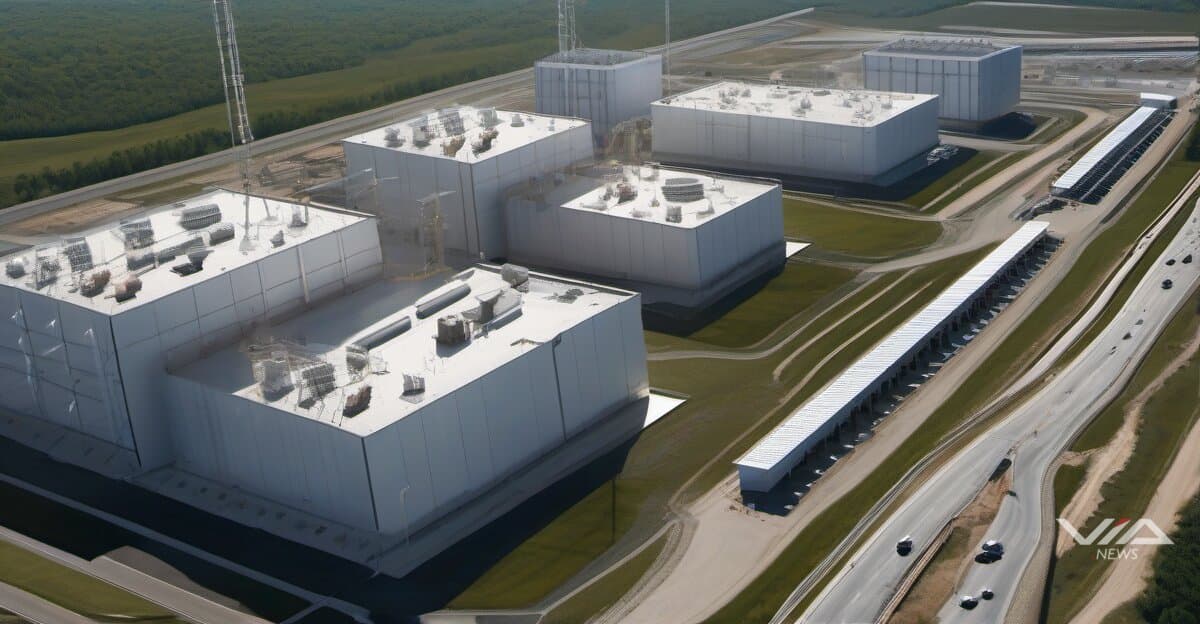
Duke Energy is committing billions in capital expenditure over five years, driven by electricity supply agreements with major hyperscalers building out AI data centers.1 The company's CEO has explicitly signaled the plan will expand further.
The scale is significant enough to reshape how utilities allocate capital. AI compute infrastructure — data centers running large model training and inference workloads — demands continuous, high-density power that strains regional grids and forces utilities to plan decades ahead.1
Duke's capex plan includes next-generation nuclear power.1 That detail matters: nuclear provides baseload electricity — constant output regardless of weather or time of day. Hyperscalers can't run AI infrastructure on intermittent supply. Committing to nuclear signals these are long-duration contracts, not short-term arrangements.
The dynamic reflects a structural shift in how AI infrastructure investment flows through the broader economy. Hyperscaler spending on GPUs and networking draws most attention, but the upstream power requirements are now large enough to trigger a parallel investment cycle in utilities.
Data center power density has risen sharply with AI workloads. A standard enterprise data center might draw 5–10 megawatts. AI training clusters routinely require 100MW or more at a single site. Multiply that across dozens of facilities under construction simultaneously, and the aggregate demand becomes utility-scale — measurable in gigawatts, not megawatts.1
Duke Energy's service territory in the Carolinas and Midwest has become a concentration point for this buildout. Securing electricity agreements before construction completes locks in supply and gives hyperscalers confidence to expand. For Duke, it justifies the capital commitment to grid upgrades, new generation, and transmission.1
The nuclear inclusion points to where this is heading. Next-generation nuclear — small modular reactors and advanced designs — is being pursued specifically because hyperscalers need carbon-free baseload power that scales with AI demand. Several technology companies have already signed agreements directly with nuclear developers. Duke's integration of next-gen nuclear into its capex plan suggests utilities are moving to capture that demand before it bypasses them entirely.1
If Duke's CEO is signaling the billions plan will grow, the current figure is likely a floor, not a ceiling. Utility capex cycles typically lag demand by years. The AI buildout is still accelerating.1