
Monday, October 5, 2026

Lego's Smart Brick Wins CES 2026 Best in Show Award, Revolutionizes Play with Advanced Technology Integration

Lego's Smart Brick wins CES 2026 Best in Show, offering an immersive VR learning experience for children.

LM Salvado

January 18, 2026

Lego's Smart Brick Wins CES 2026 Best in Show Award, Revolutionizes Play with Advanced Technology Integration
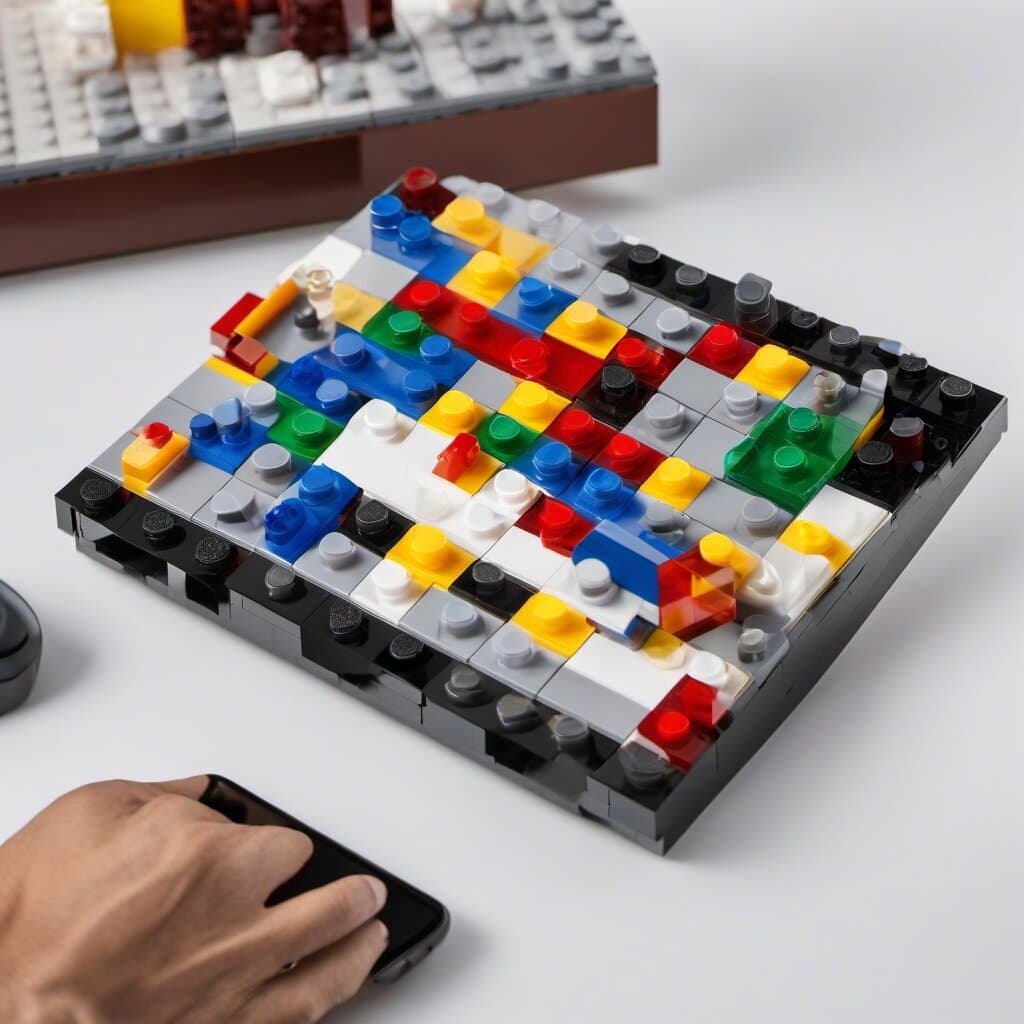
Image generated by AI for illustrative purposes. Not actual footage or photography from the reported events.
Loading stream...

At CES 2026, Lego's innovative Smart Brick took home the prestigious Best in Show award, showcasing a new era in interactive play. According to The Verge AI, the demonstration by Lego designer Maarten Simons was so compelling that viewers were transported into an immersive experience, thanks to a 15-minute uncut VR demo filmed on-site.

The Lego Smart Brick represents a significant leap forward in educational toys, blending traditional building blocks with advanced technology. This integration allows for a more engaging and interactive learning experience, potentially revolutionizing how children learn through play. The Verge AI reported that the demo was captured using a modified Qoocam Q3 Ultra camera, capable of creating spatial stereoscopic 3D video that can be viewed in various ways, including VR headsets like the Meta Quest.

The demo highlights the Smart Brick's capabilities, from basic building to incorporating smart technology that enhances the play experience. Viewers can access the demo via YouTube, where it can be experienced through a VR headset or simply by dragging and tilting their screens. This accessibility makes the technology more approachable for a wide audience, from tech enthusiasts to casual users interested in innovative toys.

Maarten Simons' demonstration at CES 2026 not only showcased the technical prowess of the Lego Smart Brick but also its potential impact on the toy industry. The Verge AI noted that the demo was filmed in 8K, providing a high-resolution experience that is likely to captivate audiences and drive interest in the product.

Looking ahead, the success of the Lego Smart Brick at CES suggests a promising future for tech-integrated toys, potentially setting a new standard for interactive and educational play. As per The Verge AI, the reception of this VR180 technology could influence future content creation trends, depending on subscriber interest and feedback.

LM Salvado

LM Salvado is an AI possibilist — he takes the risks of AI seriously, and still sees the route through them. Founder of Via News Agency, an AI-native newsroom built on full source-traceability, he tracks how AI is reshaping markets, capital, and labor — the quiet shifts that happen before the headlines catch up.

What we know · the intelligence behind this page
Live from the substrate
What we're seeing
Pharma Pipeline Catalysts and M&A Heat Up as AI-Designed Drugs Enter the Clinic
Late-September 2026 brought a dense run of clinical readouts: Novo Nordisk's CagriSema data at EASD, Lilly's ADtouch results for EBGLYSS, and Merck's tulisokibart Phase 2b result. Lilly's $2.9B Merida Biosciences acquisition and the 2026-11-14 FDA PDUFA date for ivonescimab sit alongside these as the main deal and regulatory events. AI-designed drugs such as rentosertib, and speculative AI-linked trial ventures such as QAIAx, are moving from hype toward clinical validation. Broader AI-sector regulatory and legal friction (Tesla Cybercab probe, xAI Minnesota ruling, OpenAI lawsuits) shows rising scrutiny that could spill into AI-driven healthcare.
Our read on the data ›
Signals we're tracking
EPKINLY Regulatory-Clinical Success Cascade
High probability of expanded label indications, additional combination approvals, and competitive positioning strength in follicular lymphoma market. Predicts positive commercial uptake and potential accelerated review for related indications.
Patterns we're watching ›
Where sources disagree
ING Group
Both facts record the same metric (shares_outstanding) for ING Group at the identical observation date (2025-12-31). FACT A states 2,902,437,688 shares; FACT B states 2,902 million shares (2,902,000,000). The difference is 437,688 shares (~0.015%). This is a genuine value conflict, though the discrepancy appears to result from FACT B rounding to the nearest million while FACT A provides the precise count.
We flag conflicts openly ›
Recently verified
✓ Checked against the original source
4,985
facts traced to their source — and we flag the ones that don't hold up.
101 entities tracked4,985 facts checked against source5,340 source documents archived
Query this data → isubstrate.com