
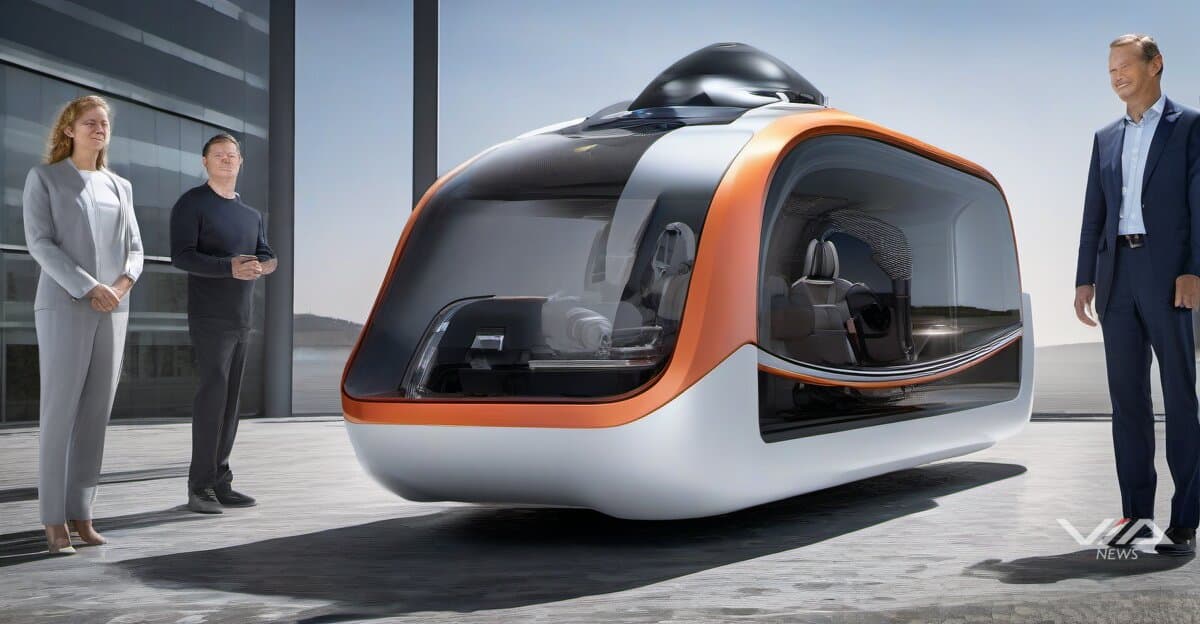
A coordinated wave of autonomous robotics systems is moving from research to commercial deployment across industrial, mobility, and medical applications between 2026 and 2028.
ABB and manufacturing leaders are advancing fully autonomous factory systems, while Bedrock Robotics and Nuro push autonomous vehicle platforms toward regulatory approval. Serve Robotics has deployed sidewalk delivery units, and Lifeward's ReWalk exoskeleton system targets medical mobility assistance.
The Nokia-NVIDIA partnership delivers AI-RAN infrastructure, combining 5G networks with edge AI processing for real-time robotic control. This addresses the latency requirements that previously limited autonomous systems to contained environments.
DoD sourcing rules taking effect in 2027 will restrict certain robotics components, accelerating domestic manufacturing timelines. Vehicle homologation targets for autonomous systems align with this regulatory window.
Boston Dynamics is conducting final stress tests on its Atlas research platform, pushing full-body control limits as the enterprise version enters production deployment. "Our engineers made one final push to test the limits of full-body control and mobility," the company stated.
Mobileye acquired Mentee Robotics to access humanoid robotics technology. "Joining forces with Mobileye gives us access to unparalleled AI infrastructure and commercialization expertise," said Prof. Lior Wolf.
Specialized applications are emerging alongside general-purpose platforms. Apeiron Labs develops underwater autonomous vehicles for subsea inspection, while R3 Robotics targets EV battery disassembly for recycling operations.
Xiangyi Cheng, an AR and robotics researcher, emphasizes foundational reasoning over automation alone. "Focus on mathematics. Engineering looks hands-on, but math is the foundation behind everything," Cheng noted, highlighting the importance of human judgment in AI-enabled systems.
The convergence of AI processing, 5G infrastructure, and regulatory frameworks creates deployment conditions that didn't exist during previous robotics commercialization attempts. Manufacturing leaders including Motohiro Yamanishi are targeting fully autonomous production lines within this window.
Medical applications represent immediate commercial opportunity, with personalized surgical planning systems under development. "Everyone's hand is different. So the surgery should be personalized," Cheng explained of AR-assisted medical systems.