
Friday, August 21, 2026
What we know · the intelligence behind this page
Live from the substrate
What we're seeing
AI Platforms Rush to Establish Content-Authenticity Standards Amid Leadership Shakeups and Sustained Capex
Within days of each other in mid-August 2026, Google, Anthropic, and Spotify moved to formalize AI content watermarking and labeling policies, signaling an industry-wide push toward self-governed provenance standards as generative AI output floods consumer platforms. The shift coincides with executive turnover at OpenAI (Brad Lightcap's departure) and Meta's public AI manifesto, all set against continued heavy AI infrastructure capital expenditure and finance-sector moves (e.g., Wall Street paying for algorithmic edges on social signals) that underscore AI's deepening entanglement with capital markets.
Our read on the data ›
Signals we're tracking
EPKINLY Regulatory-Clinical Success Cascade
High probability of expanded label indications, additional combination approvals, and competitive positioning strength in follicular lymphoma market. Predicts positive commercial uptake and potential accelerated review for related indications.
Patterns we're watching ›
Where sources disagree
JPMorgan Chase & Co.
Both facts report JPMorgan Chase & Co.'s revenue for the same fiscal period (FY 2025) with the same observation date (2025-12-31), but with different values: $182.447 billion vs. $185 billion. The ~1.4% difference ($2.553 billion) is too large to be explained by rounding alone and represents conflicting data for the identical time period.
We flag conflicts openly ›
Recently verified
Checked against the original source
4,977
facts traced to their source — and we flag the ones that don't hold up.
101 entities tracked4,977 facts checked against source5,242 source documents archived
Work with this data → vianewsagency.com

China's Auto Industry Sets Multimodal AI Standards as Vision-Language Models Enter Vehicle Cockpits

China-SAE released an Intelligent Cockpit Level Classification system in early 2025, establishing technical benchmarks as automakers integrate vision-language models into vehicles. Li Auto deployed MindGPT-4o multimodal AI in the i6 model on January 1, 2025. A 2025 industry report tracks multimodal interaction development across Chinese automotive manufacturers, signaling a shift from voice-only to vision-plus-language interfaces.

China's Auto Industry Sets Multimodal AI Standards as Vision-Language Models Enter Vehicle Cockpits
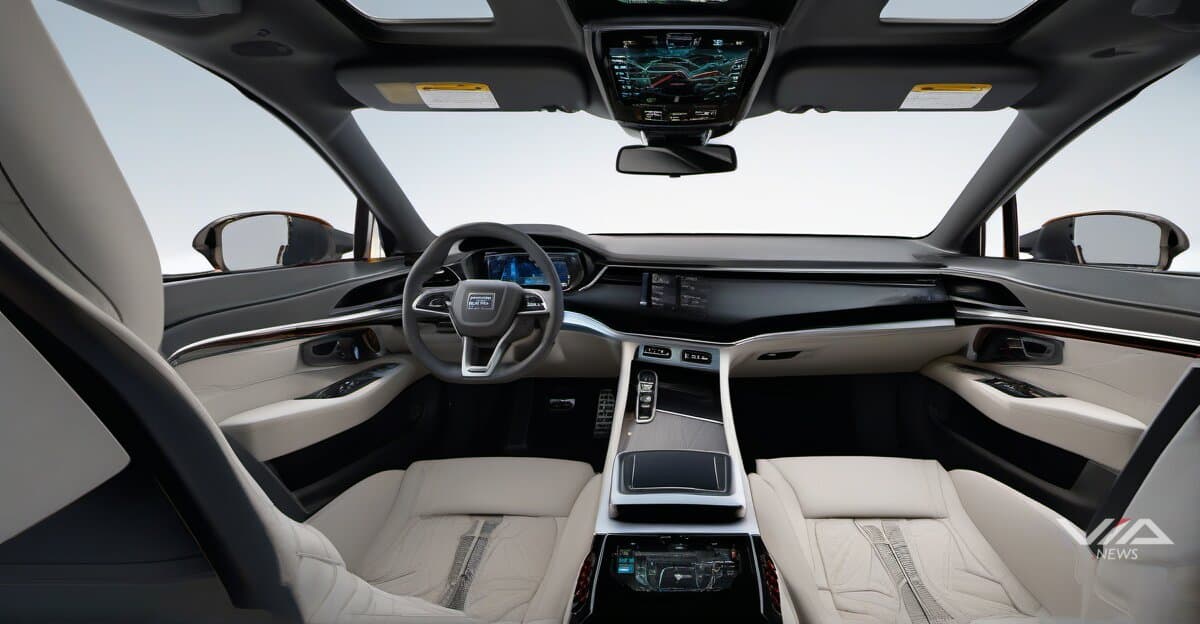
Image generated by AI for illustrative purposes. Not actual footage or photography from the reported events.
Loading stream...

China's automotive standardization body released an Intelligent Cockpit Level Classification framework in early 2025, creating industry benchmarks as multimodal AI capabilities move from experimental to production deployment. The timing coincided with Li Auto's January 1 launch of the i6 featuring MindGPT-4o, a vision-language system that processes both visual and spoken inputs.

The China Automotive Multimodal Interaction Development Research Report 2025, published January 19, 2026, documents integration patterns across manufacturers. Vision-language models enable drivers to reference dashboard elements, road conditions, or navigation displays through natural conversation combined with gesture or gaze inputs, expanding beyond voice-only systems that dominated previous generations.

The classification system addresses a technical gap: no standardized metrics existed to compare multimodal AI implementations across brands. Automakers deployed varying combinations of computer vision, natural language processing, and sensor fusion without common evaluation criteria. The framework establishes testable requirements for response accuracy, safety protocols, and context awareness.

Microsoft's NLWeb Framework development parallels automotive trends, suggesting cross-industry movement toward interfaces that parse multiple input types simultaneously. The framework processes web interactions through combined visual and language understanding, similar to cockpit systems interpreting driver intent from speech plus pointing gestures.

Adoption patterns show Chinese manufacturers moving faster than global counterparts on multimodal integration. Domestic market competition drives feature differentiation through AI capabilities, with cockpit intelligence becoming a primary purchasing consideration alongside traditional performance metrics.

The standardization push carries implications beyond China's borders. Export models will likely carry multimodal systems developed for domestic requirements, potentially establishing de facto global standards through market share. European and North American regulators have yet to publish comparable classification frameworks, creating regulatory asymmetry as the technology advances.

Production deployment remains limited to premium models, but the classification system's existence suggests expectations for broader rollout. Standards bodies typically formalize frameworks when technologies approach mass-market viability rather than during early research phases.

In this story

China's Auto Industry Sets Multimodal AI Standards as Vision-Language Models Enter Vehicle Cockpits | Via News