
Friday, August 21, 2026
What we know · the intelligence behind this page
Live from the substrate
What we're seeing
AI Platforms Rush to Establish Content-Authenticity Standards Amid Leadership Shakeups and Sustained Capex
Within days of each other in mid-August 2026, Google, Anthropic, and Spotify moved to formalize AI content watermarking and labeling policies, signaling an industry-wide push toward self-governed provenance standards as generative AI output floods consumer platforms. The shift coincides with executive turnover at OpenAI (Brad Lightcap's departure) and Meta's public AI manifesto, all set against continued heavy AI infrastructure capital expenditure and finance-sector moves (e.g., Wall Street paying for algorithmic edges on social signals) that underscore AI's deepening entanglement with capital markets.
Our read on the data ›
Signals we're tracking
EPKINLY Regulatory-Clinical Success Cascade
High probability of expanded label indications, additional combination approvals, and competitive positioning strength in follicular lymphoma market. Predicts positive commercial uptake and potential accelerated review for related indications.
Patterns we're watching ›
Where sources disagree
JPMorgan Chase & Co.
Both facts report JPMorgan Chase & Co.'s revenue for the same fiscal period (FY 2025) with the same observation date (2025-12-31), but with different values: $182.447 billion vs. $185 billion. The ~1.4% difference ($2.553 billion) is too large to be explained by rounding alone and represents conflicting data for the identical time period.
We flag conflicts openly ›
Recently verified
Checked against the original source
4,977
facts traced to their source — and we flag the ones that don't hold up.
101 entities tracked4,977 facts checked against source5,242 source documents archived
Work with this data → vianewsagency.com

U.S. Manufacturing Sector Prepares for SDV 2.0 Architecture Rollout as Autonomous Tech Adoption Accelerates

American manufacturers are positioning for a 2028 launch of Software-Defined Vehicle 2.0 architecture alongside Level 3 autonomous driving adoption. The shift aligns with broader domestic production expansion and supply chain security initiatives, particularly the 2027 DFARS ban on Chinese rare earths for defense contractors.

L.M. Salvado

March 29, 2026

U.S. Manufacturing Sector Prepares for SDV 2.0 Architecture Rollout as Autonomous Tech Adoption Accelerates
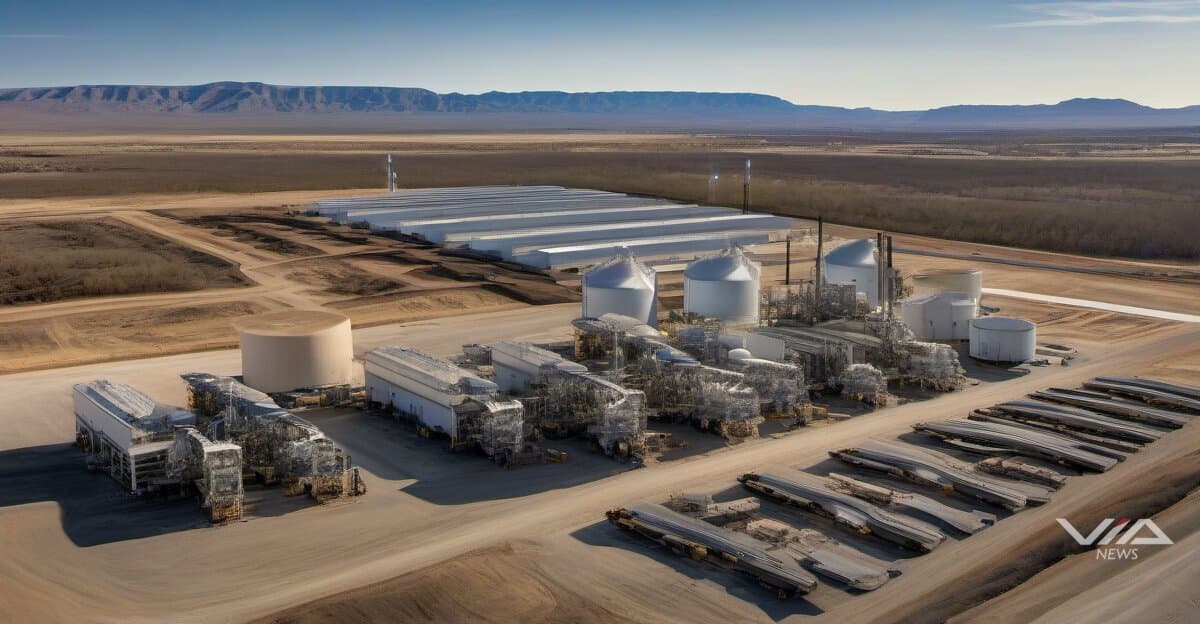
Image generated by AI for illustrative purposes. Not actual footage or photography from the reported events.
Loading stream...

U.S. manufacturing is preparing for Software-Defined Vehicle (SDV) 2.0 architecture to launch in 2028, marking a key inflection point for autonomous driving technology in domestic production.1

The automotive technology adoption comes as manufacturers expand capacity for Level 3 autonomous driving systems. SDV 2.0 represents the next generation of vehicle architecture where software controls core vehicle functions, enabling over-the-air updates and advanced autonomous capabilities.1

This manufacturing transformation intersects with supply chain security measures. The 2027 Defense Federal Acquisition Regulation Supplement (DFARS) ban on Chinese rare earth materials for defense contractors is driving onshoring investments in critical components needed for autonomous systems and electric powertrains.1

Case IH recently showcased U.S. manufacturing strength through domestic production capabilities, demonstrating the industrial base available for advanced technology integration.2 The agricultural equipment sector has long utilized autonomous guidance systems, providing a testing ground for technologies now moving into passenger vehicles.

Manufacturing executives see the convergence of regulatory pressure and technology advancement creating momentum. Companies must secure domestic rare earth supplies for motors and sensors while simultaneously preparing production lines for software-centric vehicle architectures that require different assembly processes and quality control systems.

The 2028 SDV 2.0 timeline gives manufacturers roughly two years to retool facilities and establish supply chains independent of Chinese critical minerals. Defense contractors face additional pressure from the 2027 DFARS deadline, accelerating investments in domestic rare earth processing and component manufacturing.

Level 3 autonomous systems, which allow drivers to disengage from driving tasks under specific conditions, require extensive computing power and sensor arrays dependent on rare earth permanent magnets. The technology stack from sensors to processing units must meet both automotive safety standards and, for dual-use applications, defense procurement requirements.

This manufacturing renaissance positions U.S. facilities to lead in autonomous vehicle production while reducing dependence on foreign supply chains for critical materials. The combination of technology leadership and supply chain security reflects broader economic policy favoring domestic production capacity in strategic sectors.

Source documents

Via News is a conduit. We point to the source documents behind this report — we don't replace them. Trace any claim to its source and decide what to trust. How we source

Source Trace Score12 source documents12 with a live linkVerifiability: Strong
  1. [1]Press releaseGlobeNewswire· March 27, 2026
    Case IH Celebrates American Farmers At The White House
  2. [2]Press releaseGlobeNewswire· March 27, 2026
    FlightPath Golf Tees Get Reviewed for Effective Accuracy and Distance - Results Inside
  3. [3]Press releaseGlobeNewswire· March 24, 2026
    Introducing Tenable Hexa AI: The Agentic Engine That Supercharges Security Productivity and Accelerates Risk Reduction
  4. [4]Press releaseGlobeNewswire· March 24, 2026
    LOBO Announces Pricing of $2 Million Public Offering
  5. [5]Press releaseGlobeNewswire· March 24, 2026
    Micro, AMFI and CEiiA Join Forces to create the next generation microcars and industrialize BEN in Turin
  6. [6]Press releaseGlobeNewswire· March 24, 2026
    Micro, AMFI et CEiiA unissent leurs forces pour créer la prochaine génération de micro-voitures et industrialiser BEN à Turin
  7. [7]Press releaseGlobeNewswire· March 24, 2026
    Micro, AMFI und CEiiA entwickeln gemeinsam die nächste Generation von Microcars und starten die industrielle Fertigung von BEN in Turin
  8. [8]Press releaseGlobeNewswire· March 24, 2026
    Yamaha Outdoor Access Initiative Surpasses $1 Million in 2025 Grants; Sets $10 Million Program Funding Goal by 2028
  9. [9]News articleYahoo Finance· December 30, 2025
    12 investors dish on what 2026 will bring for climate tech
  10. [10]News articleYahoo Finance· February 11, 2026
    3 Alternative Energy Stocks to Watch Despite Rising Cost Pressure
  11. [11]News articleYahoo Finance· March 13, 2026
    America Is Closing the Gap in the Rare Earth Supply Chain Race - OilPrice.com Market Commentary
  12. [12]News articleYahoo Finance· January 30, 2026
    Autoliv (ALV) Q4 2025 Earnings Call Transcript
L.M. Salvado

L.M. Salvado is an AI possibilist — he takes the risks of AI seriously, and still sees the route through them. Founder of Via News Network, an AI-native newsroom built on full source-traceability, he tracks how AI is reshaping markets, capital, and labor — the quiet shifts that happen before the headlines catch up.