
Friday, August 21, 2026
What we know · the intelligence behind this page
Live from the substrate
What we're seeing
AI Platforms Rush to Establish Content-Authenticity Standards Amid Leadership Shakeups and Sustained Capex
Within days of each other in mid-August 2026, Google, Anthropic, and Spotify moved to formalize AI content watermarking and labeling policies, signaling an industry-wide push toward self-governed provenance standards as generative AI output floods consumer platforms. The shift coincides with executive turnover at OpenAI (Brad Lightcap's departure) and Meta's public AI manifesto, all set against continued heavy AI infrastructure capital expenditure and finance-sector moves (e.g., Wall Street paying for algorithmic edges on social signals) that underscore AI's deepening entanglement with capital markets.
Our read on the data ›
Signals we're tracking
EPKINLY Regulatory-Clinical Success Cascade
High probability of expanded label indications, additional combination approvals, and competitive positioning strength in follicular lymphoma market. Predicts positive commercial uptake and potential accelerated review for related indications.
Patterns we're watching ›
Where sources disagree
JPMorgan Chase & Co.
Both facts report JPMorgan Chase & Co.'s revenue for the same fiscal period (FY 2025) with the same observation date (2025-12-31), but with different values: $182.447 billion vs. $185 billion. The ~1.4% difference ($2.553 billion) is too large to be explained by rounding alone and represents conflicting data for the identical time period.
We flag conflicts openly ›
Recently verified
Checked against the original source
4,977
facts traced to their source — and we flag the ones that don't hold up.
101 entities tracked4,977 facts checked against source5,242 source documents archived
Work with this data → vianewsagency.com

Uber Exits In-House Autonomous Development, Banks on Wayve and Rivian Partnerships

Uber sold its autonomous vehicle unit in December 2020 and shifted to partnerships with specialized AV companies including Wayve, Chinese firms, and Rivian. The strategy replaces capital-intensive internal R&D with investments in external AV developers. Uber has taken equity positions in both Wayve and Rivian to secure access to their autonomous technology.

L.M. Salvado

March 25, 2026

Uber Exits In-House Autonomous Development, Banks on Wayve and Rivian Partnerships
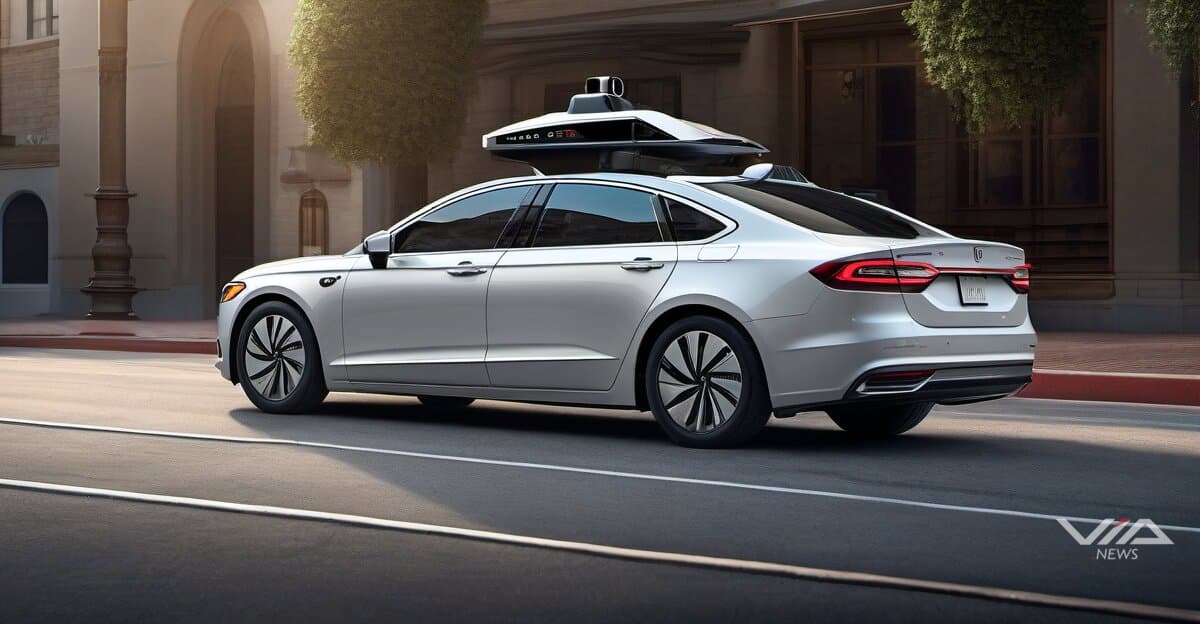
Image generated by AI for illustrative purposes. Not actual footage or photography from the reported events.
Loading stream...

Uber sold its Uber ATG autonomous vehicle unit in December 2020, ending years of internal development. The company has since replaced proprietary tech efforts with a partnership model centered on specialized autonomous vehicle firms.

The rideshare giant announced partnerships with UK-based Wayve and multiple Chinese AV companies. Uber also struck a robotaxi deal with electric vehicle maker Rivian, with negotiations reportedly spanning an extended period.

Uber backed the strategy with capital commitments. The company invested in both Wayve and Rivian Automotive, taking equity stakes in the AV developers. This approach gives Uber technology access without maintaining large internal engineering teams.

The pivot reflects a broader industry split between vertically integrated players like Tesla and Waymo, who develop full-stack autonomous systems, versus platform operators who aggregate third-party technology. Uber's model resembles its core rideshare business: own the marketplace, not the underlying assets.

Partnership economics differ sharply from in-house development. Internal AV programs require sustained R&D spending on sensors, compute hardware, simulation infrastructure, and safety validation. Uber ATG burned through capital without reaching commercial deployment before its sale.

The external model shifts timing risk to partners. Wayve and Rivian absorb development costs and deployment delays. Uber gains optionality across multiple technology approaches rather than betting on a single internal architecture.

Execution depends on partner delivery timelines and integration complexity. Uber must adapt its platform to support different autonomous systems from Wayve, Chinese providers, and Rivian. Coordinating safety standards, liability frameworks, and operational protocols across vendors adds overhead.

The strategy also creates dependency. If key partners stumble or prioritize competing platforms, Uber loses control over its autonomous roadmap. Equity investments provide some alignment but not operational authority.

Competition remains intense. Waymo operates commercial robotaxi services in multiple cities. Cruise has resumed testing after regulatory setbacks. Tesla's Full Self-Driving software reaches millions of vehicles. Uber's partnership approach must deliver comparable service quality and unit economics to compete.

In this story

About this analysis

This is a Via News analysis. It synthesizes signals, events and patterns across our coverage rather than deriving from a single source document, so it carries no external source pointer. Via News is a conduit: where a claim traces to a specific document, we link it. How we source

L.M. Salvado

L.M. Salvado is an AI possibilist — he takes the risks of AI seriously, and still sees the route through them. Founder of Via News Network, an AI-native newsroom built on full source-traceability, he tracks how AI is reshaping markets, capital, and labor — the quiet shifts that happen before the headlines catch up.