
Friday, August 21, 2026
What we know · the intelligence behind this page
Live from the substrate
What we're seeing
AI Platforms Rush to Establish Content-Authenticity Standards Amid Leadership Shakeups and Sustained Capex
Within days of each other in mid-August 2026, Google, Anthropic, and Spotify moved to formalize AI content watermarking and labeling policies, signaling an industry-wide push toward self-governed provenance standards as generative AI output floods consumer platforms. The shift coincides with executive turnover at OpenAI (Brad Lightcap's departure) and Meta's public AI manifesto, all set against continued heavy AI infrastructure capital expenditure and finance-sector moves (e.g., Wall Street paying for algorithmic edges on social signals) that underscore AI's deepening entanglement with capital markets.
Our read on the data ›
Signals we're tracking
EPKINLY Regulatory-Clinical Success Cascade
High probability of expanded label indications, additional combination approvals, and competitive positioning strength in follicular lymphoma market. Predicts positive commercial uptake and potential accelerated review for related indications.
Patterns we're watching ›
Where sources disagree
JPMorgan Chase & Co.
Both facts report JPMorgan Chase & Co.'s revenue for the same fiscal period (FY 2025) with the same observation date (2025-12-31), but with different values: $182.447 billion vs. $185 billion. The ~1.4% difference ($2.553 billion) is too large to be explained by rounding alone and represents conflicting data for the identical time period.
We flag conflicts openly ›
Recently verified
Checked against the original source
4,977
facts traced to their source — and we flag the ones that don't hold up.
101 entities tracked4,977 facts checked against source5,242 source documents archived
Work with this data → vianewsagency.com

Waabi Deploys Verifiable End-to-End AI for Level 4 Autonomous Trucks

Waabi Driver is launching commercial operations with a verifiable end-to-end AI architecture, contrasting with black box Level 2+ passenger car systems. CEO Raquel Urtasun says current truck drivers who want to retire in their profession will be able to do so, even as the company tackles remaining challenges like snowstorm navigation.

L.M. Salvado

March 17, 2026

Waabi Deploys Verifiable End-to-End AI for Level 4 Autonomous Trucks
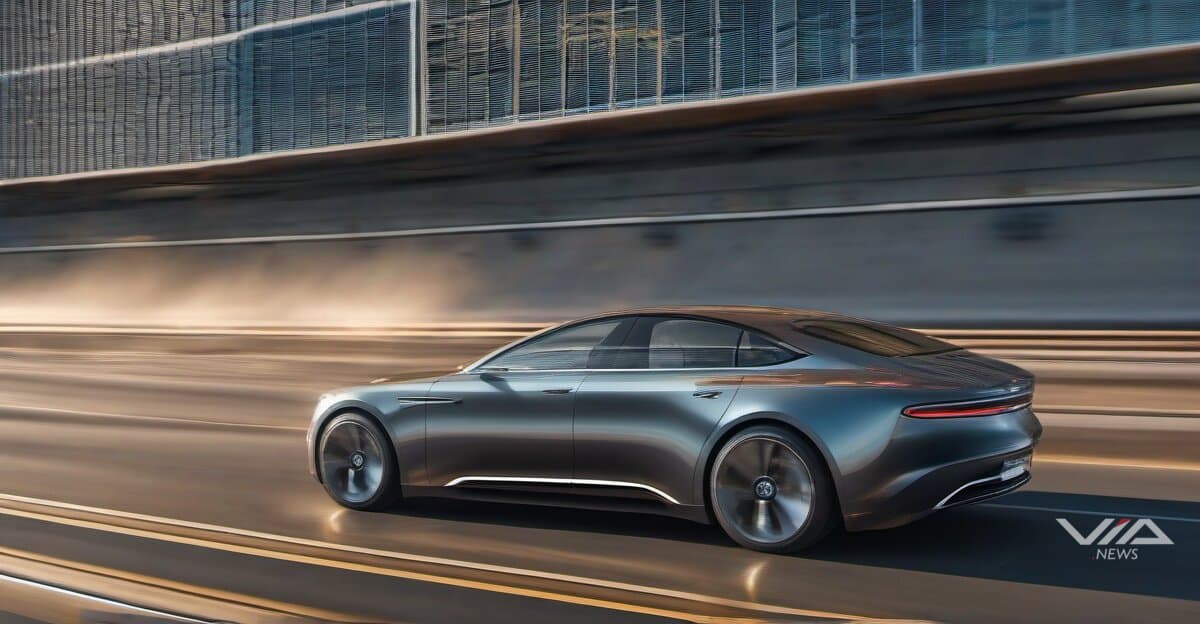
Image generated by AI for illustrative purposes. Not actual footage or photography from the reported events.
Loading stream...

Waabi is deploying its Level 4 autonomous truck system using a verifiable end-to-end AI architecture, a departure from the black box approaches used in passenger car Level 2+ systems.1 CEO Raquel Urtasun said those passenger car architectures "are not verifiable," positioning Waabi Driver as a more transparent alternative for commercial trucking.

The technology still faces weather limitations. Snowstorms remain a no-go zone for Waabi Driver.2 Urtasun acknowledged this gap while emphasizing the system's progress toward full autonomy in most conditions.

On workforce impact, Urtasun offered assurance to current drivers. "Everybody who's a truck driver today, and wants to retire as a truck driver, will be able to do so," she said.3 This timeline suggests autonomous trucks will phase in gradually rather than disrupt employment overnight.

The deployment comes as computer vision technology expands across automotive, retail, and security sectors. Vision-language-action models are enabling systems that combine visual perception with decision-making, moving beyond simple image recognition to autonomous operation.

Urtasun framed autonomous vehicles as a safety imperative. She noted 2 million deaths occur on roads globally per year, adding "nobody's questioning that."4 The comment positioned autonomous systems as a solution to human error rather than an experimental risk.

Meanwhile, Meta's Yann LeCun questioned the concentration of AI governance. "I don't think any of us, whether it's me or Dario [Amodei], Sam Altman, or Elon Musk, has any legitimacy to decide for society what is a good or bad use of AI," he said.1 The remark highlights tensions as autonomous systems move from research to real-world deployment.

Waabi's verifiable architecture represents a technical bet that transparency matters for Level 4 autonomy. Whether regulators and customers demand this over faster-to-market black box systems will determine if the approach becomes standard.

Source documents

Via News is a conduit. We point to the source documents behind this report — we don't replace them. Trace any claim to its source and decide what to trust. How we source

Source Trace Score8 source documents8 with a live linkVerifiability: Strong
  1. [1]News articleIEEE Spectrum
    Raquel Urtasun on Level-4 Autonomous Trucks
  2. [2]News articleMIT Technology Review
    The Download: AI’s role in the Iran war, and an escalating legal fight
  3. [3]News articleSeeking Alpha· March 15, 2026
    Earnings week ahead: FDX, BABA, XPEV, MU, GIS, DOCU, OKLO, ACN, and more
  4. [4]Press releaseGlobeNewswire· February 4, 2026
    Europe and North America Home and Small Business Security System Market Report 2026: DIY Convergence, AI Integration, and Smart Home Competition Reshape the Landscape - Forecast to 2031
  5. [5]News articleYahoo Finance· February 9, 2026
    EXL granted 10 new patents in the last year for AI solutions
  6. [6]News articleYahoo Finance· January 8, 2026
    Microsoft propels retail forward with agentic AI capabilities that power intelligent automation for every retail function
  7. [7]News articleSeeking Alpha· February 19, 2026
    Oceaneering projects $390M–$440M EBITDA for 2026 as ADTech drives multiyear growth
  8. [8]News articleYahoo Finance· January 11, 2026
    Supermicro Announces Intelligent In-Store Retail Solutions in Collaboration with a Broad Range of Industry Partners

In this story

L.M. Salvado

L.M. Salvado is an AI possibilist — he takes the risks of AI seriously, and still sees the route through them. Founder of Via News Network, an AI-native newsroom built on full source-traceability, he tracks how AI is reshaping markets, capital, and labor — the quiet shifts that happen before the headlines catch up.