
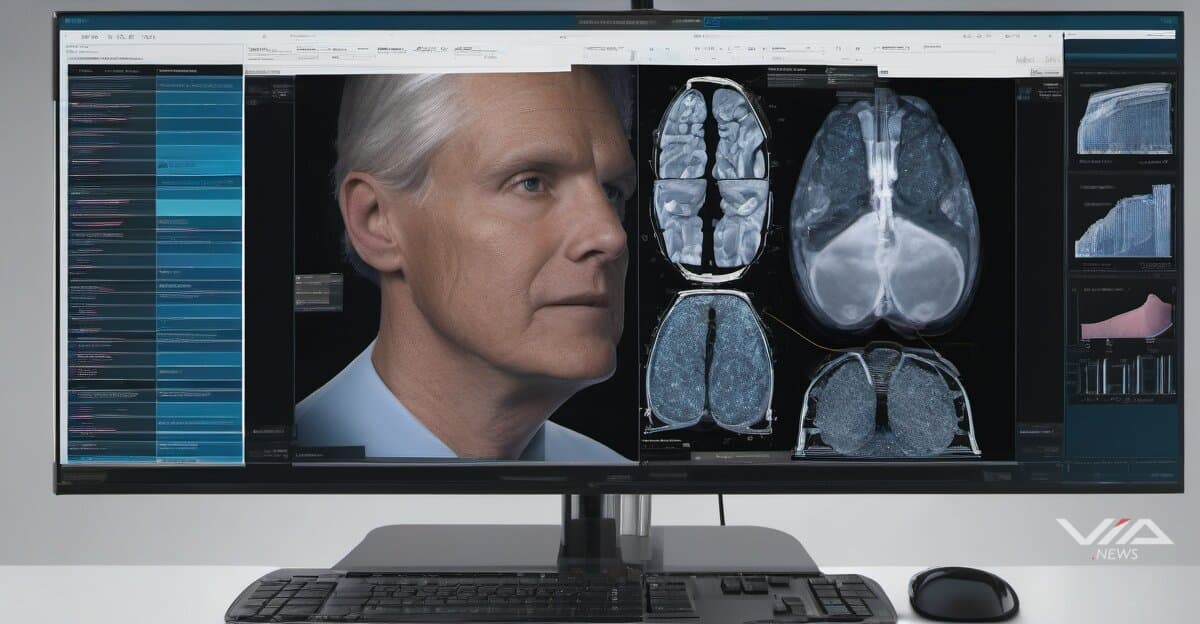
DeepHealth acquired Paris-based Gleamer to integrate AI-powered radiology diagnostics into U.S. clinical workflows, marking a shift from research prototypes to commercial healthcare deployment. The deal follows FDA clearance patterns for bone fracture and lung nodule detection systems now entering hospital networks.
Mobileye is embedding humanoid robotics control systems into autonomous vehicle platforms, extending computer vision beyond navigation to physical manipulation tasks. The integration reflects automotive AI expanding from perception to action, with vision models processing real-time sensor data for robotic decision-making in manufacturing and logistics contexts.
VeeaVision AI launched edge-native computer vision processing that eliminates cloud latency, running inference locally on distributed hardware. The platform targets retail analytics, industrial monitoring, and security applications where millisecond response times or connectivity constraints prohibit cloud-based systems.
Apple released M5-powered MacBook Air and M4 iPad Air models with enhanced neural engines for on-device vision processing, while prototyping smart glasses with integrated AI capabilities. The hardware roadmap signals Apple positioning consumer devices as computer vision platforms, competing with Meta's Ray-Ban smart glasses and emerging wearable AI products.
Cancer imaging research revealed AI systems must detect lesion merging and splitting events to meet RECIST clinical standards, addressing a gap where overlooking structural changes causes misclassification of disease progression. The finding highlights deployment barriers for diagnostic AI beyond raw detection accuracy.
AI researcher Timnit Gebru criticized resource-intensive vision models as environmentally destructive and economically hostile to specialized AI startups. She cited cases where Meta's 200-language translation model announcement prompted investors to defund African language NLP companies, and OpenAI representatives allegedly threatened small data providers with obsolescence while offering minimal compensation. The critique contrasts Big Tech's general-purpose vision models against targeted, efficient approaches serving niche markets.
The commercial expansion pattern shows vertical-specific deployment in healthcare and automotive, edge processing reducing infrastructure costs, and consumer hardware integrating vision AI as a standard feature rather than experimental add-on.