
Monday, August 24, 2026
What we know · the intelligence behind this page
Live from the substrate
What we're seeing
AI Leadership Exodus Rattles Investor Confidence Amid Capex Boom
High-profile departures at top AI labs — Brad Lightcap's exit from OpenAI and an unnamed researcher's departure from Alphabet/Google that triggered a share-price drop — are surfacing talent retention as a market risk factor even as hyperscalers pour record capital into AI infrastructure. The reaction shows investors treating key-person risk at frontier AI labs as material to valuation, a new fragility layered onto an otherwise bullish AI-driven capex cycle.
Our read on the data ›
Signals we're tracking
Satellite-Terrestrial Network Integration Acceleration
Increased investment and launches in hybrid satellite-cellular networks across telecom industry; competitive responses from other carriers; regulatory activity around satellite spectrum; expansion of emergency/rural connectivity use cases
Patterns we're watching ›
Where sources disagree
Broadcom Inc.
Both facts report EPS for Broadcom Inc. for the same fiscal period (Q1 2026) observed on the same date (2026-02-01). However, they report conflicting values: 1.5 USD per share vs 2.05 USD per share. This is a 37% difference for the identical metric and time period, not a value change over time.
We flag conflicts openly ›
Recently verified
Checked against the original source
4,978
facts traced to their source — and we flag the ones that don't hold up.
101 entities tracked4,978 facts checked against source5,251 source documents archived
Work with this data → vianewsagency.com

NVIDIA's Physical AI Stack Powers Wave of Enterprise Vision Deployments Across Autonomous Systems

NVIDIA released Cosmos 3 world foundation model, Isaac GR00T robotics platform, and Metropolis VSS Blueprint v3, enabling companies like Levatas, Waabi, and Voxelmaps to deploy computer vision AI across infrastructure monitoring, autonomous trucking, and smart cities. The integration addresses the 2 million global road deaths annually while navigating technical limits like snowstorm conditions that still block Level 4 autonomy.

LM Salvado

March 21, 2026

NVIDIA's Physical AI Stack Powers Wave of Enterprise Vision Deployments Across Autonomous Systems
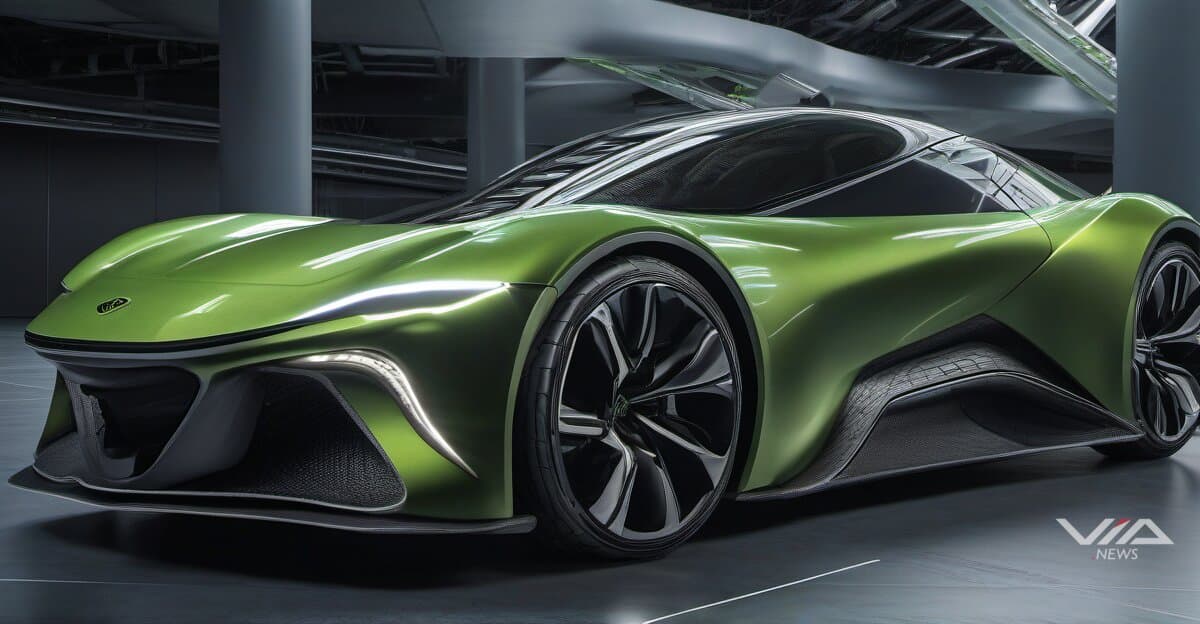
Image generated by AI for illustrative purposes. Not actual footage or photography from the reported events.
Loading stream...

NVIDIA's latest platform releases are catalyzing enterprise deployment of computer vision across physical infrastructure and autonomous systems.1 The company launched Cosmos 3 world foundation model, Isaac GR00T robotics platform, and Metropolis VSS Blueprint v3, providing the technical stack for specialized vision agents in industrial inspection, autonomous vehicles, and urban monitoring.1

Waabi is deploying Level 4 autonomous trucking using NVIDIA's platforms, though CEO Raquel Urtasun acknowledged snowstorms still create no-go zones for the Waabi Driver system.2 She emphasized that verifiable architectures are essential for Level 4 autonomy, contrasting this with Level 2+ passenger car systems that use "black box architectures" unsuitable for full autonomy.2

The deployment addresses massive safety stakes. "There are 2 million deaths on the road globally per year, and nobody's questioning that," Urtasun said, framing autonomous systems as a safety imperative despite technical constraints.2

Levatas, Milestone Systems, Inchor, and Voxelmaps are building on NVIDIA's computer vision infrastructure for applications spanning infrastructure monitoring to smart city deployments.1 The coordinated platform release suggests NVIDIA is positioning itself as the integration layer connecting foundation models to physical world applications.

Semiconductor earnings from Micron, XPeng, and Alibaba signal hardware demand supporting this deployment phase.1 XPeng's VLA 2.0 system for robotics and autonomous vehicles represents the customer base for NVIDIA's vision platforms."I don't think any of us, whether it's me or Dario [Amodei], Sam Altman, or Elon Musk, has any legitimacy to decide for society what is a good or bad use of AI," he stated.3

Urtasun projected employment continuity in trucking: "Everybody who's a truck driver today, and wants to retire as a truck driver, will be able to do so."2 The statement reflects industry messaging around gradual autonomous deployment rather than immediate workforce displacement.

NVIDIA's integrated approach—foundation models, robotics platforms, and vision blueprints—creates a commercial ecosystem where enterprise customers can deploy computer vision without building foundational infrastructure. The strategy consolidates NVIDIA's position beyond GPU sales into platform revenue across physical AI applications.

Source documents

Via News is a conduit. We point to the source documents behind this report — we don't replace them. Trace any claim to its source and decide what to trust. How we source

Source Trace Score6 source documents6 with a live linkVerifiability: Strong
  1. [1]News articleYahoo Finance· March 16, 2026
    NVIDIA, T-Mobile and Partners Integrate Physical AI Applications on AI-RAN-Ready Infrastructure
  2. [2]News articleIEEE Spectrum
    Raquel Urtasun on Level-4 Autonomous Trucks
  3. [3]News articleMIT Technology Review
    The Download: AI’s role in the Iran war, and an escalating legal fight
  4. [4]News articleSeeking Alpha· March 15, 2026
    Earnings week ahead: FDX, BABA, XPEV, MU, GIS, DOCU, OKLO, ACN, and more
  5. [5]Press releaseGlobeNewswire· March 16, 2026
    NVIDIA Expands Open Model Families to Power the Next Wave of Agentic, Physical and Healthcare AI
  6. [6]News articleYahoo Finance· March 16, 2026
    NVIDIA Launches Space Computing, Rocketing AI Into Orbit

In this story

LM Salvado

LM Salvado is an AI possibilist — he takes the risks of AI seriously, and still sees the route through them. Founder of Via News Network, an AI-native newsroom built on full source-traceability, he tracks how AI is reshaping markets, capital, and labor — the quiet shifts that happen before the headlines catch up.