
Monday, October 5, 2026

AI Pharma and Energy Partnerships Emerge as Markets Rally on Iran Peace Talks

Markets surged on hopes of US-Iran deescalation despite warnings that a prolonged Middle East oil crisis could rival the 1970s shock. Tech and crypto led gains while AI partnerships in pharmaceutical and energy infrastructure emerged amid geopolitical volatility. IMF's chief economist warned the crisis could elevate unemployment and food insecurity globally.

LM Salvado

April 25, 2026

AI Pharma and Energy Partnerships Emerge as Markets Rally on Iran Peace Talks
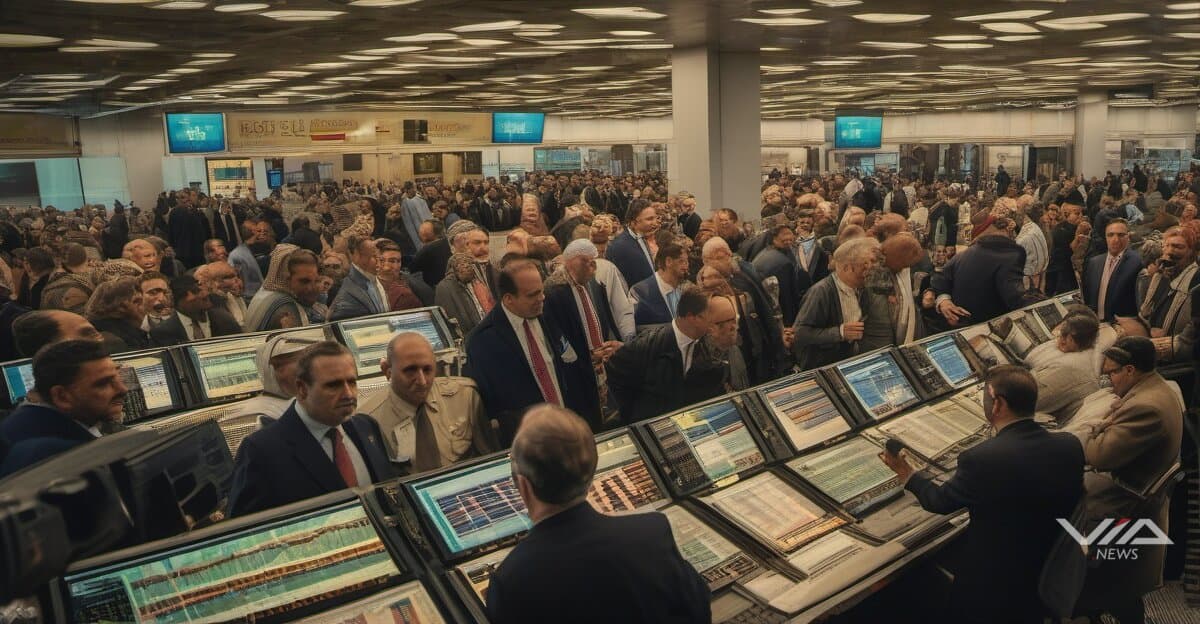
Image generated by AI for illustrative purposes. Not actual footage or photography from the reported events.
Loading stream...

Markets rallied this week as investors bet on US-Iran peace talks containing Middle East tensions, even as economic experts warned of recession risks from potential oil supply disruptions.

Pierre-Olivier Gourinchas, the IMF's chief economist, cautioned that "this oil crisis could rival that of the 1970s" and "could elevate unemployment and food insecurity in some countries."1 The warnings came as geopolitical uncertainty created volatility across energy markets.

Tech stocks and cryptocurrencies led market gains despite the crisis backdrop. Steven Blitz, chief economist at TS Lombard, noted that "the absence of pain set off this latest market run and the technicals support stocks and bonds rallying further."2 However, he added that "once the impact of the war is clearer, one more reassessment of the outlook will be in order."2

AI companies capitalized on the volatility by announcing partnerships in pharmaceutical development and energy infrastructure. These deals signal growing enterprise adoption of AI tools for critical sectors facing supply chain and operational challenges from geopolitical instability.

The pharmaceutical partnerships focus on drug discovery acceleration and clinical trial optimization, while energy sector deals target infrastructure monitoring and predictive maintenance systems. These applications aim to build resilience against disruption risks.

Major banks reported solid quarterly earnings, suggesting financial institutions remain confident in economic fundamentals despite crisis warnings. The disconnect between market optimism and economist caution reflects uncertainty about whether diplomatic efforts will successfully contain the conflict.

Lower inflation data released this week provided additional support for the rally, giving central banks room to maintain accommodative policies if oil shocks materialize. Investors are weighing near-term positive economic signals against longer-term risks from prolonged Middle East instability.

The AI partnership announcements demonstrate how enterprise technology buyers are prioritizing operational resilience and efficiency gains during periods of macroeconomic uncertainty. Companies are betting that AI-driven automation can help navigate supply chain disruptions and volatile commodity markets.

Source documents

Via News is a conduit. We point to the source documents behind this report — we don't replace them. Trace any claim to its source and decide what to trust. How we source

Source Trace Score3 source documents3 with a live linkVerifiability: Strong
  1. [1]News articleYahoo Finance· April 18, 2026
    Experts Warn That Recession Risks Are Increasing. Here's What That Means for Investors
  2. [2]News articleYahoo Finance· April 15, 2026
    US Stocks Hover Near Record on Iran Peace Hopes: Markets Wrap
  3. [3]News articleYahoo Finance· April 15, 2026
    Morning Brief: We're watching for S&P 500 record highs again
LM Salvado

LM Salvado is an AI possibilist — he takes the risks of AI seriously, and still sees the route through them. Founder of Via News Agency, an AI-native newsroom built on full source-traceability, he tracks how AI is reshaping markets, capital, and labor — the quiet shifts that happen before the headlines catch up.

What we know · the intelligence behind this page
Live from the substrate
What we're seeing
Pharma Pipeline Catalysts and M&A Heat Up as AI-Designed Drugs Enter the Clinic
Late-September 2026 brought a dense run of clinical readouts: Novo Nordisk's CagriSema data at EASD, Lilly's ADtouch results for EBGLYSS, and Merck's tulisokibart Phase 2b result. Lilly's $2.9B Merida Biosciences acquisition and the 2026-11-14 FDA PDUFA date for ivonescimab sit alongside these as the main deal and regulatory events. AI-designed drugs such as rentosertib, and speculative AI-linked trial ventures such as QAIAx, are moving from hype toward clinical validation. Broader AI-sector regulatory and legal friction (Tesla Cybercab probe, xAI Minnesota ruling, OpenAI lawsuits) shows rising scrutiny that could spill into AI-driven healthcare.
Our read on the data ›
Signals we're tracking
EPKINLY Regulatory-Clinical Success Cascade
High probability of expanded label indications, additional combination approvals, and competitive positioning strength in follicular lymphoma market. Predicts positive commercial uptake and potential accelerated review for related indications.
Patterns we're watching ›
Where sources disagree
ING Group
Both facts record the same metric (shares_outstanding) for ING Group at the identical observation date (2025-12-31). FACT A states 2,902,437,688 shares; FACT B states 2,902 million shares (2,902,000,000). The difference is 437,688 shares (~0.015%). This is a genuine value conflict, though the discrepancy appears to result from FACT B rounding to the nearest million while FACT A provides the precise count.
We flag conflicts openly ›
Recently verified
✓ Checked against the original source
4,985
facts traced to their source — and we flag the ones that don't hold up.
101 entities tracked4,985 facts checked against source5,340 source documents archived
Query this data → isubstrate.com