
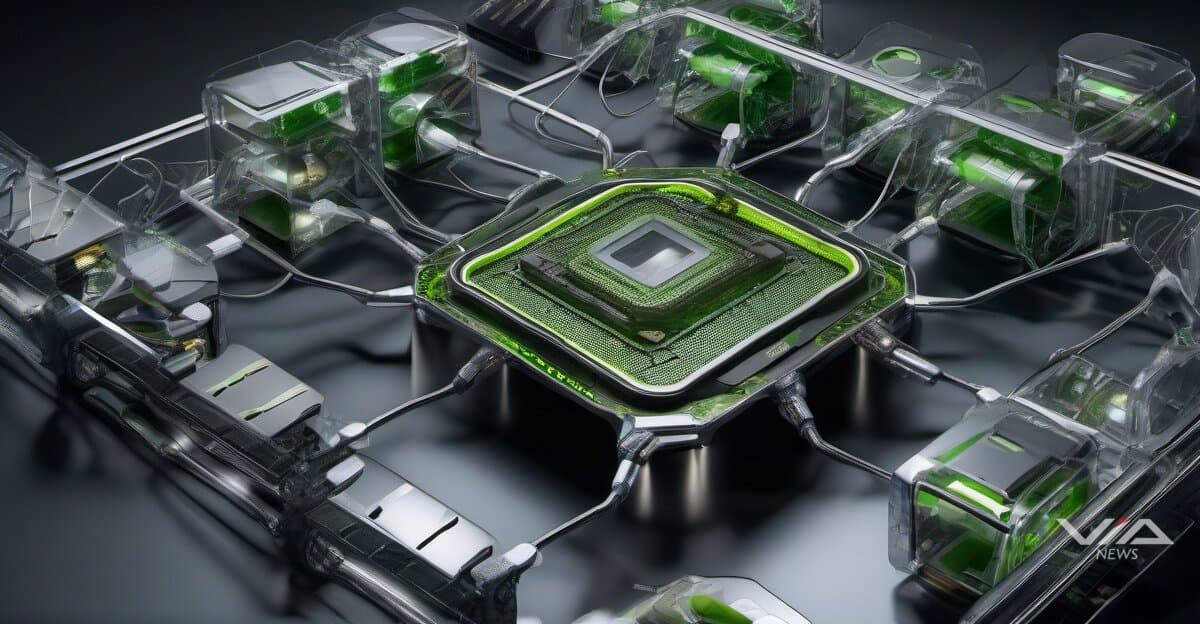
NVIDIA's BioNeMo platform has locked in partnerships with Eli Lilly and Thermo Fisher, establishing GPU-backed protein modeling as a shared backbone for commercial drug discovery. The platform race is no longer theoretical.
Five competing systems are targeting the same operating layer: Boltz Lab, Edison Kosmos, Owkin's OwkinZero, Basecamp Research's EDEN, and Natera. Each addresses a distinct bottleneck in the discovery pipeline. No single platform dominates the full stack yet.
Novo Nordisk as a case study
Novo Nordisk's stock rose 24.9% over 30 days, supported by strong Q1 2026 earnings.1 Markets are pricing AI-augmented pipelines — not just near-term GLP-1 revenues.
The company's strategic moves confirm the direction. Novo Nordisk is exiting its internal cell therapy unit and licensing its Parkinson's program to Cellular Intelligence, an AI-native cell therapy developer.1 The trade: in-house capability for AI-native expertise. Other large pharma are watching closely.
Lab digitization as a prerequisite
Tetrascience and Thermo Fisher are partnering on lab digitization, converting physical experiment data into machine-readable formats. AI models require structured data to function. This partnership removes a foundational bottleneck in the R&D workflow.
FDA Fast Track designation adds a further accelerant. Compressed regulatory timelines improve the economics of AI-assisted discovery programs, feeding demand for platforms that move pipelines faster.
How the platforms differ
OwkinZero uses federated learning across clinical datasets, protecting patient data while enabling cross-institution model training. Boltz Lab focuses on protein structure prediction workflows. Edison Kosmos integrates genomics, imaging, and chemistry into a single multimodal model. Each system targets a different weakness in the current R&D toolchain.
Commoditization is the likely endpoint. As molecular modeling and target identification capabilities converge, differentiation will shift to data access agreements, regulatory track record, and integration depth with existing lab infrastructure.
The infrastructure bet
Pharma is buying AI infrastructure now, not running pilots. Platform decisions made in 2026 will shape which pipelines reach clinical trials by 2028. The BioNeMo-Lilly-Thermo Fisher axis holds the current lead — but five credible challengers ensure the race is far from over.