
Friday, August 21, 2026
What we know · the intelligence behind this page
Live from the substrate
What we're seeing
AI Platforms Rush to Establish Content-Authenticity Standards Amid Leadership Shakeups and Sustained Capex
Within days of each other in mid-August 2026, Google, Anthropic, and Spotify moved to formalize AI content watermarking and labeling policies, signaling an industry-wide push toward self-governed provenance standards as generative AI output floods consumer platforms. The shift coincides with executive turnover at OpenAI (Brad Lightcap's departure) and Meta's public AI manifesto, all set against continued heavy AI infrastructure capital expenditure and finance-sector moves (e.g., Wall Street paying for algorithmic edges on social signals) that underscore AI's deepening entanglement with capital markets.
Our read on the data ›
Signals we're tracking
EPKINLY Regulatory-Clinical Success Cascade
High probability of expanded label indications, additional combination approvals, and competitive positioning strength in follicular lymphoma market. Predicts positive commercial uptake and potential accelerated review for related indications.
Patterns we're watching ›
Where sources disagree
JPMorgan Chase & Co.
Both facts report JPMorgan Chase & Co.'s revenue for the same fiscal period (FY 2025) with the same observation date (2025-12-31), but with different values: $182.447 billion vs. $185 billion. The ~1.4% difference ($2.553 billion) is too large to be explained by rounding alone and represents conflicting data for the identical time period.
We flag conflicts openly ›
Recently verified
Checked against the original source
4,977
facts traced to their source — and we flag the ones that don't hold up.
101 entities tracked4,977 facts checked against source5,242 source documents archived
Work with this data → vianewsagency.com

Virtual Heart Twins Hit 2,000 Clinical Procedures as FDA Formalizes In Silico Trial Framework

AI-powered virtual twin technology reached 2,000 clinical procedures in March 2026, seven years after the first virtual twin-guided pediatric heart surgery. The FDA published its first in silico clinical trial guidelines in August 2024, formalizing a regulatory pathway that began with the agency joining the Living Heart Project in 2015.

L.M. Salvado

March 21, 2026

Virtual Heart Twins Hit 2,000 Clinical Procedures as FDA Formalizes In Silico Trial Framework
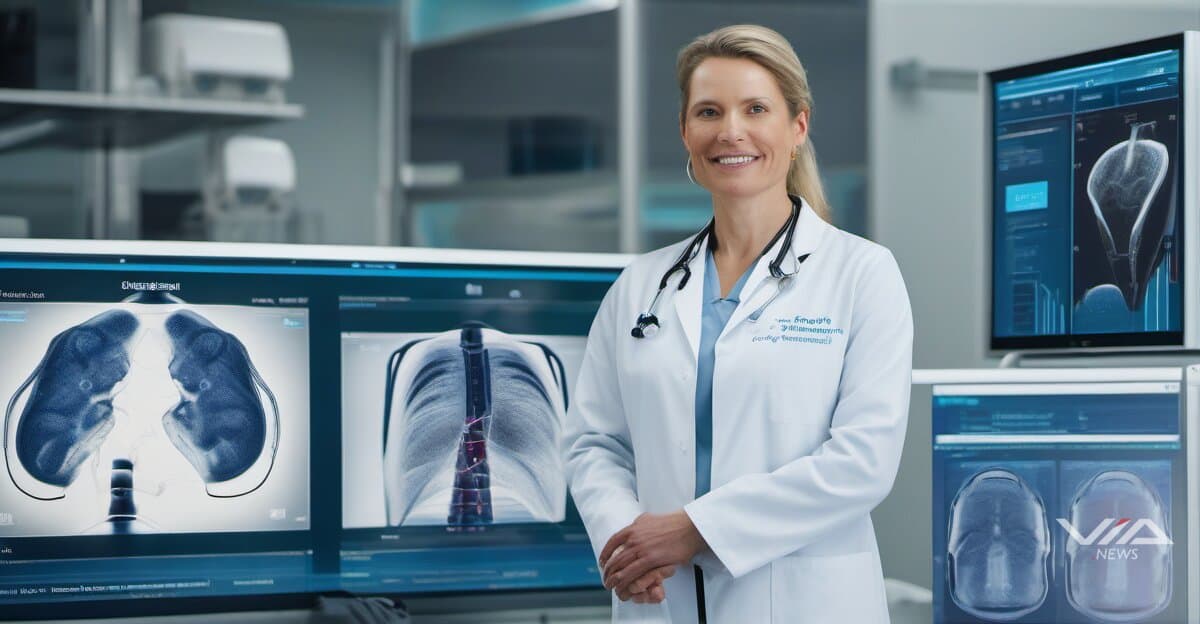
Image generated by AI for illustrative purposes. Not actual footage or photography from the reported events.
Loading stream...

Virtual twin-guided medical procedures reached 2,000 cases in March 2026, marking a clinical milestone for AI-powered patient simulations that began with a single pediatric heart surgery in May 2019.

The FDA published its first guidelines for in silico clinical trials in August 2024, establishing regulatory standards for virtual patient simulations used to validate medical devices and treatments. The framework emerged from a five-year collaboration launched in 2019 and builds on the agency's 2015 participation in the Living Heart Project, which created the first fully functional virtual heart model.

In silico trials use computational models of individual patients to simulate treatment responses and device performance. The technology allows medical teams to test procedures digitally before operating, and enables device manufacturers to supplement traditional clinical trials with virtual patient data.

The regulatory acceptance represents a shift from purely experimental use to validated clinical tools. Traditional medical device trials require physical testing across diverse patient populations, a process that can take years and cost millions. Virtual twins offer faster validation by simulating thousands of patient variations computationally.

The 2,000-procedure milestone suggests adoption is expanding beyond early-adopter institutions. The seven-year trajectory from first use to 2,000 cases indicates gradual clinical integration rather than rapid deployment, likely reflecting the time required for surgeon training, institutional validation, and regulatory clarity.

The FDA's involvement in developing the technology—from joining the Living Heart Project in 2015 to leading guideline development in 2024—shows regulatory agencies actively shaping AI healthcare tools rather than reacting to industry development. This approach may accelerate adoption by providing clear validation standards before widespread deployment.

Key questions remain around validation standards: how many virtual simulations equal one physical trial, how to verify virtual twin accuracy across patient populations, and whether regulatory approval timelines actually decrease compared to traditional methods. The published guidelines provide a framework, but real-world validation data from approved devices will determine whether in silico trials deliver on efficiency promises.

The technology's expansion into regulatory acceptance could influence broader healthcare AI deployment, establishing precedent for computational validation of medical interventions.

About this analysis

This is a Via News analysis. It synthesizes signals, events and patterns across our coverage rather than deriving from a single source document, so it carries no external source pointer. Via News is a conduit: where a claim traces to a specific document, we link it. How we source

L.M. Salvado

L.M. Salvado is an AI possibilist — he takes the risks of AI seriously, and still sees the route through them. Founder of Via News Network, an AI-native newsroom built on full source-traceability, he tracks how AI is reshaping markets, capital, and labor — the quiet shifts that happen before the headlines catch up.