
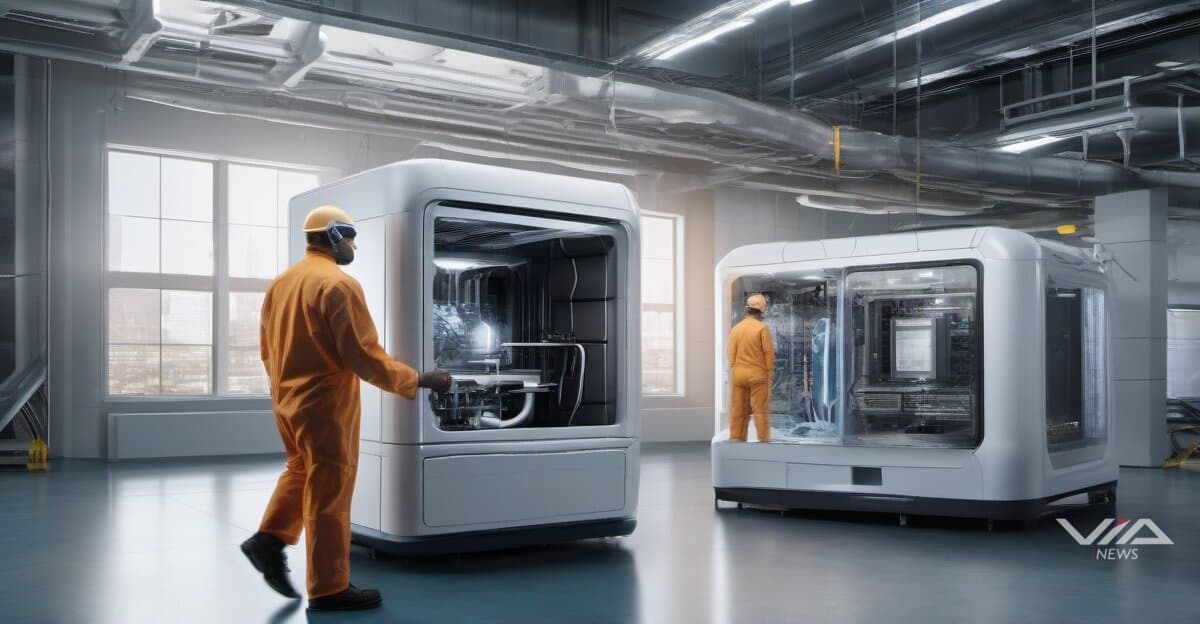
The AI industry has crossed from research into mass industrialization. Capital is now concentrated in deployment-phase products across healthcare, automotive, fintech, and physical-world systems — simultaneously, not sequentially.
Two deployment timelines are forming. Commodity AI applications are shipping in H2 2026. Frontier physical-world systems — robotics, autonomous driving silicon, nuclear compute infrastructure — are arriving on 12-30 month lags.
Automotive AI Hits Volume
Geely Auto sold 3,024,567 vehicles in 2025, a 39% year-on-year increase that exceeded its full-year target.1 The company has deployed full-domain AI across its Comprehensive Safety System 2.0, shifting coverage from vehicle-centric safety to a "People-Vehicle-Road-Cloud-Satellite" ecosystem.1
Geely also opened safety patents to public access — including one-touch window-breaking technology and underbody battery protection systems.1 Companies open patents when they compete on execution, not invention. That threshold has been crossed.
Healthcare Consolidates Around AI Platforms
Covera Health and Medmo are merging to create an end-to-end diagnostic imaging platform integrating scheduling, imaging, and quality assurance into a single offering.2 The deal targets operational fragmentation in radiology — a regulated sector entering AI-driven deployment at scale.
Platform consolidation, not point solutions, is the model for regulated industries. Scheduling, imaging, and QA siloed across vendors creates liability exposure. A unified platform reduces that surface.
VC Harvest Cycles Recycle Into Deployment
Jerusalem Venture Partners logged four exits in Q1 2026 across healthcare and technology sectors.2 Harvest cycles from 2018-2022 enterprise data vintages are now clearing — generating liquidity that flows back into operational AI companies, not further R&D.
The dynamic is structural: early AI bets from the data-infrastructure era are returning capital at scale. That capital is chasing deployment returns, not research upside.
The Bifurcated Timeline
Near-term deployment is broad. AI-assisted diagnostics, automotive safety systems, and enterprise workflows are moving into regulated industries now. Physical-world systems require longer runways. Autonomous vehicle silicon, humanoid robotics, and AI-optimized compute for energy and nuclear applications remain 12-30 months from commercial volume.
Healthcare, automotive, and fintech are advancing in parallel — driven by mature models, available compute, and investors who need deployment returns, not another research cycle.