
Friday, August 21, 2026
What we know · the intelligence behind this page
Live from the substrate
What we're seeing
AI Platforms Rush to Establish Content-Authenticity Standards Amid Leadership Shakeups and Sustained Capex
Within days of each other in mid-August 2026, Google, Anthropic, and Spotify moved to formalize AI content watermarking and labeling policies, signaling an industry-wide push toward self-governed provenance standards as generative AI output floods consumer platforms. The shift coincides with executive turnover at OpenAI (Brad Lightcap's departure) and Meta's public AI manifesto, all set against continued heavy AI infrastructure capital expenditure and finance-sector moves (e.g., Wall Street paying for algorithmic edges on social signals) that underscore AI's deepening entanglement with capital markets.
Our read on the data ›
Signals we're tracking
EPKINLY Regulatory-Clinical Success Cascade
High probability of expanded label indications, additional combination approvals, and competitive positioning strength in follicular lymphoma market. Predicts positive commercial uptake and potential accelerated review for related indications.
Patterns we're watching ›
Where sources disagree
JPMorgan Chase & Co.
Both facts report JPMorgan Chase & Co.'s revenue for the same fiscal period (FY 2025) with the same observation date (2025-12-31), but with different values: $182.447 billion vs. $185 billion. The ~1.4% difference ($2.553 billion) is too large to be explained by rounding alone and represents conflicting data for the identical time period.
We flag conflicts openly ›
Recently verified
Checked against the original source
4,977
facts traced to their source — and we flag the ones that don't hold up.
101 entities tracked4,977 facts checked against source5,242 source documents archived
Work with this data → vianewsagency.com

AI Trading's Two-Tier Reality: Institutional Quants Pull Away as Retail Platforms Flood the Market

Algorithmic trading is splitting into two distinct worlds: institutional players like Flow Traders and Virtu Financial leveraging deep learning to post strong 2025 results, while a wave of retail-facing AI platforms makes bold automation promises backed by thin track records. The divergence exposes a widening sophistication gap—and growing regulatory pressure on both ends.

AI Trading's Two-Tier Reality: Institutional Quants Pull Away as Retail Platforms Flood the Market
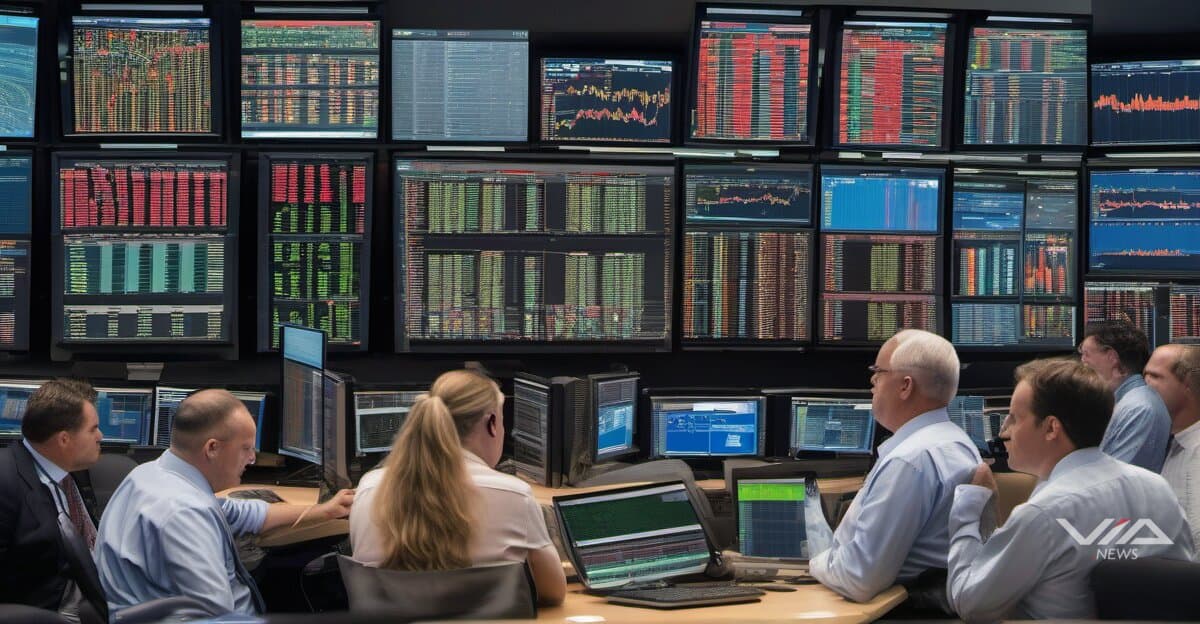
Image generated by AI for illustrative purposes. Not actual footage or photography from the reported events.
Loading stream...

The algorithmic trading landscape is undergoing a structural bifurcation that reveals as much about the maturity of machine learning as it does about the asymmetries of modern finance. On one side, institutional market makers with decades of quantitative heritage are deepening their AI capabilities and posting record results. On the other, a proliferating class of retail-facing automated trading platforms is rushing to market with sophisticated-sounding technology and carefully worded disclaimers.

Institutional Players Entrench Their AI Edge

Flow Traders and Virtu Financial headline a cohort of professional trading firms that have translated early investments in deep learning and high-frequency infrastructure into durable competitive advantages. Both firms posted strong 2025 performance metrics, underscoring how institutional-grade algorithmic trading—rooted in the mathematical rigor pioneered by Renaissance Technologies—continues to widen the gap between professional and retail participants.

These firms operate multi-layer neural network architectures capable of processing thousands of real-time data points across global exchanges simultaneously: pricing data, volume fluctuations, macroeconomic triggers, and cross-asset correlation signals. Crucially, their models are trained on proprietary datasets accumulated over years, with adaptive algorithms that refine continuously as new market data flows in. This is machine learning at production scale—not a marketing claim, but a capital-intensive operational reality.

Regulatory transparency obligations are reinforcing the institutional tier's accountability. Formal position disclosure requirements in UK markets, for instance, are imposing structured reporting on firms that once operated in relative opacity. As regulators increasingly demand documentation of algorithmic behavior and position limits, well-capitalized firms with compliance infrastructure have a structural advantage.

The Retail AI Platform Boom

Meanwhile, a parallel ecosystem has emerged targeting retail investors. Platforms including Quantum AI, Vorexlan, Envariax, GPT Invest, and Lucren are promoting AI-driven portfolio automation to mainstream audiences, typically requiring minimum deposits around $250 and promising real-time market intelligence at low cost.

Vorexlan, for example, describes a cloud-based multi-asset system with machine learning layers that analyze historical performance, volatility patterns, and sentiment indicators. The platform connects users to regulated third-party brokers for execution—operating as a services company that earns through broker partnerships rather than direct trading profits. Its technical specifications reference anomaly detection models, data normalization frameworks, and smart-routing execution systems with minimal latency.

The technology descriptions are credible on their face. But the business model—and the broader retail AI trading category—carries significant caveats. These platforms typically disclaim any guarantee of returns, and the absence of audited performance records makes independent verification nearly impossible. The gap between marketing language and demonstrable outcomes remains wide.

Asymmetric Sophistication, Growing Scrutiny

The divergence between these two tiers is not merely a quality differential—it reflects fundamentally different relationships with risk, data, and accountability. Institutional quant trading is validated through real capital at risk, regulatory oversight, and competitive market feedback. Retail AI platforms, by contrast, operate in a space where algorithmic claims are difficult to audit and investor protections vary sharply by jurisdiction.

Regulatory bodies are beginning to close this gap. KYC and AML requirements, identity verification mandates, and jurisdiction-specific compliance layers are raising the floor for legitimate retail platform operators. But the pace of platform proliferation continues to outrun the speed of regulatory adaptation.

For retail investors evaluating AI trading tools, the core question remains unchanged: what is the audited track record, and who bears the risk when the algorithm underperforms? In institutional trading, those answers are embedded in the business model. In the retail AI boom, they often are not.

Source documents

Via News is a conduit. We point to the source documents behind this report — we don't replace them. Trace any claim to its source and decide what to trust. How we source

Source Trace Score12 source documents12 with a live linkVerifiability: Strong
  1. [1]Press releaseGlobeNewswire· November 20, 2025
    Envariax Unveiled: Why Envariax Is the Next Big Leap in Algorithmic Trading
  2. [2]News articleYahoo Finance· February 12, 2026
    Flow Traders 4Q and FY 2025 Results
  3. [3]Press releaseGlobeNewswire· December 16, 2025
    Quantum AI Unveiled: How Quantum AI Platform Emerges with the Most Advanced Portfolio Automation and Real-Time Market AI
  4. [4]Press releaseGlobeNewswire· December 2, 2025
    Vorexlan Unveiled: How Vorexlan Emerges as the Most Advanced Platform for Portfolio Automation and Real-Time Market Intelligence
  5. [5]Press releaseGlobeNewswire· November 8, 2025
    Balvionex Unveiled: How Balvionex Introduces Advanced AI for Real-Time Trading Efficiency
  6. [6]Press releaseGlobeNewswire· November 15, 2025
    FinoTraze Unveiled: FinoTraze Emerges as 2025’s Most Trusted AI Trading Solution for Smarter Investing with Precision
  7. [7]News articleYahoo Finance· January 28, 2026
    Form 8.3
  8. [8]Press releaseGlobeNewswire· November 13, 2025
    GPT Invest Unveiled: How The GPT Invest Platform Is Delivering Real Results to Global Investors
  9. [9]Press releaseGlobeNewswire· November 13, 2025
    Investview, Inc. (“INVU”) Reports Financial Results, Current Operational and Financial Highlights for the Third Quarter Ended September 30, 2025
  10. [10]Press releaseGlobeNewswire· November 18, 2025
    Lucren AI Unveiled: How the Lucren AI Platform Sets the Next Evolution in Automated Trading Intelligence
  11. [11]Press releaseGlobeNewswire· November 20, 2025
    Senvix Unveiled: How This Senvix AI Platform Is Empowering Global Traders with Data-Driven Confidence
  12. [12]News articleYahoo Finance· January 29, 2026
    Virtu Financial (VIRT) Q4 2025 Earnings Transcript