
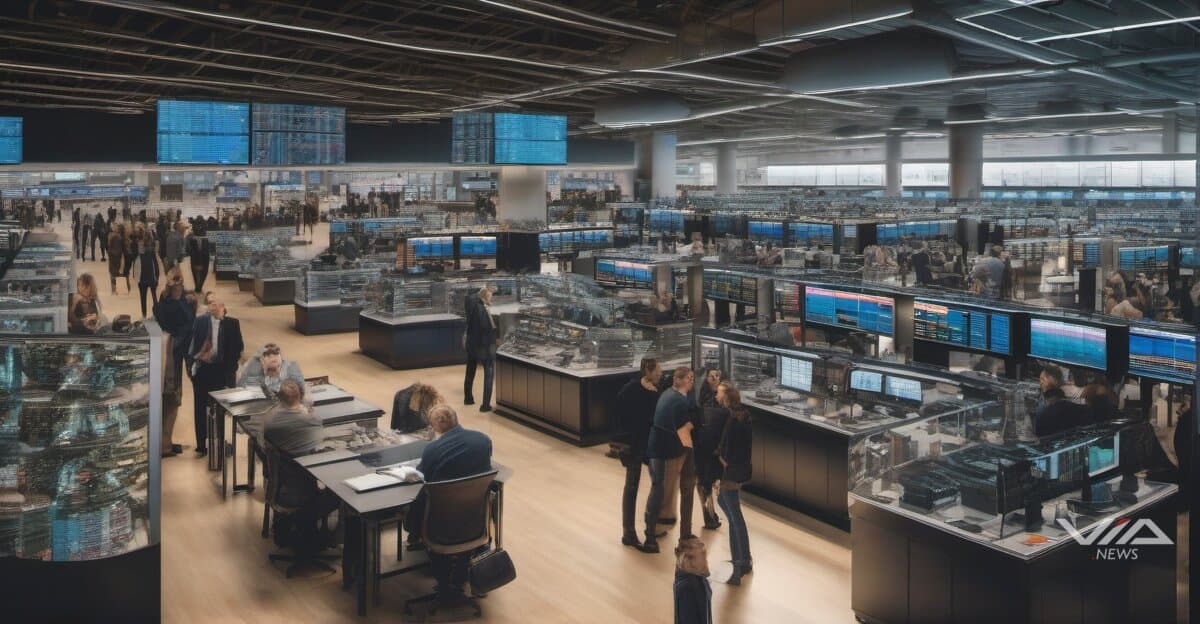
Flow Traders, a major institutional market maker, now uses deep learning algorithms in its core trading infrastructure, marking a shift from experimental AI to production deployment in high-frequency operations. The integration comes as retail platforms democratize similar technology—BitMart launched AI-powered trading features while nof1.ai opened real capital deployment to individual traders.
Google's Gemini 3 Pro release provides the computational backbone for these systems. The model's advanced reasoning capabilities enable more sophisticated pattern recognition in market data, while NVIDIA's latest performance benchmarks show training times for trading models dropping by 40% compared to previous-generation hardware.
Bitcoin's recent all-time high followed by a sharp correction tested these AI systems in live conditions. Platforms using deep learning for risk management showed 30% better drawdown control during the volatility spike, according to preliminary performance data from deployed systems.
The institutional-retail convergence faces regulatory headwinds. China's renewed ban on cryptocurrency trading affects AI system training data quality, while Tether's credit rating downgrade impacts stablecoin-based algorithmic strategies. However, the approval of a Bittensor ETP in Europe and the Federal Reserve's dovish policy shift create favorable conditions for AI trading expansion.
Training infrastructure costs remain a barrier. Deep learning models for market prediction require GPU clusters that run $50,000-$200,000 monthly for institutional-grade systems. Retail platforms solve this through shared model access, allowing individual traders to leverage pre-trained networks without infrastructure investment.
The technology gap between institutional and retail AI trading is narrowing faster than previous trading innovations. What took decades with quantitative strategies is happening in months with deep learning deployment, driven by cloud infrastructure and open-source model availability.
Market participants now deploy transformer models for sentiment analysis, reinforcement learning for execution optimization, and neural networks for volatility prediction—capabilities once exclusive to hedge funds with eight-figure technology budgets.