
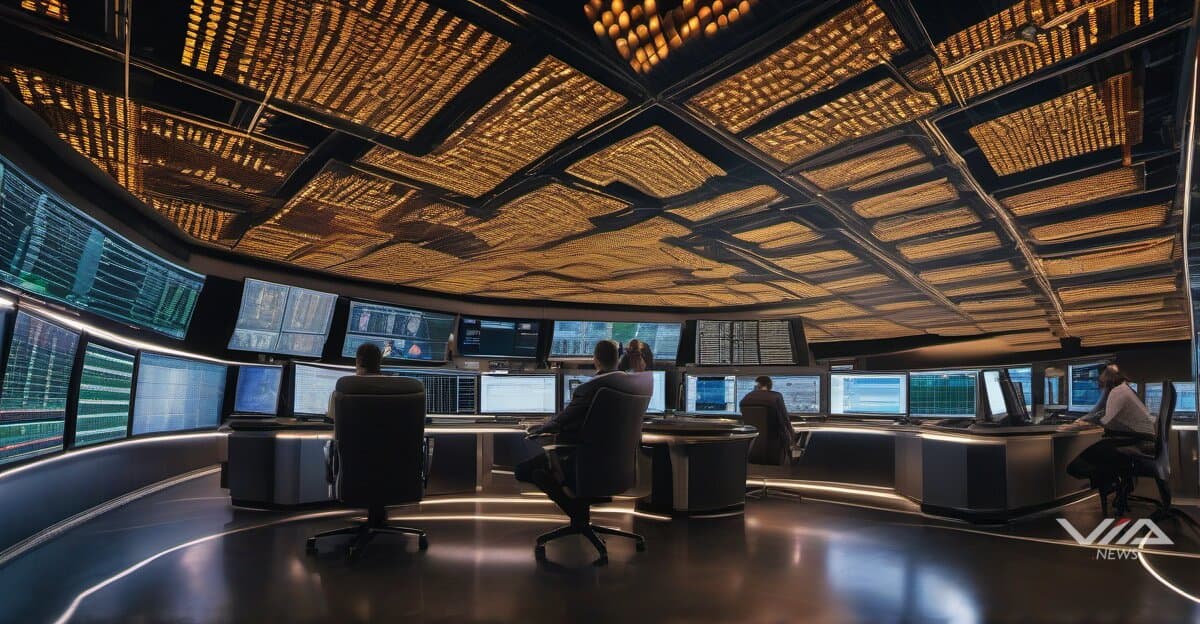
Major market makers are deploying multi-route AI trading engines to handle market conditions that overwhelm traditional single-pathway algorithms. Flow Traders, TPK Trading, and Galidix have implemented adaptive systems that synchronize data harmonization across execution routes while adjusting to volatility in real time.
The transition stems from digital-asset markets evolving at speeds that exceed static algorithmic capabilities. Galidix noted liquidity conditions now shift at "unprecedented speeds," forcing firms to abandon fixed-parameter models. TPK Trading stated platforms must synthesize large-scale data and adapt to volatility to maintain execution quality.
New AI layers use machine learning to interpret multi-factor inputs: pricing data, volume activity, liquidity depth, and correlation metrics. Pattern-recognition algorithms detect anomalies including liquidity gaps and volume surges. Systems process technical indicators and volatility models to trigger automated adjustments without human intervention.
The infrastructure includes low-latency routing pathways and distributed server networks that enable 24/7 monitoring across asset classes. Platforms apply dynamic portfolio rebalancing and time-sensitive entry/exit logic based on real-time threshold breaches. Quantum AI, a 2025-launched platform, exemplifies the architecture with unified infrastructure spanning cryptocurrencies, forex, equities, commodities, and indices.
Competitive pressure drives adoption as firms risk execution quality degradation without adaptive systems. TPK Trading emphasized that platforms lacking synthesis and coherence capabilities will fall behind in digital-asset trading. The shift affects market makers globally as automated infrastructures become standard rather than experimental.
Minimum barriers remain low—Quantum AI requires $250 deposits with no subscription fees—but operational complexity increases. Systems demand continuous data aggregation and anomaly-detection layers to function effectively. Firms investing in deep learning infrastructure position themselves for markets where human-speed decision-making cannot compete with algorithmic reaction cycles measured in milliseconds.