
Thursday, September 10, 2026

Quantum Hardware Faces Architecture Fragmentation as Five Competing Approaches Battle for AI Integration

Quantum computing remains pre-paradigmatic with five distinct hardware approaches—superconducting, ion trap, photonic, topological, and neutral atom—creating technology obsolescence risk for companies like South Korea's SDT Inc. No consensus exists on which architecture will best complement AI workloads, forcing quantum manufacturers to hedge bets or risk stranded capital. The medium-likelihood, catastrophic-severity risk reflects quantum's 70% confidence ceiling on architectural predictions.

Quantum Hardware Faces Architecture Fragmentation as Five Competing Approaches Battle for AI Integration
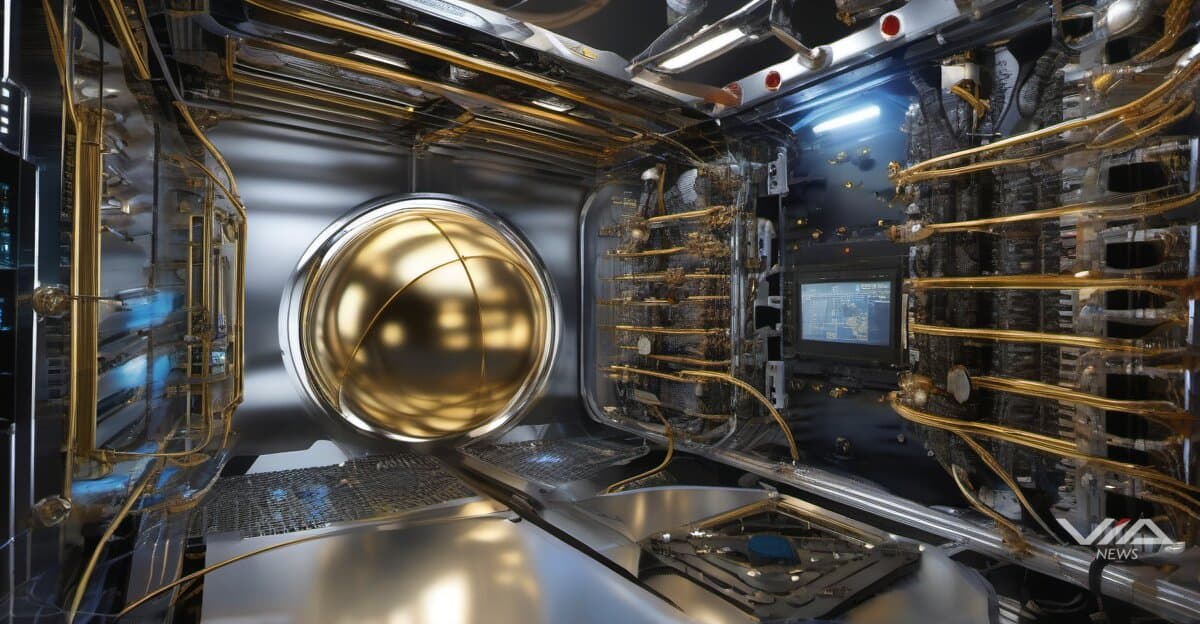
Image generated by AI for illustrative purposes. Not actual footage or photography from the reported events.
Loading stream...

Quantum computing hardware development splits across five competing architectures, none dominant for AI system integration. Superconducting qubits (IBM, Google), ion traps (IonQ, Quantinuum), photonic systems (Xanadu, PsiQuantum), topological qubits (Microsoft), and neutral atoms (QuEra, Pasqal) each promise quantum advantage but suit different computational tasks.

South Korean manufacturer SDT Inc. exemplifies the capital allocation dilemma. Quantum design firms must either specialize in one architecture—risking obsolescence if that approach fails—or spread resources across multiple platforms, diluting expertise and delaying time-to-market.

AI workload requirements complicate architectural choices. Machine learning optimization favors gate-based quantum computers with high qubit connectivity. Neural network training might benefit from photonic systems' room-temperature operation and lower error rates. Quantum sampling for generative AI could leverage neutral atom arrays' scalability to 1,000+ qubits.

Superconducting systems lead in qubit count (IBM's 1,121-qubit Condor) but require dilution refrigeration to 15 millikelvin. Ion traps offer superior coherence times—minutes versus microseconds—but scale slowly. Photonic approaches operate at room temperature, cutting infrastructure costs 90%, yet lack proven error correction at scale.

Hybrid quantum-classical architectures emerge as the practical path for AI integration. These systems offload specific subroutines—optimization, sampling, linear algebra—to quantum processors while classical GPUs handle data preprocessing and model inference. No pure quantum system will replace AI accelerators; the question is which quantum approach becomes the standard co-processor.

Investment risk intensifies as manufacturing scales. Fabrication facilities for superconducting qubits cost $50M+. Photonic systems leverage existing semiconductor fabs but require new packaging. Ion trap systems need precision lasers and vacuum chambers. Committing to the wrong platform strands both capital and specialized engineering talent.

Industry forecasts expect architectural consolidation by 2028-2030, once error-corrected logical qubits demonstrate clear application advantages. Until then, quantum hardware manufacturers face a pre-paradigmatic landscape where today's $100M R&D investment could become tomorrow's technical debt. For AI applications specifically, the architecture supporting efficient tensor operations with 100+ logical qubits will likely capture majority market share.

In this story

What we know · the intelligence behind this page
Live from the substrate
What we're seeing
AI Capital Boom Meets Valuation Jitters: Funding Surges While Bellwether Stocks Wobble
A dense wave of AI-sector funding (Socure, Stability AI, Emerald AI, Generalist AI, Gatik, Regent Craft and others closing rounds on the same day) and strong enterprise-automation earnings (UiPath raising full-year guidance) point to continued heavy capital deployment into AI infrastructure, fintech-adjacent AI, and agentic automation. Yet Palantir's stock fell even after winning the Army's high-profile TITAN contract, and commentary (e.g., the Alphabet bull case citing AI capex and regulatory risk) signals growing investor unease about whether current AI valuations and spending levels are sustainable.
Our read on the data ›
Signals we're tracking
Satellite-Terrestrial Network Integration Acceleration
Increased investment and launches in hybrid satellite-cellular networks across telecom industry; competitive responses from other carriers; regulatory activity around satellite spectrum; expansion of emergency/rural connectivity use cases
Patterns we're watching ›
Where sources disagree
JPMorgan Chase & Co.
Both facts represent the same entity (JPMorgan Chase & Co.), same attribute (EPS), and same observation date (2025-12-31), which aligns with FY 2025 year-end reporting. Fact A explicitly states FY 2025 with EPS of 20.02 USD/share. Fact B has an unspecified fiscal period (N/A) but reports 4.63 USD, a significantly different value (4.3x lower). Given identical observation dates and the same metric, both facts appear intended to represent FY 2025 annual EPS. The conflicting values (20.02 vs 4.63) constitute a direct contradiction. The N/A period in Fact B suggests incomplete or corrupted metadata rather than legitimate time-period variation.
We flag conflicts openly ›
Recently verified
Checked against the original source
4,981
facts traced to their source — and we flag the ones that don't hold up.
101 entities tracked4,981 facts checked against source5,278 source documents archived
Query this data → isubstrate.com