
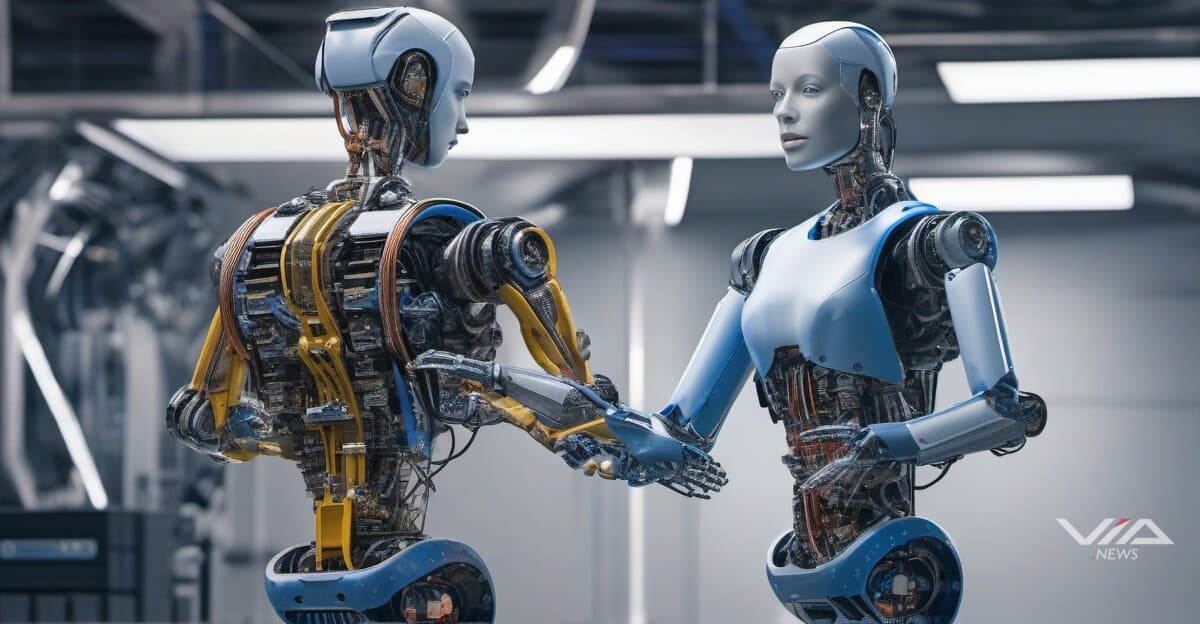
AI foundation models are replacing rule-based programming in robotics as companies deploy autonomous systems that learn physical tasks rather than execute pre-coded routines. Serve Robotics acquired Vayu Robotics specifically to gain foundation model technology for physical intelligence, marking a strategic pivot toward AI-native robotics architectures.
Three humanoid robotics companies—Galaxea AI, Spirit AI, and AI² Robotics—launched in the past six months, each built around foundation models for general-purpose physical manipulation. These systems process visual and sensor data through neural networks trained on diverse physical tasks, contrasting with traditional industrial robots programmed for single repetitive operations.
Commercial traction is accelerating. Fortune 500 companies deploying autonomous security robots from Artificial Intelligence Technology Solutions report 35-80% cost reductions compared to human guards in the $50 billion security services industry. RAD's autonomous security units generate recurring revenue streams as enterprise clients expand deployments after initial pilots.
The company's RADSight 2.0 architecture cuts power consumption by over 50% versus earlier configurations, addressing a key deployment barrier for 24/7 autonomous operation. Each Fortune 500 client represents potential for multiple reorders as they scale from pilot installations to fleet deployments.
Warehouse automation follows similar patterns. Foundation models enable robots to handle diverse objects and adapt to changing layouts without reprogramming, replacing fixed conveyor systems and single-purpose machinery. Service robots in retail and hospitality environments use the same underlying technology to navigate human spaces and respond to unpredictable situations.
Internal resistance emerged at OpenAI over Pentagon partnerships for autonomous systems, highlighting ethical tensions as foundation model capabilities extend to defense applications. The debate centers on whether military deployment of AI-powered robotics contradicts commitments to beneficial AI development.
The transition from programmed automation to learned autonomy represents a fundamental architecture change. Traditional industrial robots execute predetermined sequences; foundation model systems interpret sensory input and generate appropriate physical responses, enabling operation in unstructured environments previously requiring human workers.