
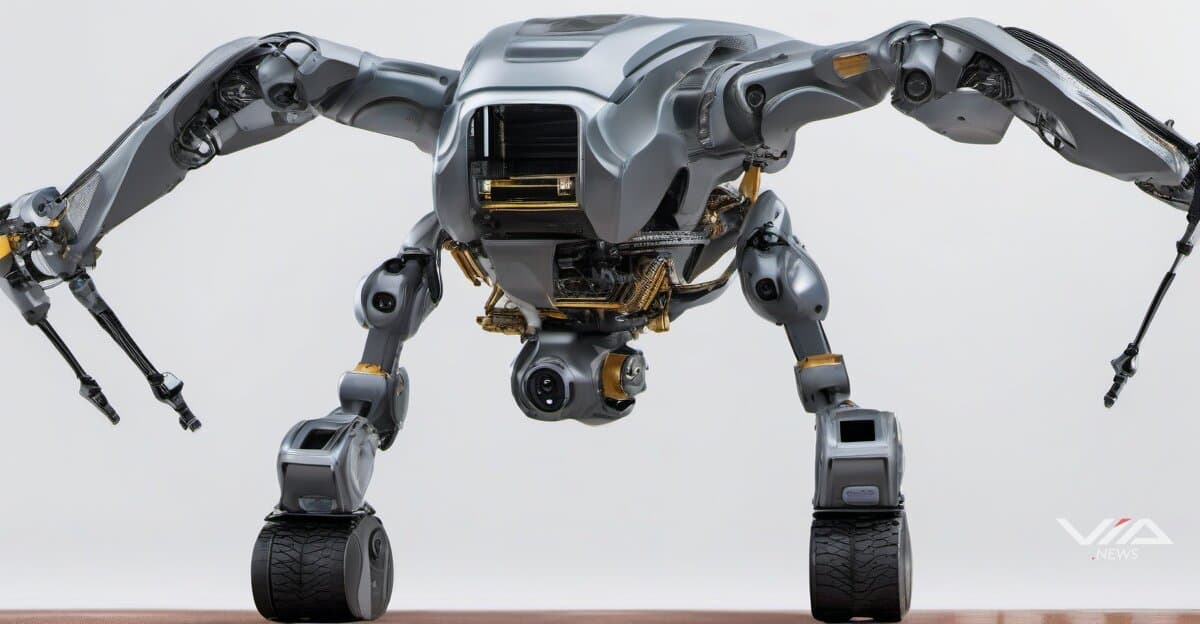
The robotics industry recorded over 40 commercial deployments spanning consumer AI pets, defense drones, and industrial automation in Q1 2026, according to sector analysis tracking autonomous systems adoption. The deployments signal robotics moving beyond controlled factory floors into complex real-world scenarios requiring adaptive navigation and decision-making.
Regulatory barriers fell as the Department of Defense revised sourcing requirements for autonomous drones and Aetna authorized coverage for industrial exoskeletons. The policy shifts followed years of lobbying from manufacturers struggling to scale beyond pilot programs. Defense contracts now permit non-traditional suppliers to bid on autonomous surveillance systems, opening procurement to startups with AI-native architectures.
Commercial robotaxi production entered volume manufacturing while warehouse operators deployed fleets of autonomous material handlers that reduced human injury rates by 34% in early trials. AI-RAN partnerships integrated computer vision directly into 5G infrastructure, cutting latency for robot-to-cloud communications from 47ms to 12ms in field tests.
Consumer robotics broke through with AI-powered companion pets using large language models for natural interaction. Units shipped to 50,000+ households responded to voice commands and learned owner preferences through embedded neural networks. The $299-$899 price range positioned them below traditional pet ownership costs while addressing loneliness in elderly populations.
Industrial breakthroughs included underwater autonomous vehicles mapping ocean floors at 6,000-meter depths and EV battery disassembly robots handling hazardous materials without human supervision. The disassembly systems identified and extracted lithium cells with 99.2% accuracy, solving a critical bottleneck in battery recycling as EV adoption accelerates.
Physical AI convergence drove the expansion, combining transformer models for planning with computer vision for real-time obstacle detection. Systems now operate in unstructured environments—sidewalks, construction sites, hospital corridors—where pre-programmed paths fail. Edge computing chips processing 40 trillion operations per second enabled autonomous decisions without cloud dependency.
Consistent commercial traction across verticals, rather than isolated proof-of-concepts, drives this assessment. Deployment velocity increased from 5-7 launches per quarter in 2025 to 15+ in early 2026 as manufacturers shifted from custom builds to platform approaches supporting multiple use cases.