
Thursday, September 10, 2026

Computer Vision Splits Into Specialized Domains as General-Purpose Models Hit Limits

Computer vision development is fragmenting into domain-specific applications for robotics, edge devices, and medical imaging rather than scaling general-purpose models. Autonomous drones, medical lesion tracking systems, and edge AI processors now require optimization for power constraints and specialized tasks. The shift follows concerns about data practices and environmental costs of large-scale model training.

Computer Vision Splits Into Specialized Domains as General-Purpose Models Hit Limits
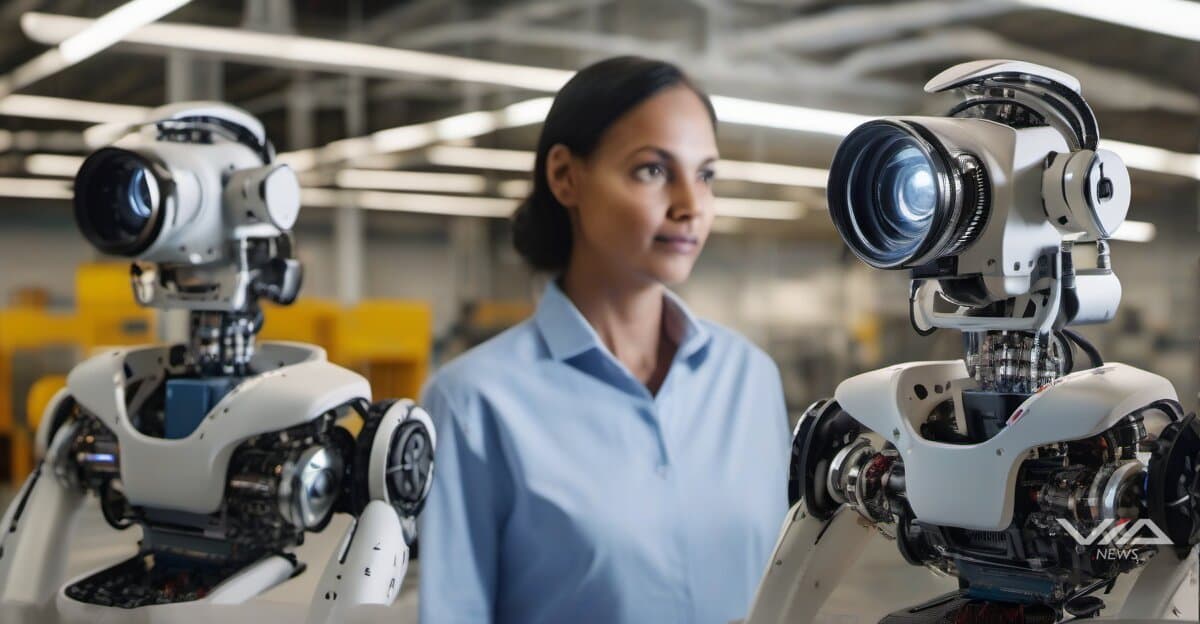
Image generated by AI for illustrative purposes. Not actual footage or photography from the reported events.
Loading stream...

Computer vision applications are diverging into specialized domains instead of converging toward universal models. Autonomous robotics, edge AI devices, and medical imaging systems now demand task-specific optimization rather than general-purpose architectures.

Medical imaging reveals the stakes. Accurate detection of merging and splitting lesions is crucial for reliable response evaluation under RECIST standards. Melika Qahqaie notes that overlooking these events leads to misclassification and potentially incorrect assessment of disease progression. Computer vision systems must track individual lesion behavior across scans, not just detect objects.

Edge AI devices face different constraints. Low-power processors in drones, security cameras, and IoT sensors require models stripped down for real-time inference. These systems prioritize speed and energy efficiency over breadth, running specialized neural networks that handle narrow tasks like obstacle avoidance or motion detection.

Cultural preservation work demonstrates domain adaptation. At Yunju Temple, researchers use micro-trace imaging algorithms to enhance depth visualization of millennium-old stone scripture carvings. Hui Pengyu's team collects image data under light sources at different angles, then applies computer vision to reveal worn inscriptions. The technique requires custom algorithms tuned for stone surface textures and erosion patterns.

The economics of general-purpose models create pressure against specialization. When Meta released No Language Left Behind covering 200 languages including 55 African languages, investors told small NLP startups focused on African languages to shut down. Timnit Gebru reports similar patterns: when Big Tech announces broad model releases, funding dries up for specialized alternatives.

Development costs drive the same consolidation pressure. Gebru describes the dominant paradigm's resource demands: data collection practices, environmental impact from training compute, and labor exploitation. Small teams building domain-specific models struggle to compete on perceived scope.

Yet robotics applications expose general-purpose model weaknesses. Picking systems in warehouses need sub-100ms inference for gripper positioning. Autonomous drone racing requires prediction of gate positions at 60+ fps. Medical imaging demands explainability and audit trails. Each domain optimizes different metrics that universal models average across.

The computer vision field now faces competing directions: scale toward broader general models or specialize toward task-optimized systems. Current deployment patterns suggest fragmentation wins where performance constraints or domain requirements exceed what general-purpose architectures deliver.

Source documents

Via News is a conduit. We point to the source documents behind this report — we don't replace them. Trace any claim to its source and decide what to trust. How we source

Source Trace Score12 source documents12 with a live linkVerifiability: High
  1. [1]News articleYahoo Finance· January 6, 2026
    Durin Debuts MagicKey(™): The First Multi-Factor Authentication for Home Entry
  2. [2]News articleAI Now Institute
    Frugal AI
  3. [3]Press releaseGlobeNewswire· December 22, 2025
    Global Times: How does Yunju Temple keep millennium-old stone scriptures alive today?
  4. [4]Peer-reviewed paperarXiv
    Unbalanced optimal transport for robust longitudinal lesion evolution with registration-aware and appearance-guided priors
  5. [5]News articleYahoo Finance· January 5, 2026
    Acer Announces New Lineup of Premium Swift AI Copilot+ PCs Featuring Intel Core Ultra Series 3 Processors
  6. [6]Press releaseGlobeNewswire· February 24, 2026
    AI-Enabled Edge and Autonomous Systems Take Center Stage
  7. [7]Press releaseGlobeNewswire· February 23, 2026
    Deep Learning Market Size to Surpass $296B by 2031 as Autonomous Systems and Robotics are Set to Grow at 37.2% CAGR, Says a 2026 Mordor Intelligence Report
  8. [8]News articleYahoo Finance· January 29, 2026
    How automotive AI is moving from promise to practice
  9. [9]News articleMIT Technology Review
    The Download: Microsoft’s online reality check, and the worrying rise in measles cases
  10. [10]News articleIEEE Spectrum
    Video Friday: Autonomous Robots Learn By Doing in This Factory
  11. [11]News articleIEEE Spectrum
    Video Friday: Humanoid Robots Celebrate Spring
  12. [12]News articleIEEE Spectrum
    Video Friday: Robot Collective Stays Alive Even When Parts Die
What we know · the intelligence behind this page
Live from the substrate
What we're seeing
AI Capital Boom Meets Valuation Jitters: Funding Surges While Bellwether Stocks Wobble
A dense wave of AI-sector funding (Socure, Stability AI, Emerald AI, Generalist AI, Gatik, Regent Craft and others closing rounds on the same day) and strong enterprise-automation earnings (UiPath raising full-year guidance) point to continued heavy capital deployment into AI infrastructure, fintech-adjacent AI, and agentic automation. Yet Palantir's stock fell even after winning the Army's high-profile TITAN contract, and commentary (e.g., the Alphabet bull case citing AI capex and regulatory risk) signals growing investor unease about whether current AI valuations and spending levels are sustainable.
Our read on the data ›
Signals we're tracking
Satellite-Terrestrial Network Integration Acceleration
Increased investment and launches in hybrid satellite-cellular networks across telecom industry; competitive responses from other carriers; regulatory activity around satellite spectrum; expansion of emergency/rural connectivity use cases
Patterns we're watching ›
Where sources disagree
JPMorgan Chase & Co.
Both facts represent the same entity (JPMorgan Chase & Co.), same attribute (EPS), and same observation date (2025-12-31), which aligns with FY 2025 year-end reporting. Fact A explicitly states FY 2025 with EPS of 20.02 USD/share. Fact B has an unspecified fiscal period (N/A) but reports 4.63 USD, a significantly different value (4.3x lower). Given identical observation dates and the same metric, both facts appear intended to represent FY 2025 annual EPS. The conflicting values (20.02 vs 4.63) constitute a direct contradiction. The N/A period in Fact B suggests incomplete or corrupted metadata rather than legitimate time-period variation.
We flag conflicts openly ›
Recently verified
Checked against the original source
4,981
facts traced to their source — and we flag the ones that don't hold up.
101 entities tracked4,981 facts checked against source5,278 source documents archived
Query this data → isubstrate.com