
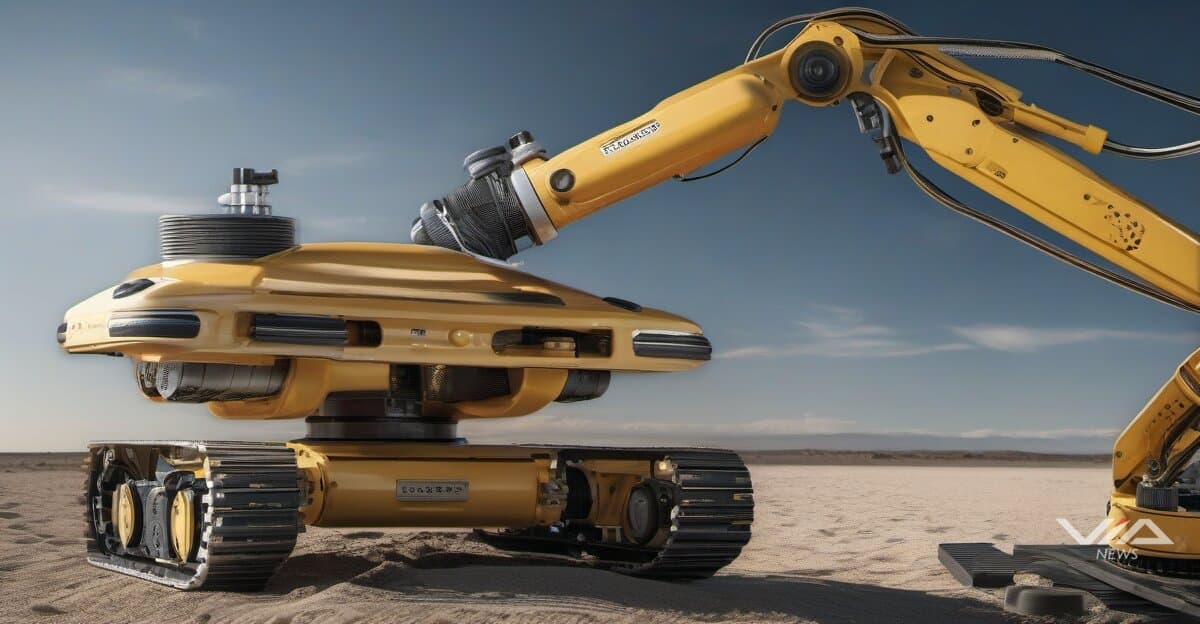
Artificial Intelligence Technology Solutions launched RADSight 2.0, an autonomous security platform consuming half the power of prior systems while targeting the $50 billion U.S. security and guarding services market. The company's RAD (Robotic Assistance Devices) units deliver cost savings between 35% and 80% compared to traditional manned security operations.
The upgraded architecture enables Fortune 500 companies to deploy recurring revenue models through reorder potential across multiple facilities. RAD expects to convert existing sales opportunities into deployed clients generating subscription-based income streams as enterprises shift from human guards to AI-powered surveillance.
Commercial robotics companies are integrating foundation models to move beyond fixed automation into adaptive security responses. The RADSight platform demonstrates how embodied AI—combining computer vision, mobility, and decision-making—addresses labor-intensive industries facing cost pressures and staffing challenges.
The security robot market intersects broader robotics expansion, including delivery systems and warehouse automation. Serve Robotics recently reported growth in autonomous delivery while acquiring AI capabilities, showing parallel trends across commercial applications. Companies are racing to embed large language models and vision systems into physical robots for real-world tasks.
However, the AI robotics sector faces ethical tensions in defense applications. OpenAI's partnerships with the Pentagon have triggered internal friction and executive departures over military use cases. The divide highlights industry debates around weaponized AI versus commercial deployments in logistics, security, and service industries.
Power efficiency improvements in RADSight 2.0 address operational barriers to robot deployment at scale. Lower energy consumption reduces total cost of ownership for enterprises evaluating automation versus human labor across 24/7 security operations.
The security services industry's transformation mirrors manufacturing and logistics shifts toward embodied AI. Foundation models enable robots to handle variable environments rather than scripted tasks, expanding addressable markets beyond controlled factory floors into outdoor patrols, facility monitoring, and threat detection scenarios requiring contextual judgment.