
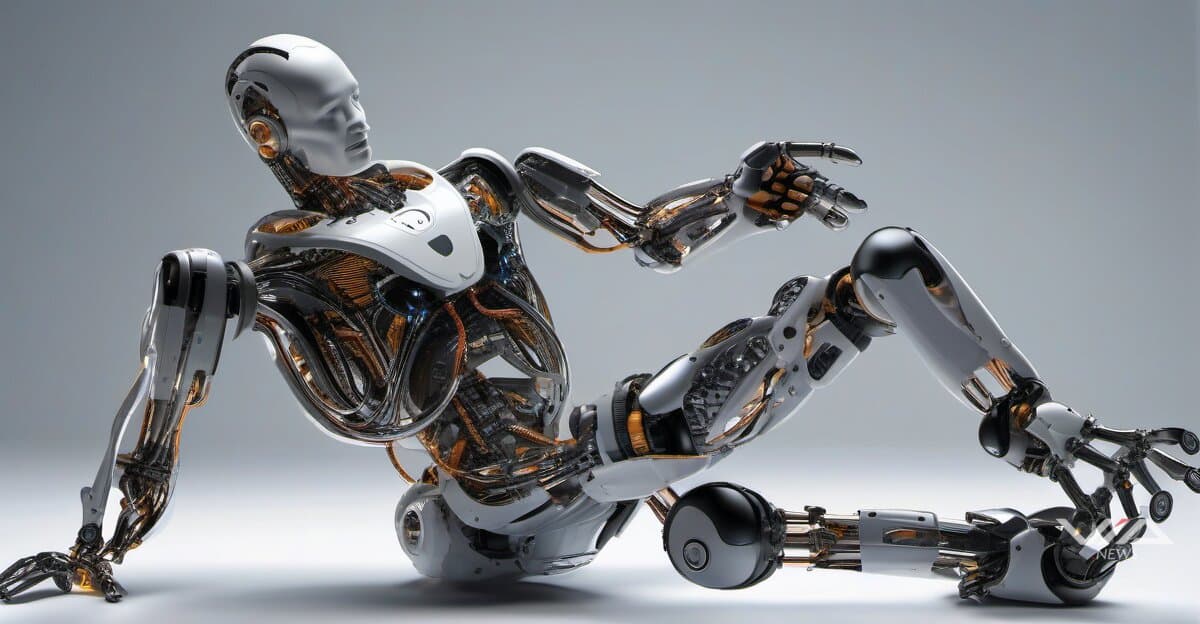
Boston Dynamics is finalizing testing platforms for commercial deployment as the robotics industry shifts from research to market-ready products. The development coincides with multiple humanoid robot startups launching consumer-facing platforms, signaling maturation of embodied AI capabilities.
Harvard researchers achieved breakthroughs in soft robotics manufacturing, creating materials that adapt to unstructured environments. EPFL advanced algorithmic approaches for autonomous navigation, while Toyota Research Institute developed systems enabling robots to learn manipulation tasks from human demonstration.
The convergence arrives ahead of ICRA 2026 in June, where researchers will present advances spanning perception, control systems, and human-robot interaction. The conference historically precedes commercial adoption cycles, with previous years' presentations leading to productization within 18-24 months.
Humanoid platforms now demonstrate capabilities required for warehouse logistics, elder care assistance, and household tasks. The commercial viability hinges on three factors: manufacturing costs dropping below $50,000 per unit, battery life exceeding 8-hour operational shifts, and safety certifications for human-adjacent work environments.
Autonomous systems testing expanded beyond controlled environments into retail spaces and healthcare facilities. Early deployments focus on repetitive tasks where ROI calculations favor robotics over human labor within 2-3 years.
The sector's momentum reflects hardware improvements—actuators with higher torque-to-weight ratios, vision systems processing 60fps in variable lighting—and software advances in sim-to-real transfer learning. Robots trained in simulation now adapt to physical environments with 85% task success rates, up from 60% in 2024.
Investment patterns shifted toward companies demonstrating revenue rather than prototype capabilities. Series B funding now requires proof of commercial contracts, not just technical demonstrations. This threshold eliminates speculative players while concentrating capital on viable platforms.
The June ICRA gathering will test whether research velocity matches commercial demand, determining if 2026 marks the inflection point for embodied AI or another premature declaration of "the robotics decade."