
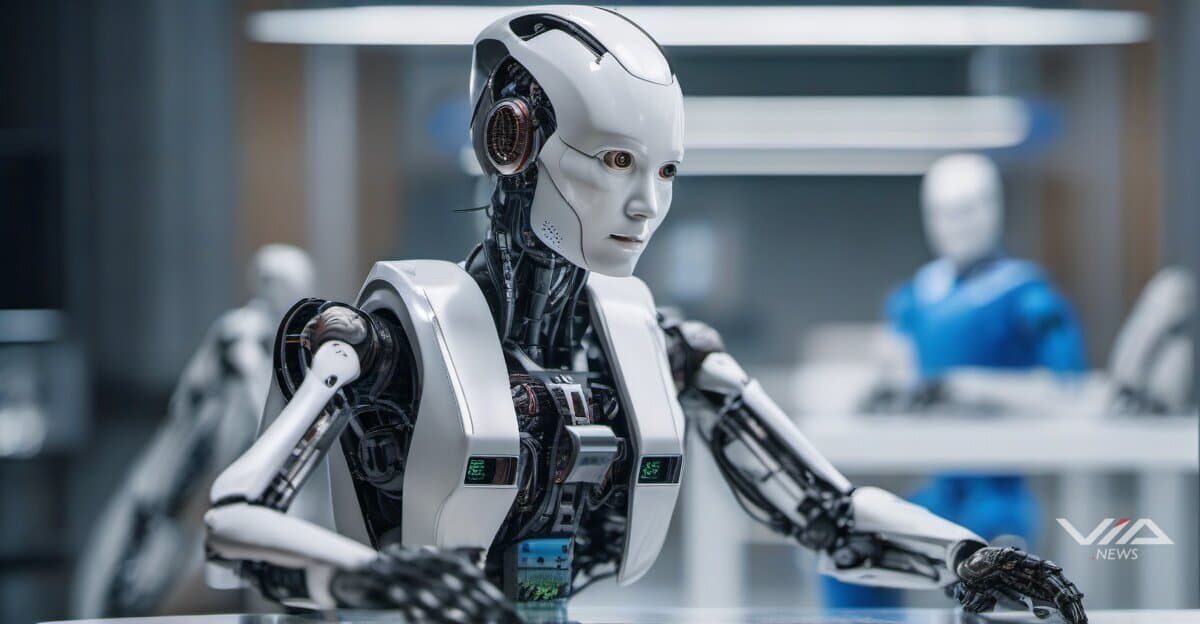
Mentee Robotics, the Tel Aviv-based humanoid robotics startup founded by some of the same engineers who built Mobileye's core vision systems, is targeting series production and commercialization of its humanoid robot platform — a milestone that would push the company firmly into the competitive race to put bipedal machines to work in factories, warehouses, and beyond.
The production target arrives as Mobileye moves to acquire Mentee Robotics, a deal that would fold the humanoid startup into one of the world's leading autonomous driving technology companies. Mobileye, itself a subsidiary of Intel, brings decades of experience in the perception and sensing systems that are increasingly central to robot navigation and operation — a strategic fit that could give Mentee a meaningful edge in a field crowded with well-funded competitors.
Mentee's humanoid robot, developed with an emphasis on real-world physical dexterity and machine vision, has been designed from the ground up with scalability in mind. Unlike some humanoid projects that prioritize research demonstrations, Mentee's engineering team has signaled an intent to build hardware that can survive the rigors of industrial deployment, including manipulation tasks in logistics and light manufacturing environments where human-form factors offer genuine ergonomic advantages over traditional robotic arms or autonomous mobile robots.
The series production announcement places Mentee in direct conversation with a cohort of humanoid companies racing toward commercialization. Tesla's Optimus program, Figure AI, Agility Robotics — now backed by Amazon — and China's Unitree and Fourier Intelligence have all made production commitments in recent years, betting that the economics of humanoid robotics will become viable within this decade. Industry analysts have projected the humanoid robot market could reach tens of billions of dollars annually by the early 2030s, though actual deployment at scale has so far lagged headline ambitions.
What distinguishes Mentee's position is the depth of its computer vision heritage. Mobileye's EyeQ chip architecture and its associated sensor fusion software represent some of the most battle-tested perception technology in the world, refined through hundreds of millions of kilometers of real-world driving data. Applying that expertise to the embodied AI challenge — where a robot must interpret a dynamic physical environment and act on it in real time — could compress development timelines that have stalled other programs.
Commercialization, however, remains the harder problem. Humanoid robots capable of performing unstructured tasks reliably and safely still require significant advances in manipulation, locomotion stability, and task learning. Series production requires not just technical readiness but supply chain maturity, unit economics that attract enterprise buyers, and regulatory clarity in the sectors where robots will operate alongside humans.
Mentee's 2028 commercialization horizon suggests the company is being deliberate rather than rushed, signaling confidence in a phased approach that prioritizes reliability over speed-to-market. For Mobileye, the acquisition represents a bet that the convergence of autonomous vehicle perception and humanoid embodiment is not merely plausible — it is the next logical frontier.
The humanoid robot sector is moving fast. Mentee's series production target is a signal that even well-resourced incumbents are no longer watching from the sidelines.