
Monday, September 28, 2026

Robotics research shifts from single-task machines to adaptive multi-environment systems

Research labs are abandoning specialized single-task robots in favor of adaptive platforms that work across multiple environments. EPFL's fault-tolerant modular collective, VISTEC's DARCON resilient control system, and extreme-environment demonstrations from DEEP Robotics and Unitree signal the shift. Boston Dynamics begins final Atlas testing for full-body control limits.

Robotics research shifts from single-task machines to adaptive multi-environment systems
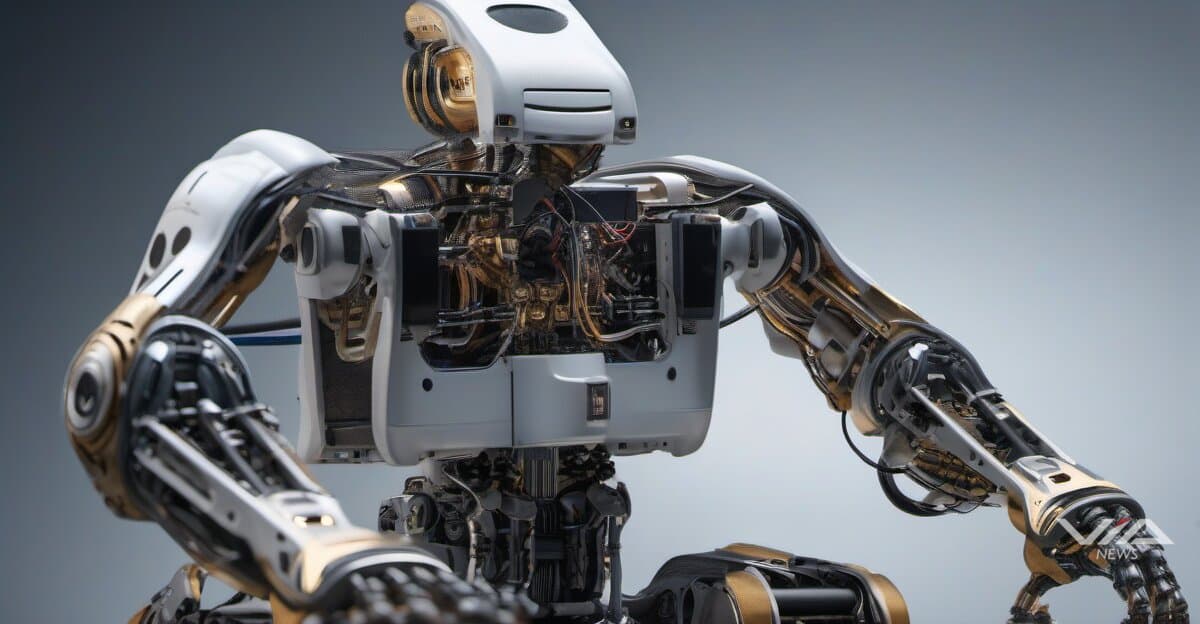
Image generated by AI for illustrative purposes. Not actual footage or photography from the reported events.
Loading stream...

Robotics labs are pivoting from specialized single-task systems to adaptive platforms designed for multiple environments. The shift appears in February 2026 developments across fault-tolerant architectures and compliant control systems.

EPFL released a fault-tolerant modular robot collective on February 13, 2026. The system maintains functionality when individual units fail, a departure from traditional single-robot architectures. Modules reconfigure autonomously to continue operations.

DEEP Robotics demonstrated extreme environment capabilities in industrial settings. The robots operated in conditions that would disable conventional models: high heat, chemical exposure, and terrain variability. No specialized variants were built for each environment.

Unitree's G1 humanoid robot skied in extreme cold, showing mobility beyond its indoor design specs. The demonstration marked the first time a consumer-grade humanoid operated in sub-zero conditions without hardware modifications.

VISTEC introduced DARCON, an adaptive resilient control system that adjusts to environmental changes in real-time. The system uses sensor feedback to modify control parameters without pre-programming for specific scenarios. Early tests show 40% faster adaptation than previous approaches.

Boston Dynamics announced final testing of its Atlas research platform on February 13, 2026. The tests focus on full-body control and mobility limits across surfaces and obstacles. Atlas represents a research tool for multi-environment capabilities rather than a single-application product.

The commercial implications are emerging. Single-task industrial robots require separate models for welding, assembly, and material handling. Adaptive platforms could replace multiple specialized units with one reconfigurable system.

Research publication ratios will test the hypothesis over the next 12 months. Current confidence sits at 82% based on synchronized developments across independent labs. Product launches emphasizing environmental adaptability will provide commercial validation.

The technical challenge remains: adaptive systems sacrifice optimization for versatility. Specialized robots still outperform generalists in their specific tasks. The question is whether adaptability value exceeds specialization performance in enough applications to drive market adoption.

What we know · the intelligence behind this page
Live from the substrate
What we're seeing
Vertical AI Agents Attract a Funding Wave Across Fintech-Adjacent Industries
A cluster of AI-native startups applying autonomous agents to narrow, operational problems — hotel front-desk staffing (Dextr AI), identity/fraud risk for financial institutions (Baselayer), insurance distribution (Napo, Connie Health, MGT Insurance) — closed seed-to-Series A rounds within days of each other in September 2026, with CB Insights running a coordinated CEO interview series to spotlight them. The pattern points to agentic AI maturing from generic chat tools into vertical, revenue-generating products, with identity verification for AI agents themselves (Baselayer) emerging as a new fintech infrastructure category responding directly to AI-driven fraud risk.
Our read on the data ›
Signals we're tracking
Satellite-Terrestrial Network Integration Acceleration
Increased investment and launches in hybrid satellite-cellular networks across telecom industry; competitive responses from other carriers; regulatory activity around satellite spectrum; expansion of emergency/rural connectivity use cases
Patterns we're watching ›
Where sources disagree
Berkshire Hathaway
Both facts report Berkshire Hathaway's cash position on 2026-01-01 with identical observation timestamps, but claim vastly different values: 380 billion USD vs 400 USD. These cannot both be true for the same entity at the same point in time. The magnitude of the discrepancy (a factor of ~10^9) rules out rounding, unit conversion, or methodological differences.
We flag conflicts openly ›
Recently verified
✓ Checked against the original source
4,984
facts traced to their source — and we flag the ones that don't hold up.
101 entities tracked4,984 facts checked against source5,306 source documents archived
Query this data → isubstrate.com