
For years, the Pentagon and its prime contractors talked about physical AI and robotics as a promising horizon — something to be tested, evaluated, and eventually fielded. That horizon is now the present. A convergence of deals announced in early 2026 marks a decisive inflection point: the defense industrial base is integrating autonomous systems and robotic platforms directly into its core manufacturing and operational infrastructure.
The clearest signal comes from Huntington Ingalls Industries (HII), the United States' largest military shipbuilder, which signed a memorandum of understanding with Path Robotics to deploy autonomous welding systems in naval vessel construction. Shipbuilding is among the most labor-intensive and technically demanding manufacturing sectors — welding hull sections requires precision that has historically demanded highly skilled tradespeople in short supply. HII's move to embed robotic welding at the platform level is not a pilot program. It is a strategic commitment to restructure how warships are built.
Path Robotics, which uses AI-driven computer vision to guide welding robots through complex, unstructured environments, simultaneously closed a funding round exceeding $300 million, underscoring investor conviction that defense and heavy industry contracts represent a durable, scalable revenue base. The company's technology is notable precisely because it does not require pre-programmed paths — the system perceives its environment and adapts, a capability directly applicable to the variability inherent in large-scale military manufacturing.
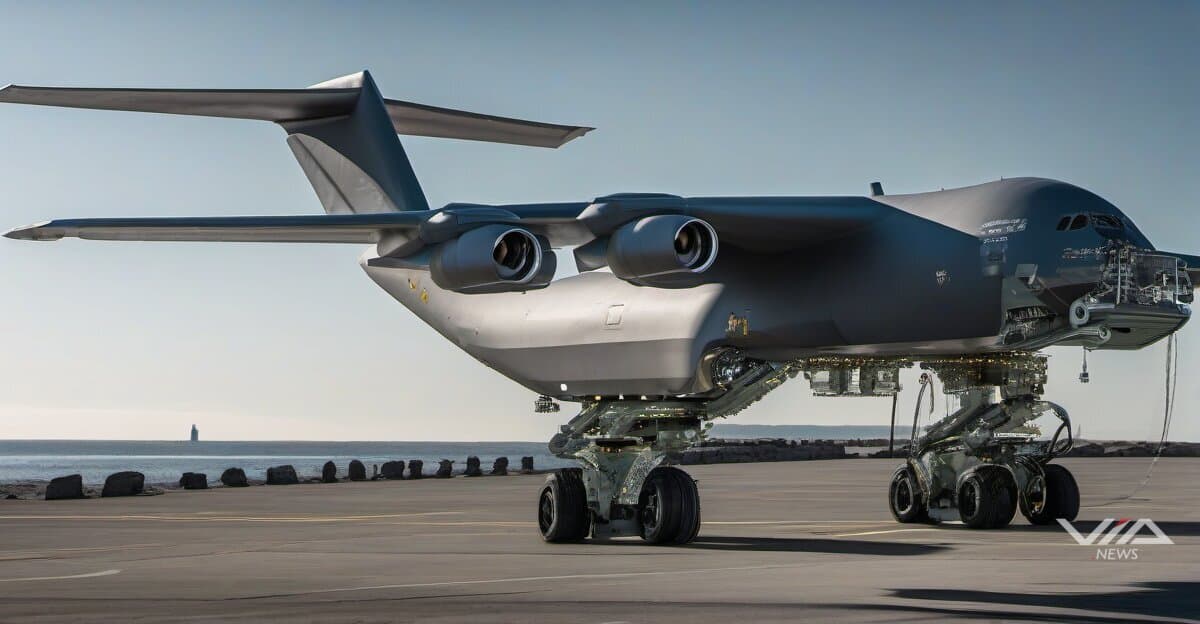
On the mission systems side, Curtiss-Wright secured a contract with Boeing for next-generation mission computers aboard the C-17 Globemaster III, the workhorse of U.S. strategic airlift. Mission computers are the cognitive core of modern military aircraft — they process sensor data, manage avionics, and increasingly serve as the integration layer for AI-enabled decision support. Upgrading the C-17's mission computer is not an incremental refresh; it positions one of the most operationally critical platforms in the U.S. inventory to absorb AI capabilities as they mature.
Taken individually, each of these developments is significant. Taken together, they describe a structural shift. Defense primes and their tier-one suppliers are no longer asking whether physical AI belongs in their supply chains — they are building it in. The FY2026-2027 budget cycle is expected to accelerate this trend, with analysts anticipating increased contract awards across autonomous manufacturing, robotic assembly, and AI-enabled platform computing.
The implications extend beyond the factory floor. As physical AI becomes embedded in how weapons systems are built and sustained, the companies with validated, production-proven robotic and autonomous capabilities will hold a durable competitive advantage in defense procurement. Small- and mid-cap defense technology firms with genuine physical AI exposure — particularly in autonomous manufacturing and embedded mission computing — are increasingly positioned to benefit as primes seek to de-risk their supply chains with established technology partners rather than experimental vendors.
The defense sector has a long history of separating R&D theater from genuine procurement intent. The HII-Path Robotics MOU, the Curtiss-Wright-Boeing contract, and a nine-figure funding round arriving in the same window are not theater. They are the early returns of a production-scale bet on physical AI — and the rest of the industrial base is watching closely.