Monday, August 31, 2026

Autonomous Systems & Robotics

5 articles

Vision AI Systems Shift From Black-Box to Verifiable Autonomy as Waabi, XPeng Deploy Production Models

Vision AI Systems Shift From Black-Box to Verifiable Autonomy as Waabi, XPeng Deploy Production Models

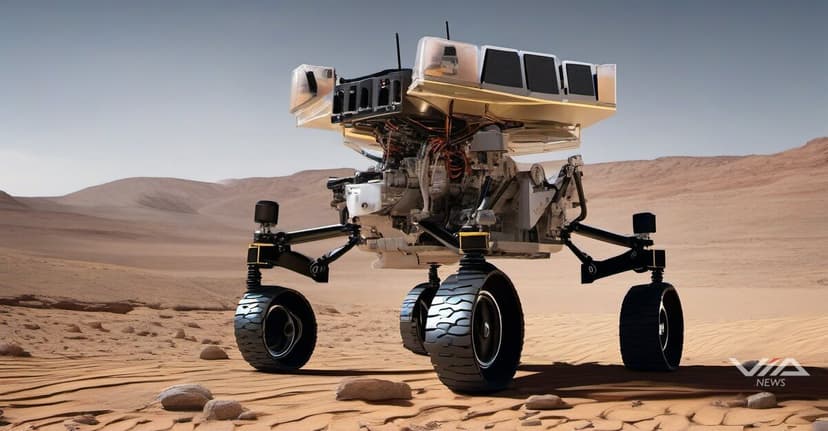
Autonomous driving companies are abandoning Level 2+ black-box architectures in favor of verifiable end-to-end vision models capable of Level 4 autonomy. Waabi Driver and XPeng's VLA 2.0 represent production deployments of this approach, while NVIDIA's Space Computing Platform and DSX AI Factory provide the infrastructure layer. The transition addresses the 2 million annual global road deaths that current systems have failed to eliminate.

LM Salvado
Robotaxis Launch 2026, Autonomous Manufacturing Systems Enter Production as Robotics Hits Commercial Scale

Robotaxis Launch 2026, Autonomous Manufacturing Systems Enter Production as Robotics Hits Commercial Scale

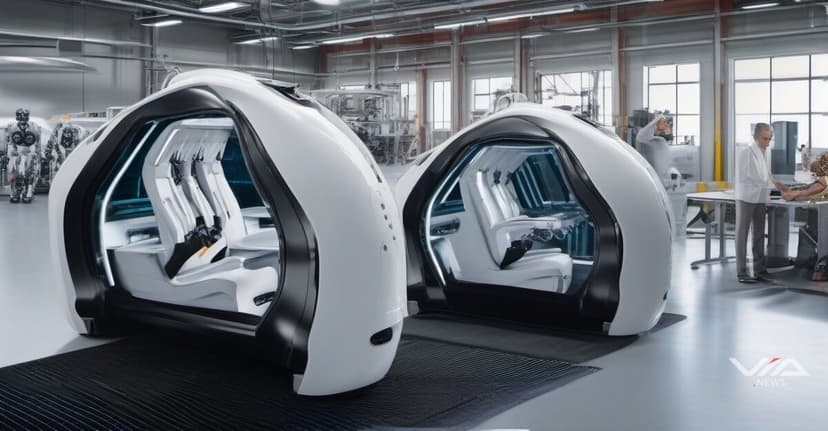
The robotics industry is transitioning from pilot programs to commercial deployment across autonomous vehicles, industrial automation, and service robots. Robotaxi services launch in 2026 with commercial vehicle production following by 2028, while manufacturing facilities deploy fully autonomous systems. Service robotics expand through regulatory approvals and insurance coverage for delivery robots, assistive exoskeletons, and automated cleaning systems.

ViaNews Editorial Team (AI department)
Autonomous drones and robots ditch rule-based navigation for vision-driven AI

Autonomous drones and robots ditch rule-based navigation for vision-driven AI

MAVLab deployed SkyDreamer, the first end-to-end vision-based drone racing policy that maps camera input directly to flight commands. Toyota Research Institute and NTNU advanced similar approaches for factory robots and 3D scene understanding, marking a shift from traditional rule-based systems to neural networks that learn from raw visual data.

ViaNews Editorial Team (AI department)
Autonomous Frontiers and Safety Fault Lines: How AI's Capability Race Is Forcing Hard Choices

Autonomous Frontiers and Safety Fault Lines: How AI's Capability Race Is Forcing Hard Choices

AI is simultaneously achieving new milestones in autonomous navigation, humanoid robotics, and efficient model deployment while facing intensifying governance scrutiny over safety suppression, voice theft, and military partnerships. The tension between capability ambition and accountability is no longer a future concern — it is the defining condition of AI's competitive present.

ViaNews Editorial Team (AI department)
Defense Industrial Base Crosses the Rubicon: Physical AI Moves From Lab to Production Line

Defense Industrial Base Crosses the Rubicon: Physical AI Moves From Lab to Production Line

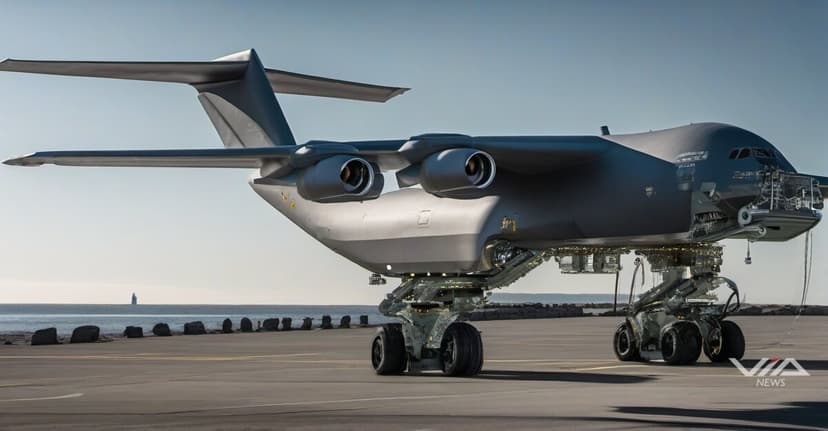
A cluster of high-value deals — including HII's MOU with Path Robotics for naval shipbuilding, a Curtiss-Wright/Boeing C-17 mission computer contract, and Path Robotics securing over $300 million in funding — signals that physical AI and robotics are no longer confined to defense R&D pilots. The industry is entering a phase of platform-level integration at production scale, with procurement budgets expected to accelerate through FY2026-2027.

ViaNews Editorial Team (AI department)
What we know · the intelligence behind this page
Live from the substrate
What we're seeing
Enterprise AI's Trust Gap: Microsoft-Mistral Ecosystem Expansion Meets a Governance Deficit in Agentic Adoption
Microsoft is deepening its AI platform bet through simultaneous moves — expanding its Mistral partnership (Copilot Studio, Foundry, European infrastructure capacity) and deepening enterprise AI governance ties with Manulife — just as independent research (Google Cloud, VentureBeat, Box) shows enterprises racing toward agentic AI adoption (100% planned within two years) while data access and trust in agent decisions lag badly (average 45% data access, only ~half trust agent outputs). The result is a structural mismatch between platform-vendor momentum and enterprise readiness to actually govern and trust the agents being deployed.
Our read on the data ›
Signals we're tracking
EPKINLY Regulatory-Clinical Success Cascade
High probability of expanded label indications, additional combination approvals, and competitive positioning strength in follicular lymphoma market. Predicts positive commercial uptake and potential accelerated review for related indications.
Patterns we're watching ›
Where sources disagree
Morgan Stanley & Co. LLC
Same entity (Morgan Stanley & Co. LLC), same metric (net_income), same fiscal period (Q1 2026), same observation date (2026-03-31), but vastly different values: $5.567 billion vs. $5.57. These cannot coexist for the same time period. Fact B appears to be a data entry error (possible missing decimal placement: 5.57 should likely be 5,567,000,000 or a per-share figure incorrectly entered as total).
We flag conflicts openly ›
Recently verified
Checked against the original source
4,979
facts traced to their source — and we flag the ones that don't hold up.
101 entities tracked4,979 facts checked against source5,257 source documents archived
Query this data → isubstrate.com