
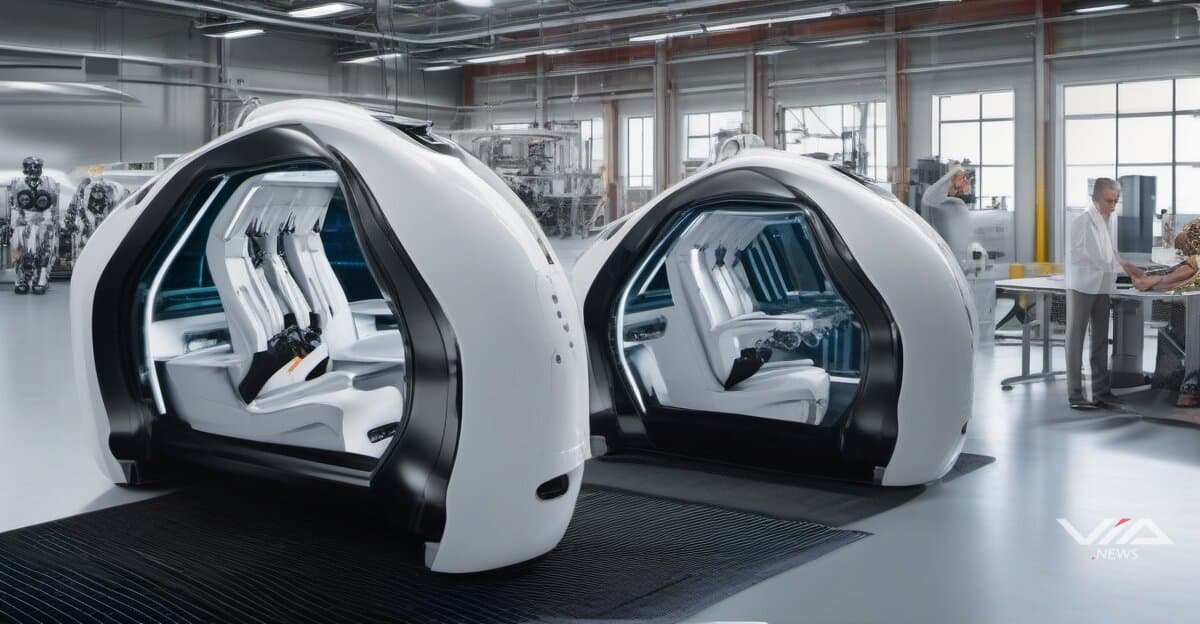
Robotaxi services will launch commercially in 2026, marking the robotics industry's shift from research programs to production-scale deployment. Commercial autonomous vehicle manufacturing is scheduled to begin by 2028 as companies move past pilot phases into market operations.
Mobileye acquired Mentee Robotics to accelerate humanoid robot development, gaining access to AI infrastructure for scalable robotics solutions. "Joining forces with Mobileye gives us access to unparalleled AI infrastructure and commercialization expertise, accelerating our mission to bring scalable, safe, and cost-effective humanoid solutions to market," said Prof. Lior Wolf of Mentee Robotics.
Boston Dynamics completed final testing of its Atlas research platform for full-body control and mobility limits as the enterprise version enters commercial deployment. "Now that the Atlas enterprise platform is getting to work, the research version gets one last run in the sun. Our engineers made one final push to test the limits of full-body control and mobility," the company stated.
Industrial automation is advancing toward fully autonomous manufacturing systems. Companies are deploying robots that handle complete production processes without human intervention, moving beyond single-task automation to integrated systems managing entire workflows.
Service robotics are expanding market reach through regulatory frameworks and insurance programs. Delivery robots now operate in multiple cities with municipal approvals. Insurance providers are covering assistive exoskeletons and robotic cleaning systems, removing financial barriers to adoption in healthcare and commercial facilities.
The transition reflects maturation of core technologies including computer vision, machine learning control systems, and sensor integration. Engineers are applying mathematical foundations to solve real-world deployment challenges. "Focus on mathematics. Engineering looks hands-on, but math is the foundation behind everything," advised robotics engineer Xiangyi Cheng.
Medical robotics are advancing toward personalized procedures through AR-guided systems. "Everyone's hand is different. So the surgery should be personalized," Cheng noted, describing surgical assistance platforms adapting to individual patient anatomy.
The commercial scaling phase marks a fundamental shift from concept validation to market execution across robotics sectors, with production timelines now measured in years rather than decades.