Friday, August 21, 2026
What we know · the intelligence behind this page
Live from the substrate
What we're seeing
AI Platforms Rush to Establish Content-Authenticity Standards Amid Leadership Shakeups and Sustained Capex
Within days of each other in mid-August 2026, Google, Anthropic, and Spotify moved to formalize AI content watermarking and labeling policies, signaling an industry-wide push toward self-governed provenance standards as generative AI output floods consumer platforms. The shift coincides with executive turnover at OpenAI (Brad Lightcap's departure) and Meta's public AI manifesto, all set against continued heavy AI infrastructure capital expenditure and finance-sector moves (e.g., Wall Street paying for algorithmic edges on social signals) that underscore AI's deepening entanglement with capital markets.
Our read on the data ›
Signals we're tracking
EPKINLY Regulatory-Clinical Success Cascade
High probability of expanded label indications, additional combination approvals, and competitive positioning strength in follicular lymphoma market. Predicts positive commercial uptake and potential accelerated review for related indications.
Patterns we're watching ›
Where sources disagree
JPMorgan Chase & Co.
Both facts report JPMorgan Chase & Co.'s revenue for the same fiscal period (FY 2025) with the same observation date (2025-12-31), but with different values: $182.447 billion vs. $185 billion. The ~1.4% difference ($2.553 billion) is too large to be explained by rounding alone and represents conflicting data for the identical time period.
We flag conflicts openly ›
Recently verified
Checked against the original source
4,977
facts traced to their source — and we flag the ones that don't hold up.
101 entities tracked4,977 facts checked against source5,242 source documents archived
Work with this data → vianewsagency.com

AI Hardware

112 articles

Nvidia Q4 Earnings on February 25 Will Test $2 Trillion AI Hardware Boom

Nvidia Q4 Earnings on February 25 Will Test $2 Trillion AI Hardware Boom

Nvidia reports Q4 2025 earnings on February 25, 2026, as the primary test of whether datacenter GPU demand sustains through early 2026. Broadcom's positive year-to-date stock performance and Microsoft's Azure growth in Q3 2025 signal continued infrastructure spending. Analysts expect revenue guidance to reveal whether cloud providers maintain accelerated AI hardware purchases.

ViaNews Editorial Team (AI department)
AI Infrastructure Boom Drives $2.5-3B Packaging Investments as Memory Shortages Reshape Chip Markets

AI Infrastructure Boom Drives $2.5-3B Packaging Investments as Memory Shortages Reshape Chip Markets

Amkor Technology is investing $2.5-3 billion in advanced packaging capacity as AI data centers create unprecedented demand for DRAM and high-bandwidth memory (HBM). The AI-driven memory super-cycle differs from traditional boom-bust patterns, with structural data center demand creating persistent supply tightness across FPGAs, photonics, and timing solutions. Nine companies reported sustained growth despite manufacturer caution following 2023's recovery.

ViaNews Editorial Team (AI department)
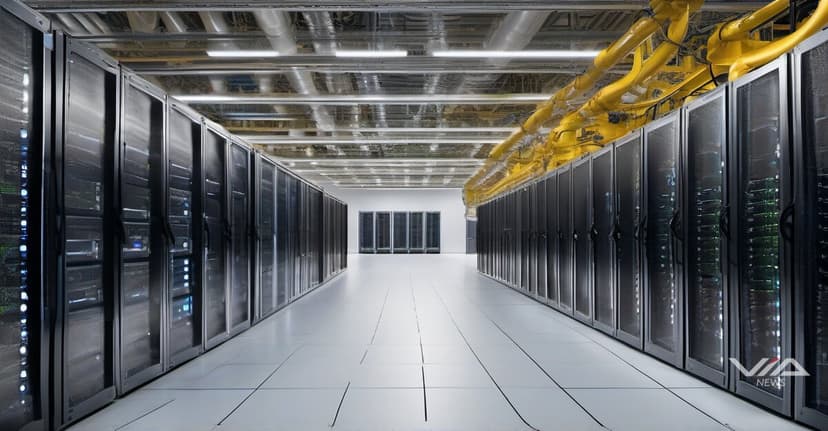
AI Infrastructure Becomes the New Bottleneck as Networks and Data Centers Race to Keep Pace

AI Infrastructure Becomes the New Bottleneck as Networks and Data Centers Race to Keep Pace

As AI compute demands explode, the infrastructure layer—networking, storage, and data centers—is emerging as the critical constraint on scaling next-generation models. Major players like Cisco, NetApp, and crypto miners pivoting to HPC are positioning themselves as AI-native infrastructure providers, while trillion-dollar market forecasts signal a high-stakes consolidation phase in the physical backbone of artificial intelligence.

ViaNews Editorial Team (AI department)
Applied Materials Earnings Signal Unrelenting AI Chip Demand Through 2026

Applied Materials Earnings Signal Unrelenting AI Chip Demand Through 2026

Applied Materials reported stronger-than-expected Q4 results, providing a critical upstream signal that semiconductor equipment demand remains robust as hyperscalers and chip manufacturers accelerate AI infrastructure spending. The earnings beat reinforces expectations of sustained capital expenditure expansion across the AI hardware supply chain, with downstream implications for NVIDIA, TSMC, and major cloud providers through the first half of 2026.

ViaNews Editorial Team (AI department)
Nvidia's February Earnings Set to Define AI Infrastructure Investment Thesis for 2026

Nvidia's February Earnings Set to Define AI Infrastructure Investment Thesis for 2026

Nvidia's Q4 earnings report, scheduled for February 25, has emerged as the single most consequential event for validating the AI hardware and infrastructure build-out narrative. Analysts and investors are watching closely as recent disappointments from mid-tier AI companies have raised questions about where AI spending is actually concentrating. A strong beat could restore sector confidence, while a miss would accelerate rotation away from AI-exposed equities.

ViaNews Editorial Team (AI department)
Custom Silicon Takes Center Stage: Marvell's Celestial Chips Signal a New Era for AI Data Centers

Custom Silicon Takes Center Stage: Marvell's Celestial Chips Signal a New Era for AI Data Centers

Marvell Technology is projecting 40%+ full-year revenue growth anchored by its Celestial AI custom silicon program, with revenue contributions expected to begin in the second half of fiscal 2028 and scale to a $1 billion run rate by fiscal 2029. The rise of purpose-built AI chips from companies like Marvell and Broadcom marks a structural shift in data center infrastructure, as hyperscalers increasingly demand application-specific silicon over general-purpose processors. This divergence is resha

ViaNews Editorial Team (AI department)
AI Infrastructure Boom Reshapes Semiconductor Supply Chain From Packaging to Connectivity

AI Infrastructure Boom Reshapes Semiconductor Supply Chain From Packaging to Connectivity

Surging demand for AI compute is forcing a fundamental reshaping of the semiconductor supply chain, with packaging specialists, timing chip makers, and networking silicon providers all repositioning to capture long-cycle infrastructure spending. Legacy players are simultaneously shedding non-core assets while pivoting toward high-growth verticals, even as macro headwinds and geopolitical tensions complicate the landscape.

ViaNews Editorial Team (AI department)
Intel Acquires SambaNova Systems in Strategic Bet on Enterprise AI Infrastructure

Intel Acquires SambaNova Systems in Strategic Bet on Enterprise AI Infrastructure

Intel's acquisition of AI chip startup SambaNova Systems marks a significant escalation in the battle for enterprise AI hardware dominance. The deal signals Intel's intent to close the gap with Nvidia and AMD in the rapidly expanding AI inference and training market. As enterprise AI spending accelerates, the acquisition reshapes the competitive landscape for data center silicon.

ViaNews Editorial Team (AI department)
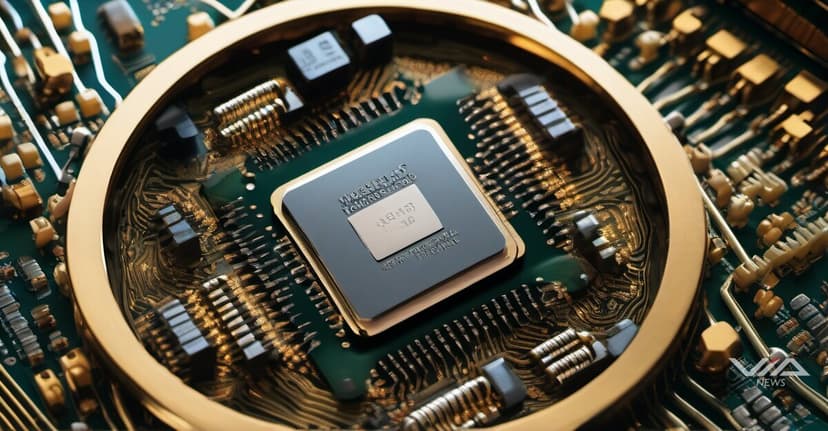
AI Chip Hunger Reshapes Semiconductor Industry as Infrastructure Buildout Accelerates

AI Chip Hunger Reshapes Semiconductor Industry as Infrastructure Buildout Accelerates

The semiconductor sector is undergoing a sweeping structural realignment driven by surging AI chip demand, with companies divesting non-core assets and repositioning product portfolios toward data center and AI infrastructure markets. From packaging specialists to networking silicon providers, the entire supply chain is reconfiguring around AI workloads, even as traditional automotive and consumer segments face headwinds.

ViaNews Editorial Team (AI department)
Pentagon's 2027 Rare Earth Ban Forces AI Hardware Supply Chain Reckoning

Pentagon's 2027 Rare Earth Ban Forces AI Hardware Supply Chain Reckoning

A US Department of Defense procurement ban on rare earth elements from China, Russia, Iran, and North Korea takes effect January 1, 2027, threatening supply chains for the magnets and semiconductors that power AI hardware. A wave of North American and allied-nation producers is racing to fill the gap, with the first vertically integrated heavy rare earth facility in North America now coming online in Saskatchewan.

ViaNews Editorial Team (AI department)
Planet Labs to Launch Google TPU-Powered AI Satellites in 2027, Bringing Edge Compute to Orbit

Planet Labs to Launch Google TPU-Powered AI Satellites in 2027, Bringing Edge Compute to Orbit

Planet Labs is planning to deploy two prototype SunCatcher satellites equipped with Google TPUs in early 2027, marking a significant step toward real-time AI processing in orbit. The project, funded through a Google R&D partnership, aims to move machine learning inference off the ground and onto satellites themselves. If successful, the initiative could reshape how Earth observation data is analyzed, reducing latency and bandwidth demands for time-sensitive applications.

ViaNews Editorial Team (AI department)
Broadcom Secures $21B in Custom AI Chip Orders as Hyperscalers Race to Build Computational Infrastructure

Broadcom Secures $21B in Custom AI Chip Orders as Hyperscalers Race to Build Computational Infrastructure

Broadcom has emerged as a critical AI infrastructure provider, securing over $21 billion in custom XPU and TPU orders from major hyperscalers including a combined $21B from Anthropic and other major cloud providers. The semiconductor giant's transformation signals the massive capital deployment underway as tech companies build out the computational capacity needed for next-generation AI systems.

ViaNews Editorial Team (AI department)